

4 charts on how kids’ injury risk changes over time and differs for boys and girls
- Written by Lisa Nicole Sharwood, Injury epidemiologist | Expert Witness, UNSW Sydney
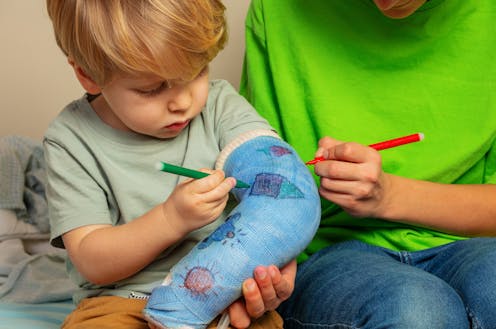
Injuries are the leading cause of disability and death among Australian children and adolescents. At least a quarter of all emergency department presentations during childhood are injury-related.
Injuries can be unintentional (falls, road crashes, drowning, burns) or intentional (self harm, violence, assault). The type, place and cause of injury differs by age, developmental stage and sex. Injury also differs by socioeconomic status and place of residence. Injuries are predictable, preventable events, and understanding where and how they occur is essential to inform prevention efforts.
A new report from the Australian Institute of Health and Welfare, released today, tells us more about the injuries Australian children and adolescents sustained in the year from July 2021 to June 2022. It finds:
children aged 1–4 years are the age group most likely to present to an emergency department with injuries
adolescents aged 16–18 years are the age group most likely to be admitted to hospital for injuries
boys are more likely to be hospitalised for injuries than girls. This continues into adulthood
girls are five times more likely to be hospitalised for intentional self-harm injuries than boys
falls are the leading cause of childhood injury, accounting for one in three child injury hospitalisations. Falls from playground equipment are the most common
fractures are the most common type of childhood injury, especially arm and wrist fractures in children aged 10–12 years.
So injury patterns differ between boys and girls. And causes of injury in children change as they progress through different stages of development.
For children under age one, drowning, burns, choking and suffocation had the highest injury hospital admission rates compared to adults.
In early childhood (ages 1-4 years), the highest causes of injury hospitalisation were drowning, burns, choking and suffocation and accidental poisoning.
Road and other transport injuries are the most common cause of injury requiring hospital admission among adolescents aged 16–18 years.
What about sports?
Sports and physical activities come with risk of injury. But the health benefits far outweigh the risks.
Cycling causes the highest number of sporting injuries with almost 3,000 injury hospital presentations. Again, active transport has many benefits for our health and connecting communities. But there is still more to be done to make cycling safer.
For the top 20 sports that are most likely to cause injury hospital admissions, fractures are the most common type of injury. Soft-tissue injuries, open wounds and head injuries are also common.
However, the data should be interpreted with caution, as only around half of all injury hospitalisations among children and adolescents had an “activity while injured” specified.
What we do know is that injuries are most likely to occur at home.
Read more: Is it broken? A strain or sprain? How to spot a serious injury now school and sport are back
Balancing risk and safety
Injuries can be serious or fatal. Even non-fatal injuries can keep children in hospital for long periods of time and delay their growth and development.
To prevent injuries, we need to balance risk and safety. For children, play is an important part of learning and expressing various skills, knowledge, and attitudes. Play teaches children to problem-solve, nurtures social and emotional development, improves self-awareness and helps them master their physical abilities.
Embracing risk is a fundamental part of play in all environments where children play and explore their world. As children transition into adolescence, the nature of these risks changes. But with proper guidance and supervision from parents and caregivers, we can strike a balance between offering opportunities for risk-taking and ensuring children’s safety from serious harm.
What can governments do to prevent injuries?
The Australian government has drafted a new National Injury Prevention Strategy, which is expected to be released later in 2024. This will provide clear guidance for all levels of government and others on prevention strategies and investment needed.
In the meantime, better injury surveillance data is sorely needed to better identify the cause of injuries (such as family violence, alcohol and other drug misuse, intentional self-harm or consumer product-related injuries), and to identify where injuries took place (home, school, shopping centre, and so on). There is also insufficient attention paid to priority populations, including people of low socioeconomic status, those in rural and remote areas and Aboriginal and Torres Strait Islander people.
Better reporting on childhood and adolescent injury trends will better inform parents, caregivers, teachers and health professionals about the risks.
Read more: Giant tube slides and broken legs: why the latest playground craze is a serious hazard
Authors: Lisa Nicole Sharwood, Injury epidemiologist | Expert Witness, UNSW Sydney

















