

Tony Birch on the writing of Kim Scott
- Written by Tony Birch, Boisbouvier Chair in Australian Literature, The University of Melbourne
I was first struck by the power of Kim Scott’s writing while I was far from home, in both a physical and cultural sense. In 2003, I was in the United States, staying at Harvard University, outside Boston. I’d been invited to speak at an Australian Studies conference. The gathering attracted major Australian writers and thinkers, including Gail Jones, Frank Moorhouse, David Malouf and Meaghan Morris.
Our hosts were generous, accommodating us at the well-appointed Harvard Inn, where we enjoyed the hospitality of big beds, big bathtubs and, in the tradition of American culinary excess, big servings at every meal. Although I’m a non-drinker, I enjoyed the company at the nightly gatherings in the inn with other conference attendees. We shared stories and engaged in civil debate, while several of my Australian colleagues liberally sampled the many Australian wines on offer. By the evening of the last day of our visit, the cellar lay almost bare, with not a drop of Australian red or white to be found.
 Goodreads
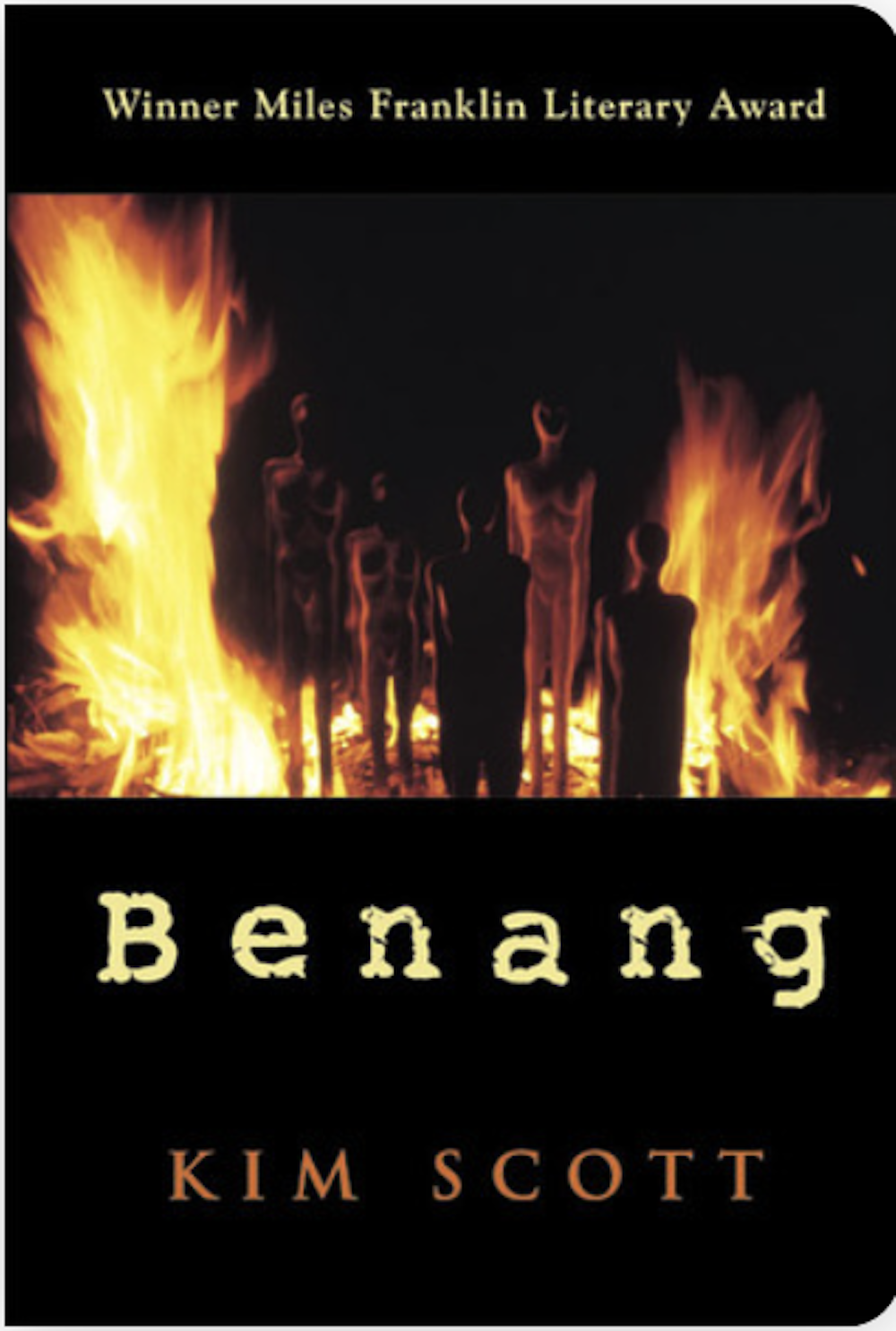
Towards the end of the talk, I quoted words that are forced upon Benang’s violent white patriarch, Ern Scat, by his “mixed-blood” grandson, Harley. “Ern Solomon Scat,” I announced to the auditorium, channelling the words of both Harley and the author, “fucks chooks [. . .] fucked all his family before him.”
The poetic statement was not well received by some in the audience. “Fucks chooks?” one man whispered to another, a bewildered look on his face. “Did he say ‘fucks chooks’?”, he repeated. “Chooks?” My comments caused some discomfort. The criticism that followed focused not on this quote from Benang, nor on concern for any chook that may have been harmed during an act of white male bestiality, but on my perceived disrespect for Australia expressed while on the other side of the globe.
Nationalism cannot escape its parochialism, particularly when being articulated “offshore”. I had not fully grasped the fact I was attending a gathering that, to a great degree, was intended to be a “celebration of the nation”. Others in the room, several academics and representatives of the Australian government, let me know that Harvard was not the place to discuss what was described to me as the “internal politics” of Australia.
However, Scott’s writing was the very antithesis of a shallow flag-waving exercise. The reception of my discussion of his use of fiction to interrogate both historical and contemporary politics in Australia revealed not so much the sensitivities of some audience members (although those were clearly apparent) but that Scott was just the writer we needed during a period of cultural upheaval in Australia.
Read more:
Inside the story: the all-knowing narrator in Kim Scott's Taboo
Goodreads
Towards the end of the talk, I quoted words that are forced upon Benang’s violent white patriarch, Ern Scat, by his “mixed-blood” grandson, Harley. “Ern Solomon Scat,” I announced to the auditorium, channelling the words of both Harley and the author, “fucks chooks [. . .] fucked all his family before him.”
The poetic statement was not well received by some in the audience. “Fucks chooks?” one man whispered to another, a bewildered look on his face. “Did he say ‘fucks chooks’?”, he repeated. “Chooks?” My comments caused some discomfort. The criticism that followed focused not on this quote from Benang, nor on concern for any chook that may have been harmed during an act of white male bestiality, but on my perceived disrespect for Australia expressed while on the other side of the globe.
Nationalism cannot escape its parochialism, particularly when being articulated “offshore”. I had not fully grasped the fact I was attending a gathering that, to a great degree, was intended to be a “celebration of the nation”. Others in the room, several academics and representatives of the Australian government, let me know that Harvard was not the place to discuss what was described to me as the “internal politics” of Australia.
However, Scott’s writing was the very antithesis of a shallow flag-waving exercise. The reception of my discussion of his use of fiction to interrogate both historical and contemporary politics in Australia revealed not so much the sensitivities of some audience members (although those were clearly apparent) but that Scott was just the writer we needed during a period of cultural upheaval in Australia.
Read more:
Inside the story: the all-knowing narrator in Kim Scott's Taboo
 Kim Scott:
Photo: Janine Sheen/Black Inc
My second meeting with Scott was more personal. It took place literally at the centre of Australia, in the Sails in the Desert hotel near Uluru. I’d been invited to a five-day screenwriting workshop, organised by the Indigenous unit of Screen Australia. The workshop was led by the renowned filmmaker Rachel Perkins and the screenwriter and director Guillermo Arriaga, the author of scripts for major films including Amores Perros (2000), 21 Grams (2003), The Three Burials of Melquiades Estrada (2005) and Babel (2006). Other writers invited to the workshop included Dylan Coleman, Bruce Pascoe, Melissa Lucashenko, Dub Leffler – and Scott.
My first impression of Kim in person was that he was warm and friendly, and just a little bit cheeky in a generous way, which didn’t surprise me at all. He is a person with a quick sense of humour, delivered with laconic ease. Both Scott’s physical stature and his mannerisms reminded me of one of my favourite screen actors, Jack Lemmon, in particular the deadpan, and occasionally tragic, face he wears in films such as The Apartment (1960) – a look that Lemmon was always able to shift to a childlike grin in an instant.
Kim Scott:
Photo: Janine Sheen/Black Inc
My second meeting with Scott was more personal. It took place literally at the centre of Australia, in the Sails in the Desert hotel near Uluru. I’d been invited to a five-day screenwriting workshop, organised by the Indigenous unit of Screen Australia. The workshop was led by the renowned filmmaker Rachel Perkins and the screenwriter and director Guillermo Arriaga, the author of scripts for major films including Amores Perros (2000), 21 Grams (2003), The Three Burials of Melquiades Estrada (2005) and Babel (2006). Other writers invited to the workshop included Dylan Coleman, Bruce Pascoe, Melissa Lucashenko, Dub Leffler – and Scott.
My first impression of Kim in person was that he was warm and friendly, and just a little bit cheeky in a generous way, which didn’t surprise me at all. He is a person with a quick sense of humour, delivered with laconic ease. Both Scott’s physical stature and his mannerisms reminded me of one of my favourite screen actors, Jack Lemmon, in particular the deadpan, and occasionally tragic, face he wears in films such as The Apartment (1960) – a look that Lemmon was always able to shift to a childlike grin in an instant.
 Pan Macmillian Australia
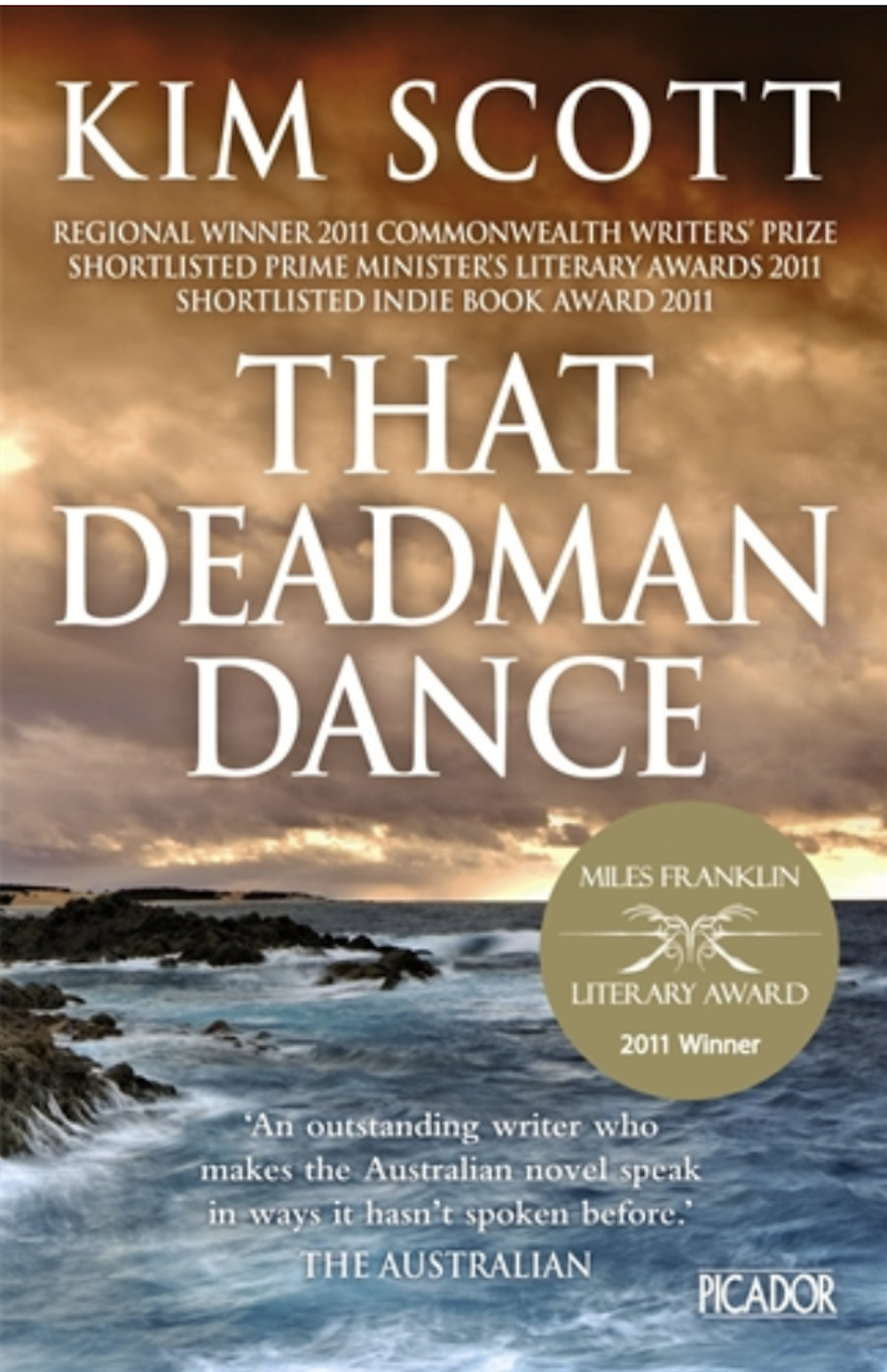
I didn’t realise at the time the extent to which Scott’s personality and demeanour reflect characters in both Benang and his following novel, That Deadman Dance (2010). These are Noongar men who somehow manage to balance profound sadness and trauma with a degree of humour that deceptively undermines colonial attempts to subjugate the Aboriginal body.
Harley, the protagonist of Benang, is a playful character. A sly wink here and there is used to disarm readers, before he grabs their attention with stories of the utmost power. Likewise, in That Deadman Dance, BobbyWabalanginy, a Noongar man, travels across time, space and place, providing a lens on the past for readers. Bobby is a street performer and discarded fringe-dweller, entertaining settlers who have seemingly won control over his Country.
Read more:
The case for Kim Scott's That Deadman Dance
In some scenes in the novel, Bobby appears as an endearing child, an innocent, witness to and documentarian of the colonial violence that increasingly damages both the culture and the natural ecologies of Noongar people. He becomes a repository of memories, of stories of loss, dislocation and colonial neglect.
As with the characters in his novels, Scott himself inhabits a range of guises, faces he wears to interrogate the complex and messy frontier history of colonial encounters. He is a writer, storyteller and researcher, a conduit working within the Noongar community to recover and retell stories from an Aboriginal perspective, be it a narrative examining “first contacts” with the British on Noongar territory in the early 19th century, a creative interrogation of a book published by a racist “protector” more than a century later, or a story of violence that takes place in a prison cell in the 21st century. Scott’s literary voice is a choir, and we are fortunate to have been offered his song.
My own academic training was in history. I completed my PhD at Melbourne University in 2003 and taught Australian and Aboriginal History for several years. I was also, for a short period, involved in the History Wars of the late 1990s and early 2000s, an undignified exercise whereby politically motivated populists – intellectuals and politicians both – picked over a carcass of footnotes in yet another attempt to delegitimise the rights and authority of Aboriginal and Torres Strait Islander people.
I became disheartened by the behaviour of the history profession, once described to me by a colleague as the “self-appointed aristocracy of the humanities”, around the time I began to think more seriously about other forms of storytelling that might inform us about the past. I became interested in film, still photography, writing and oral storytelling.
I was attracted to Scott’s writing not only for its rich approach to storytelling but also for the way he understood the power of the colonial archive. Rather than regard it as a set of neutral and objective facts, Scott knew that paper, ink and the written word produced highly selective and subjective stories of Australia’s colonial past. He also realised that if he were to extract a counter-narrative from the archive, to force it to confess to truths camouflaged by bureaucratic language, he could use fiction to great effect.
I value Scott’s fiction because it prods me to consider the lives of Noongar people and the courage they have shown when faced with the onslaught of invader violence. Through a discussion of his novels, I want to explore fiction as a pathway to truth. I have no interest in arguing over the relative truth of fiction and history writing (I’ll let some other dog chase that tail), or the power of a metaphor versus the footnote. I do not regard fiction to be in a contest with the discipline of history.
Fiction is more than able to validate truth without having to defer to capital-H history. With all the talk of “truth-telling” in Australia, some of it worthwhile and some clichéd, Scott’s writing provides an invaluable entry point to a meaningful dialogue.
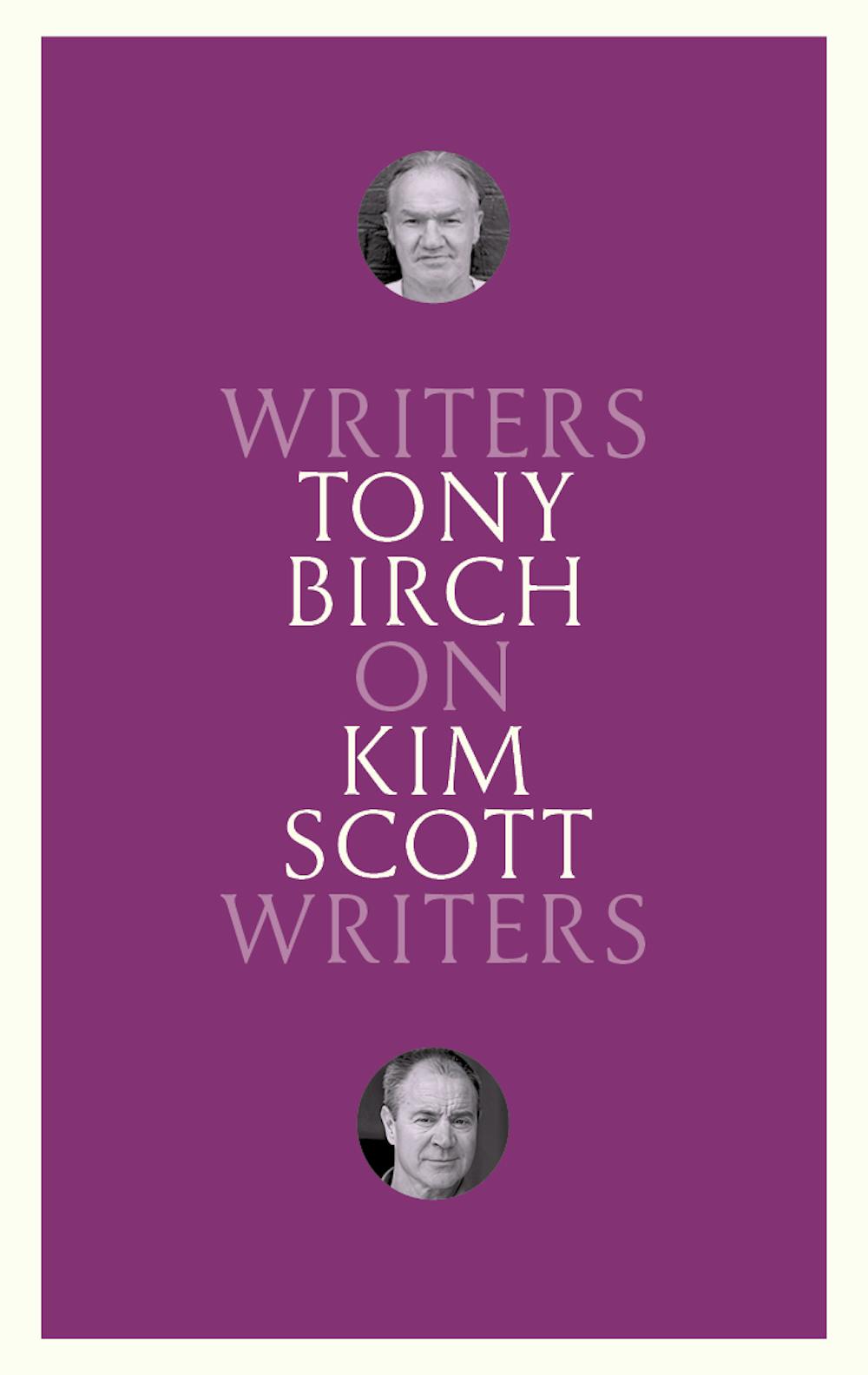
This is an edited version of the introduction to On Kim Scott, by Tony Birch (Black Inc).
Authors: Tony Birch, Boisbouvier Chair in Australian Literature, The University of Melbourne
Pan Macmillian Australia
I didn’t realise at the time the extent to which Scott’s personality and demeanour reflect characters in both Benang and his following novel, That Deadman Dance (2010). These are Noongar men who somehow manage to balance profound sadness and trauma with a degree of humour that deceptively undermines colonial attempts to subjugate the Aboriginal body.
Harley, the protagonist of Benang, is a playful character. A sly wink here and there is used to disarm readers, before he grabs their attention with stories of the utmost power. Likewise, in That Deadman Dance, BobbyWabalanginy, a Noongar man, travels across time, space and place, providing a lens on the past for readers. Bobby is a street performer and discarded fringe-dweller, entertaining settlers who have seemingly won control over his Country.
Read more:
The case for Kim Scott's That Deadman Dance
In some scenes in the novel, Bobby appears as an endearing child, an innocent, witness to and documentarian of the colonial violence that increasingly damages both the culture and the natural ecologies of Noongar people. He becomes a repository of memories, of stories of loss, dislocation and colonial neglect.
As with the characters in his novels, Scott himself inhabits a range of guises, faces he wears to interrogate the complex and messy frontier history of colonial encounters. He is a writer, storyteller and researcher, a conduit working within the Noongar community to recover and retell stories from an Aboriginal perspective, be it a narrative examining “first contacts” with the British on Noongar territory in the early 19th century, a creative interrogation of a book published by a racist “protector” more than a century later, or a story of violence that takes place in a prison cell in the 21st century. Scott’s literary voice is a choir, and we are fortunate to have been offered his song.
My own academic training was in history. I completed my PhD at Melbourne University in 2003 and taught Australian and Aboriginal History for several years. I was also, for a short period, involved in the History Wars of the late 1990s and early 2000s, an undignified exercise whereby politically motivated populists – intellectuals and politicians both – picked over a carcass of footnotes in yet another attempt to delegitimise the rights and authority of Aboriginal and Torres Strait Islander people.
I became disheartened by the behaviour of the history profession, once described to me by a colleague as the “self-appointed aristocracy of the humanities”, around the time I began to think more seriously about other forms of storytelling that might inform us about the past. I became interested in film, still photography, writing and oral storytelling.
I was attracted to Scott’s writing not only for its rich approach to storytelling but also for the way he understood the power of the colonial archive. Rather than regard it as a set of neutral and objective facts, Scott knew that paper, ink and the written word produced highly selective and subjective stories of Australia’s colonial past. He also realised that if he were to extract a counter-narrative from the archive, to force it to confess to truths camouflaged by bureaucratic language, he could use fiction to great effect.
I value Scott’s fiction because it prods me to consider the lives of Noongar people and the courage they have shown when faced with the onslaught of invader violence. Through a discussion of his novels, I want to explore fiction as a pathway to truth. I have no interest in arguing over the relative truth of fiction and history writing (I’ll let some other dog chase that tail), or the power of a metaphor versus the footnote. I do not regard fiction to be in a contest with the discipline of history.
Fiction is more than able to validate truth without having to defer to capital-H history. With all the talk of “truth-telling” in Australia, some of it worthwhile and some clichéd, Scott’s writing provides an invaluable entry point to a meaningful dialogue.
This is an edited version of the introduction to On Kim Scott, by Tony Birch (Black Inc).
Authors: Tony Birch, Boisbouvier Chair in Australian Literature, The University of Melbourne 
















