

Why are adults without kids hooked on Bluey? And should we still be calling it a ‘kids’ show’?
- Written by Jessica Balanzategui, Senior Lecturer in Media, RMIT University
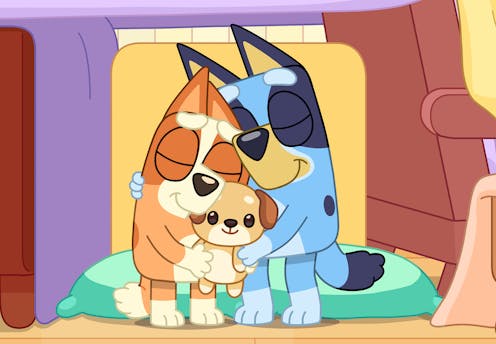
“Bluey mania” shows no sign of abating. Bluey’s season finale, The Sign, was the most viewed ABC program of all time on iView.
A “hidden” follow-up episode, aptly named The Surprise, created a storm of headlines around the world, many of which have a decidedly adult tone.
As highlighted in social media fan communities and articles, the show has struck a chord with adults, many of whom aren’t parents. What do they get from a show that is ostensibly “for kids”?
Parents love Bluey (sometimes more than kids)
Our research with children aged 7-9 and their parents provides evidence of how enraptured adults are by Bluey. Our findings also suggest it’s the parents who often drive household Bluey obsessions.
As one mum told us:
If we could tell the Australian TV gods something that we’d like to have on Australian TV, it would be more Bluey, don’t get rid of Bluey. […] Bluey is loved by mums a lot.
Another explained how the show provided learning for parents:
It’s the gentle parenting, kindness, empathy for the children, the humour […] And helping kids [and] families work through real life situations with kindness and compassion.
When one eight-year-old and his mum told us about their favourite shows, the following exchange took place:
Mum:: What about Bluey? Son: I sometimes [watch it]… Mum: You don’t want to say. He doesn’t want to say he watches Bluey. Bluey’s fantastic. Son: I sometimes- Mum: He wants to be a big boy. […] Everyone in this room probably loves Bluey. It’s not just for kids. Son: Enough about that.
Beyond families, Bluey has also attracted teen and adult fans without kids – in part thanks to a vibrant TikTok community (aka #blueytok). While some commentary suggests this adult fandom is “weird”, Bluey is only the latest in a long line of “children’s” shows with a passionate adult fanbase.
Shifting barriers in television
The distinction between “children’s” and “adult” television has long been crucial to our cultural understandings of what separates a child from an adult.
In the 1950s, academics were concerned children were watching TV content that was too mature for them, turning them into “adultised children”, and that adults watching kids’ shows were becoming “infantile adults”.
The industry took note. In 1957, a reduction in children’s TV production in the United States made space for so-called “kidult” shows designed for both age groups.
Since then, the boundaries between children’s and adult television have continually shifted. In television’s early days, science fiction was associated with child audiences (which is why many initially assumed Star Trek was a kids’ show).
These boundaries were also influenced by television scheduling. Warner Bros’ early animation shorts were initially all-ages theatrical releases, but in 1960 were packaged into the Bugs Bunny Show – pitched for kids and aired on Saturday mornings. As a result, by 1967 animation was considered kids’ fare.
The boundaries shifted again in the 1980s as adult Japanese anime such as Akira (1988) became popular in the West.
In 1989, The Simpsons debuted on TV. Our research reveals even today there is confusion regarding the show’s suitability for young children. Some of our seven-to-nine-year-old participants described secretly watching it without their parents’ knowledge.
Childhood healing
Bluey’s adult appeal is credited to the show’s playful yet emotionally complex content. One reason adults tune into today’s kids’ TV is because it’s far more diverse than the shows they could access growing up.

Take 19-year-old Bluey fan Darby Rose, who points to an episode in which a Jack Russell terrier has ADHD. “As a neurodivergent person myself, this representation makes me ecstatic,” Rose says. This is also true of many teen programs, with the queer-friendly high-school romance Heartstopper attracting a large adult following.
It’s not just childhood nostalgia that drives adults to kids’ shows (although this is one aspect). Watching kids’ shows can be self-affirming for adults who missed out on seeing their identity onscreen growing up. Some adult fans even say Bluey has helped them heal childhood wounds.
Children’s television meets adult fan cultures
Watching “adult” television enables kids to feel more grown-up. Conversely, adults can watch children’s television to embrace aspects of their personality they feel social pressure to repress.
The latter is often the case for “Bronies” (a portmanteau for “bro” and “pony”): adult male fans of the animated kids’ show My Little Pony: Friendship is Magic (2010-20). The community has attracted much controversy. But research has found the reasons behind being a Brony aren’t suspicious or bizarre, but are empowering in unexpected ways.
As Bronies themselves have explained, the fandom allows them to rethink what masculinity means to them, with the support of other fans online and at events such as BronyCon.
Why can’t “manliness” include watching a cute show about ponies with friendship at its heart?
 The 2012 BronyCon event in New Jersey attracted about 4,000 My Little Pony fans.
Mel Evans/AP
The 2012 BronyCon event in New Jersey attracted about 4,000 My Little Pony fans.
Mel Evans/AP
The changing nature of children’s television
The rise of streaming has led to yet another shift. On-demand viewing means freedom from the constraints of TV scheduling, which historically set the terms for “child” and “adult” viewing.
As our book details, Netflix has invested in the expansion of cultural expectations around what makes “child-appropriate” television.
Netflix’s mega hit Stranger Things deliberately pushes at these boundaries to attract a wide audience, from children and teens, to families, to adults without kids. As co-creator Matt Duffer explains, the aim was to get children hooked on the show, and then later in the season “scare the shit out of them. Then the parents can get mad.”
Parents certainly aren’t mad about their children getting hooked on Bluey. They may even be the secret to its global success: to keep the children watching, get the adults hooked.
Authors: Jessica Balanzategui, Senior Lecturer in Media, RMIT University

















