

Why are algorithms called algorithms? A brief history of the Persian polymath you’ve likely never heard of
- Written by Debbie Passey, Digital Health Research Fellow, The University of Melbourne
Algorithms have become integral to our lives. From social media apps to Netflix, algorithms learn your preferences and prioritise the content you are shown. Google Maps and artificial intelligence are nothing without algorithms.
So, we’ve all heard of them, but where does the word “algorithm” even come from?
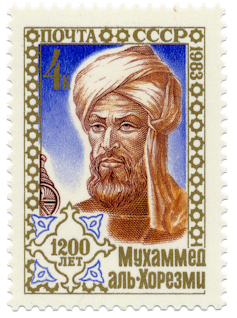
Over 1,000 years before the internet and smartphone apps, Persian scientist and polymath Muhammad ibn Mūsā al-Khwārizmī invented the concept of algorithms.
In fact, the word itself comes from the Latinised version of his name, “algorithmi”. And, as you might suspect, it’s also related to algebra.
Largely lost to time
Al-Khwārizmī lived from 780 to 850 CE, during the Islamic Golden Age. He is considered the “father of algebra”, and for some, the “grandfather of computer science”.
Yet, few details are known about his life. Many of his original works in Arabic have been lost to time.
It is believed al-Khwārizmī was born in the Khwarazm region south of the Aral Sea in present-day Uzbekistan. He lived during the Abbasid Caliphate, which was a time of remarkable scientific progress in the Islamic Empire.
Al-Khwārizmī made important contributions to mathematics, geography, astronomy and trigonometry. To help provide a more accurate world map, he corrected Alexandrian polymath Ptolemy’s classic cartography book, Geographia.
He produced calculations for tracking the movement of the Sun, Moon and planets. He also wrote about trigonometric functions and produced the first table of tangents.
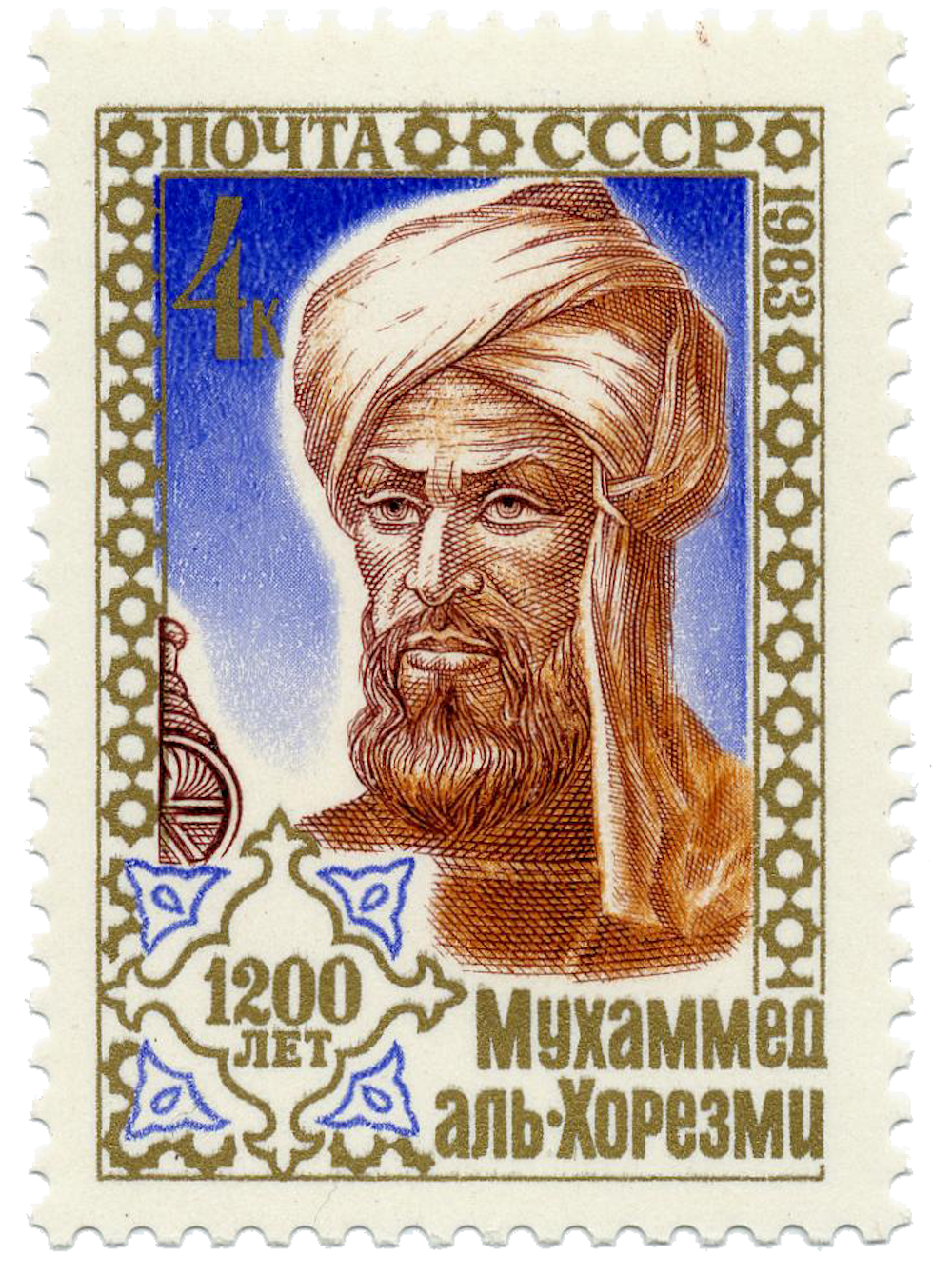
Al-Khwārizmī was a scholar in the House of Wisdom (Bayt al-Hikmah) in Baghdad. At this intellectual hub, scholars were translating knowledge from around the world into Arabic, synthesising it to make meaningful progress in a range of disciplines. This included mathematics, a field deeply connected to Islam.
The ‘father of algebra’
Al-Khwārizmī was a polymath and a religious man. His scientific writings started with dedications to Allah and the Prophet Muhammad. And one of the major projects Islamic mathematicians undertook at the House of Wisdom was to develop algebra.
Around 830 CE, Caliph al-Ma’mun encouraged al-Khwārizmī to write a treatise on algebra, Al-Jabr (or The Compendious Book on Calculation by Completion and Balancing). This became his most important work.
 A page from The Compendious Book on Calculation by Completion and Balancing.
World Digital Library
A page from The Compendious Book on Calculation by Completion and Balancing.
World Digital Library
At this point, “algebra” had been around for hundreds of years, but al-Khwārizmī was the first to write a definitive book on it. His work was meant to be a practical teaching tool. Its Latin translation was the basis for algebra textbooks in European universities until the 16th century.
In the first part, he introduced the concepts and rules of algebra, and methods for calculating the volumes and areas of shapes. In the second part he provided real-life problems and worked out solutions, such as inheritance cases, the partition of land and calculations for trade.
Al-Khwārizmī didn’t use modern-day mathematical notation with numbers and symbols. Instead, he wrote in simple prose and employed geometric diagrams:
Four roots are equal to twenty, then one root is equal to five, and the square to be formed of it is twenty-five, or half the root is equal to ten.
In modern-day notation we’d write that like so:
4x = 20, x = 5, x2 = 25, x / 2 = 10
Grandfather of computer science
Al-Khwārizmī’s mathematical writings introduced the Hindu-Arabic numerals to Western mathematicians. These are the ten symbols we all use today: 1, 2, 3, 4, 5, 6, 7, 8, 9, 0.
The Hindu-Arabic numerals are important to the history of computing because they use the number zero and a base-ten decimal system. Importantly, this is the numeral system that underpins modern computing technology.
Al-Khwārizmī’s art of calculating mathematical problems laid the foundation for the concept of algorithms. He provided the first detailed explanations for using decimal notation to perform the four basic operations (addition, subtraction, multiplication, division) and computing fractions.
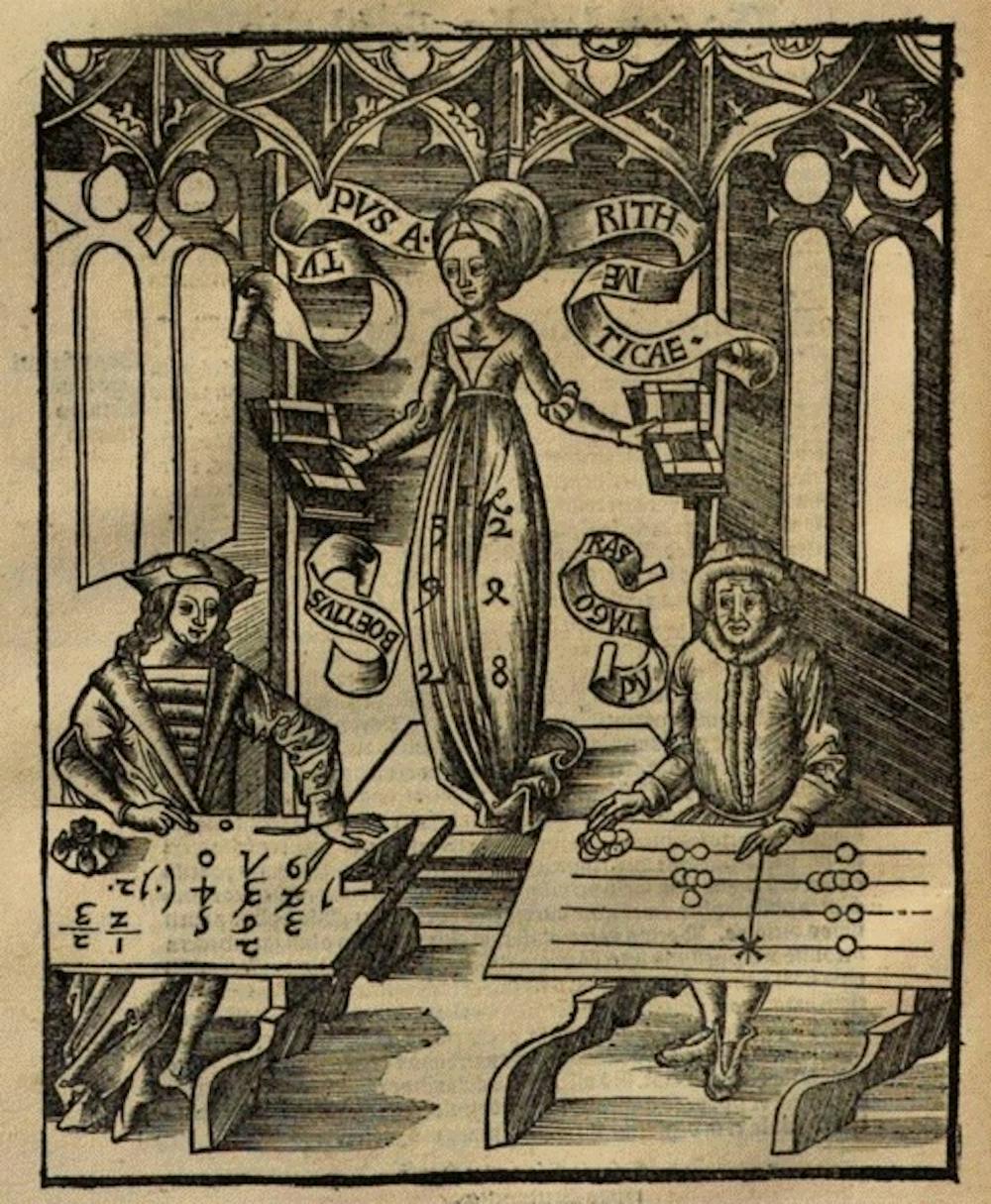 The contrast between algorithmic computations and abacus computations, as shown in Margarita Philosophica (1517).
The Bavarian State Library
The contrast between algorithmic computations and abacus computations, as shown in Margarita Philosophica (1517).
The Bavarian State Library
This was a more efficient computation method than using the abacus. To solve a mathematical equation, al-Khwārizmī systematically moved through a sequence of steps to find the answer. This is the underlying concept of an algorithm.
Algorism, a Medieval Latin term named after al-Khwārizmī, refers to the rules for performing arithmetic using the Hindu-Arabic numeral system. Translated to Latin, al-Khwārizmī’s book on Hindu numerals was titled Algorithmi de Numero Indorum.
In the early 20th century, the word algorithm came into its current definition and usage: “a procedure for solving a mathematical problem in a finite number of steps; a step-by-step procedure for solving a problem”.
Muhammad ibn Mūsā al-Khwārizmī played a central role in the development of mathematics and computer science as we know them today.
The next time you use any digital technology – from your social media feed to your online bank account to your Spotify app – remember that none of it would be possible without the pioneering work of an ancient Persian polymath.
Authors: Debbie Passey, Digital Health Research Fellow, The University of Melbourne


















.png)