

Some say the Treaty of Waitangi divides NZ – a new survey suggests the opposite is true
- Written by Olli Hellmann, Associate Professor of Political Science, University of Waikato
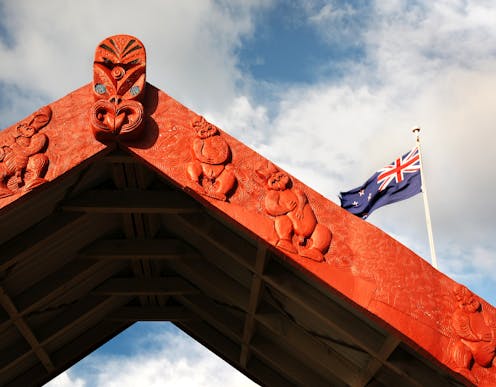
The stories Aotearoa New Zealand tells itself about the history of Te Tiriti o Waitangi/the Treaty of Waitangi have evolved considerably over time. For many decades, starting with the 1940 centennial, state-sponsored commemorations of the signing, the event was romanticised as a coming together of two peoples.
Increasingly, these collective memories were challenged – primarily by Māori activism, but also by the work of revisionist historians. As a result, today’s official narratives acknowledge the Treaty was broken repeatedly, often violently, during European colonisation. And they also recognise the Crown’s obligation to remedy past breaches.
Some conservative politicians have seen this shift in collective remembering as an opportunity for political point scoring. They denounce recent reinterpretations of the Treaty as sowing social division and weakening national unity.
For example, in his 2004 Orewa speech, then National leader Don Brash reviled the Treaty settlements process for creating “a racially divided state”. In 2017, National Prime Minister Bill English claimed many New Zealanders “cringe” at Māori protests on Waitangi Day.
Lately, ACT party leader David Seymour has attacked current interpretations of the Treaty as being “divisive”. His Treaty Principles Bill aims to rewrite those principles, against loud opposition from Māori.
But my new research, published recently in the journal Political Science, does not support claims the Treaty divides New Zealanders. In fact, the survey suggests quite the opposite: the Treaty provides a powerful symbol that promotes mutual understanding and reconciliation.
Our most important historical event
The survey involved a broadly representative sample of over 1,000 people. The key question asked respondents to spontaneously name the most important event in the history of Aotearoa New Zealand. This may seem simple, but it is an effective way to tap into readily accessible – and therefore meaningful – memories.
The Treaty of Waitangi was the most frequent response, among both Pākehā/European New Zealanders (38%) and Māori (59%).
Younger respondents were significantly more likely to recall the signing of the Treaty than older generations. This possibly reflects efforts since the late 1990s to educate citizens on the Treaty and the role of the Waitangi Tribunal in redressing historical injustices.
In fact, among those respondents born between 2000 and 2006, more than 70% identified the Treaty as the most important event in national history.
Remembering the past matters
The survey data make it possible to investigate how collective memories of the historical past shape what individuals think about politics and society in the present.
In particular, we can compare two groups of respondents: those who recalled the Treaty of Waitangi as most important, and those who attached the greatest importance to Eurocentric historical events (such as the arrival of Captain Cook and European settlers, World War I, and women’s suffrage).
Participants were also prompted to rate their “warmth” towards other social groups. In addition, the survey included a range of questions about national identity and redress of historical wrongs against Māori.
Analysis of the responses revealed four important findings.
There was no evidence Māori who rated the Treaty as the most important historical event felt markedly “cool” towards European New Zealanders. Rather, it was Pākehā respondents calling to mind Eurocentric historical events who exhibited little warmth for Māori.
There was no evidence that singling out the Treaty as the most important event undermined individuals’ sense of national belonging – among either Pākehā or Māori.
Pākehā respondents who named the Treaty as the most important event were likely to support a broader definition of what it means to be a New Zealander. Specifically, they understood national identity to be inclusive of Māori culture and values, rather than insisting on a narrow, monocultural understanding.
Pākehā who identified the Treaty as the most important historical event showed a significant tendency to support redress for historical injustices to Māori.
The symbolic power of the Treaty
When nations craft narratives about their historical origins – be it revolutions, wars or the making of constitutions – they tend to frame these stories positively.
Aotearoa New Zealand is different. The Treaty of Waitangi – often considered the nation’s founding document – includes in its more recent narratives an admission of guilt and an obligation to remedy past wrongs.
Some politicians have taken aim at these narratives. They claim dwelling too much on historical breaches of the Treaty – for example, through Waitangi Tribunal proceedings or Māori protest – strains the social fabric.
However, the recently published survey findings indicate such concerns are misplaced. Rather, narratives that foreground Treaty breaches help forge a bicultural sense of belonging and commitment to work through those breaches.
The survey also finds the Treaty holds especially strong symbolic power among young people. This suggests electoral strategies that seek to undo decades of revisionist storytelling about the Treaty will likely lead to diminishing returns in the future.
Authors: Olli Hellmann, Associate Professor of Political Science, University of Waikato

















