

Noise-cancelling headphones, earplugs and earmuffs – do they really help neurodivergent people?
- Written by Kitty-Rose Foley, Senior Lecturer, Faculty of Health, Southern Cross University
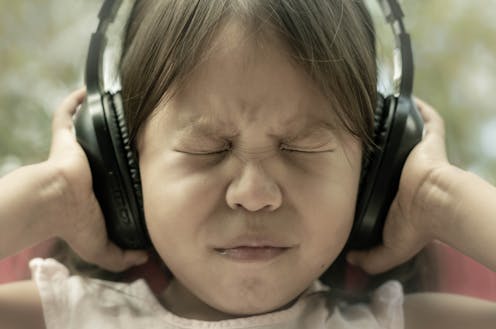
Noise can make it hard to concentrate, especially for people who are extra sensitive to it.
Neurodivergent people (such as those who are autistic or have attention-deficit hyperactivity disorder – ADHD) can experience different sensory sensitivities. Their nervous system may process information differently when they are exposed to sensory experiences such as bright lights, loud noise, strong smells or busy environments.
Decreased sound tolerance is estimated to affect up to 70% of autistic people and is described in three ways: hyperacusis (perceiving everyday sounds as loud or painful), misophonia (an aversion to specific sounds) and phonophobia (fear of a specific sound). As a sensory feature of autism, decreased sound tolerance may have the largest overall impact on quality of life.
Many autistic or ADHD people describe how noise stops or limits their day-to-day activities such as attending classes, work meetings, socialising or even health care.
In the overall population, we know too much noise can lead to poorer physical and psychological health. Unwanted or unexpected noise can cause irritation, anxiety, anger and restlessness.
Noise-cancelling headphones, earplugs and earmuffs are often recommended or marketed to help manage noise sensitivities. But do they actually make a difference?
How they work
Different devices work in different ways. Most earplugs and earmuffs simply act as a barrier to block or muffle sound. Noise-cancelling headphones (and now some in-ear devices) can reduce unwanted sound by using active noise-control engineering.
Sound travels in waves into the eardrum, where it vibrates. Noise-cancelling headphones use tiny microphones to send another sound wave which is exactly the opposite of the incoming sound. The opposing forces reduce the vibration in the ear. This process is called phase cancellation.
There are a range of noise-cancelling devices available for use in different settings and situations from parenting and social gatherings, to sleep and deep focus, to school, concerts or festivals. They may be recommended by health professionals, often occupational therapists whose role it is to find ways people can participate in everyday activities. There is a small amount of evidence to support their use.
In one study, researchers interviewed 17 autistic adults about their public transport use. Most said they used coping strategies to avoid too much noise stimuli. They did this by listening to music or using noise-cancelling headphones. They felt this prevented sensory overload and stress. It followed an earlier pilot study of 16 school children, which found earmuffs and noise-cancelling headphones helped them in the classroom.
Their usefulness based on what others observe
Other research has explored people’s feelings about the usefulness of noise-cancelling headphones for autistic children and adults.
A 2019 study explored how autistic children and teens joined in everyday life at home and school when wearing noise-cancelling headphones. Parents and teachers said the kids were able to pay attention and focus, and had a better ability to stay calm when wearing them.
The autistic children in the study were also able to participate in loud activities at school without noise-related anxiety or stress. Some teachers were concerned that wearing headphones could be stigmatising for children and they may not be able to hear instructions.
Another study surveyed more than 250 speech pathologists, audiologists and teachers about the pros and cons of autistic children using noise-cancelling headphones, earplugs or earmuffs.
High rates of device use were reported and 40% of those surveyed thought the devices may allow for better participation in classroom lessons, social situations and recreational activities. They were uncertain about the benefits and potential downsides overall, including any reductions in the amount of speech heard and spoken. However, almost half of respondents believed headphone use would be more likely to increase listening skills and vocabulary diversity.
Noise-cancelling headphones were included as part of a sensory toolkit to support autistic children’s access to health care in a 2019 American study. Over 2,580 patient visits, more than 1,640 children aged 3 to 18 were flagged with sensory sensitivities and given a kit. Families universally reported improvements in their children’s care when the kits were used.
While research from the perspectives of parents, teachers and health professionals is useful, more research which centres the voices and perspectives of neurodivergent children and adults is required to really understand the effectiveness of these devices.

4 features to consider
So, while acknowledging limited evidence and some potential downsides, noise-cancelling headphones, earplugs and earmuffs may be an accessible and relatively cheap option to reduce noise stimuli and stress.
In selecting between noise cancelling headphones, earplugs or earmuffs, people may need to think about:
- the wearer’s ability to tolerate earplugs within the ear. If they are sensitive to touch, headphones or earmuffs may be easier to tolerate
- the desired noise cancelling level. Different devices will provide different levels of noise reduction, so it’s important to consider whether the person will need to be able to hear speech (such as for school or work)
- how they look. Earplugs may be more subtle and difficult to see as they are positioned mostly within the ear
- storage when not in use. If headphones or earplugs are for use at school or in the workplace, they may be removed at different times during the day. A storage case can ensure they don’t get lost or damaged.
Finding useful devices to help neurodivergent people cope with sensory input and support access to the community is very important. More research is needed into the benefits of headphones, earplugs or earmuffs for wearers and to explore any potential risks.
In addition, more thought and consideration should be given to the universal design of buildings and public spaces in relation to sensory experiences. This can make everyday activities more inclusive for everyone.
Authors: Kitty-Rose Foley, Senior Lecturer, Faculty of Health, Southern Cross University

















