

pleasure-seeking parrots are using aromatic plants, stinky ants and alcohol
- Written by Penny Olsen, Honorary Professor in Ecology and Evolution, Australian National University
Birds have been known to seek out pungent chemicals for various reasons. Some consume fermented fruits with gusto and suffer the ill effects. Others expose themselves to ants, but only the stinky kind. These ants produce useful antimicrobials and insect repellents.
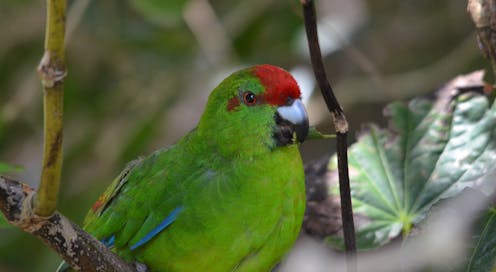
In our recent research, my colleagues and I observed Norfolk Island green parrots applying chewed pepper tree bark and shoots to their feathers and skin during preening. We believe this is a rare example of a bird using plant matter to rid themselves of parasites. But there may be more to it. These birds do seem to be enjoying themselves.
For more than a century, scientists have puzzled over the purpose of anting. When birds engage in this behaviour, they either actively spread ants or simply allow ants to move through their feathers. In defence, the ants release formic acid. Could birds be getting high on the fumes?
Maybe pepper tree bark has more than medicinal effects too. It’s highly likely such self-medicating is stimulating.
Anointing behaviour in the green parrot (Luis Ortiz-Catedral)Stimulating substances
Both formic acid and piperine (from pepper trees) are pungent chemicals with proven medicinal, antimicrobial and insect-repelling qualities.
Our green parrots appeared extra animated while they busily snipped, chewed and rubbed the pungent pepper tree bark and foliage through their plumage.
Almost a century ago, in 1931, Prussian naturalist Alfred Troschütz noted of anting “the formic acid must have an especially agreeable effect”.
Then, in 1957, US ornithologist Lovie Whitaker concluded the bird she was studying “appeared to derive sensual pleasure, possibly including sexual stimulation” from anting. Her views were quickly dismissed and anting declared “strictly functional”. But is it?
The apparent ecstatic state reached by some anting birds is well known. People often come across Australian magpies with their feathers fluffed, body contorted, perhaps staggering and seemingly unable to respond normally — that is, to flee.

In humans, piperine (the key ingredient in pepper) is mildly stimulating. And several potentially hallucinogenic or mind-altering substances, notably formic acid, have been isolated from ant toxins.
Formic acid has been used to tone the muscles, increase muscular energy and ease the sense of fatigue. In 17th-century Europe, it was the “secret” ingredient in a popular tonic believed to improve wellbeing, calm digestion and increase sexual appetite.
Indigenous groups across southern California used red harvester ants for medicinal purposes as well as religious rituals. The ants were ingested alive, in massive quantities, to induce prolonged catatonic states punctuated by hallucinogenic visions.
 Green parrots on Norfolk Island appear to enjoy anointing themselves with chewed pepper tree bark.
Neil Tavener
Green parrots on Norfolk Island appear to enjoy anointing themselves with chewed pepper tree bark.
Neil Tavener
Flying under the influence
Many birds become intoxicated after eating fermented fruits and berries. Their drunken state is often detected when they collide with windows or cars, get caught by cats while in a stupor, or suffer from alcohol poisoning.
In 2021, about half a dozen drunk red-winged parrots were handed in to Broome Veterinary Hospital in Western Australia after feasting on overripe mangoes. Many more never made it to the clinic.
The drunken reputation of the Kereru saw it voted in as New Zealand’s Bird of the Year in 2018. This pigeon is known for occasionally becoming tipsy, even falling out of trees.
Inebriated kererū pigeons binge on fruit punch (Guardian News, 2018)All of these pissed parrots and pigeons lend themselves to jokes about party animals, but there is a deeper evolutionary context to such behaviour.
As fruit ripens it becomes sweeter and more nutritious. At the same time, the sugar ferments and is converted into alcohol (ethanol). So the concentration of alcohol increases.
Volatile compounds (alcohols) produced during fermentation can be carried in the air, helping birds locate the rich food source. Ethanol is also a source of energy in its own right and stimulates the appetite.
Fruit eaters including birds, our human ancestors and other animals may have come to associate the presence of ethanol with a sugar hit and mild pleasure. In turn, the fruit eaters reward the fruit or nectar producing plants by dispersing seeds, or facilitating cross-pollination.
This evolutionary explanation for an attraction to alcohol is sometimes referred to as The Drunken Monkey Hypothesis, first suggested by US biologist Robert Dudley.
Eat, drink and be merry
While some birds are inclined to imbibe, it seems most can handle their liquor. Like humans, their central nervous system may well reward moderate alcohol consumption, making them feel less fatigued, more relaxed and sociable.
Such pleasure-seeking may seem like an evolutionary dead end, but nature generally contrives to limit availability to alcohol. Stimulation is mild and cases of drunken excess are the exception. The latter often occur in situations where the fleshy fruits are in abundance, other food is scarce or conditions have produced unusually high sugar content, which yields an extra potent brew when it ferments. Often, the boozy casualties are young birds. Sound familiar? Just as well smart birds haven’t figured out how to distil alcohol.
Likening green parrots rubbing aromatic vegetation through their plumage to inebriated pigeons falling from trees may seem a stretch. But nature rewards behaviour that offers evolutionary advantage, often, it seems by tapping into animals’ pleasure centres. The pursuit of pleasure is an important, usually overlooked, aspect of animal behaviour, worthy of attention and further research.
Authors: Penny Olsen, Honorary Professor in Ecology and Evolution, Australian National University

















