
Spotify’s audiobook bundle has reduced music royalties. The music industry is fighting back – and authors have questions too
- Written by: Millicent Weber, ARC DECRA Fellow and Senior Lecturer in English, Australian National University
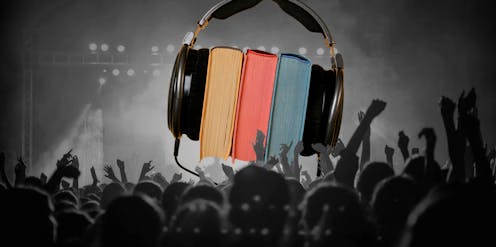
Audio streaming giant Spotify, one of the world’s largest audio platforms, entered the audiobook market last October, offering its premium subscribers 15 hours per month of free audiobook listening. But audiobook bundling has led to reduced royalties for songwriters.
Last month, the National Music Publishers’ Association, which represents music publishers and songwriters, filed a complaint with the US Federal Trade Commission, calling the bundle “a scheme to increase profits by deceiving consumers and cheating the music royalty system”.
Under the US system, the “bundle” classification allowed Spotify to pay a discounted rate to songwriters, as books and music are under the same subscription price. It’s suggested payments to songwriters could drop by US$150 million over the next year.
In the US last month, Spotify introduced a new “Basic” tier, which excludes audiobooks, and an Audiobooks Access tier. So far, its Australian offerings remain the same.
The music industry fight is, however, not the only controversy associated with Spotify’s entry into audiobooks. Book publishers and authors are also concerned about how audiobook streaming might affect how authors are paid and their rights over their work.

More than a third of Australians listen to audiobooks
Australians are listening to more audiobooks than ever before. This year, it’s expected audiobooks will surpass ebooks in sales for the first time. In Australia, more than a third of the population (34%) listen to audiobooks.
Audiobooks make reading more accessible for vision-impaired readers, and for readers with disabilities such as dyslexia or ADHD. Research conducted by Creative Australia shows audiobooks are more popular with younger readers, men, and readers who are Indigenous or from culturally and linguistically diverse backgrounds.
Audiobooks’ increasing popularity has, like the rise of podcasts and other forms of audio, been driven by the rapid uptake of smartphones. Pre-digital audiobooks circulated on vinyl, cassette or CD, as well as specialised talking-book formats for vision-impaired readers. Popularity was limited, as audiobooks in these forms were unwieldy.
In 2024, audiobook listening is shaped not by physical media, but by digital production and distribution platforms, like Audible and now Spotify. With audiobooks, readers pay to access a vast library of material – but the control of that library ultimately resides with the platform that hosts it.
Does Spotify impact authors’ pay?
Spotify pays out royalties after 10% or more of a book is listened to, according to Publisher’s Weekly. This is similar to its music royalty model, which only pays after more than 30 seconds of a song has been listened to.
Spotify reported significant operating losses in 2023 due to the start-up costs of its audiobook venture, and claims to have paid “tens of millions” of dollars to audiobook rights holders. Despite this, many are concerned.
“The streaming of audiobooks competes directly with sales and is even more damaging than music streaming because books are typically only read once, while music is often streamed many times,” said the UK Society of Authors in a statement.
The Australian Society of Authors responded to Spotify’s audiobook launch by saying they want to ensure remuneration to authors is fair.
While “all of the major” book publishers had agreed limited streaming deals with Spotify, the UK Society of Authors said, “most licences given to publishers for licensing of audio do not include streaming”. As far as it was aware, agreements were made without approaching authors or their agents, and authors had not been consulted on licence or payment terms.
The audiobook players
The biggest audiobook platform, both in Australia and internationally, is Audible, owned by Amazon. Audible Australia boasts a catalogue of “over 400,000 titles”. Monthly membership (A$16.45) includes one credit per month to purchase and download an audiobook title (with an option to then purchase more).
Other commercial options available in Australia include a monthly subscription to Rakuten Kobo, which advertises a catalogue of over 150,000 audiobook titles and follows a similar “credits plus purchases” system, and Scribd.
 Michelle Bridges reading an excerpt for the audio version of her book.
One Green Bean/AAP
Risking loss of intellectual property
Major global corporations have unprecedented control over cultural products, including books and audiobooks. Minor shifts for consumers, like Spotify’s new audiobook offering, can signal and accompany tectonic changes for creators, affecting things like their income and their rights over their work. These changes are amplified for creators in specific regions, like Australia.
In 2021, Spotify acquired Findaway Voices, a production and distribution company for self-published authors. Findaway had been the major independent alternative to the Amazon-owned Audiobook Creation eXchange (ACX). The production side of both companies included a marketplace where authors could find and collaborate with narrators.
Spotify maintained both the production and distribution sides of the business until late 2023. Then it quietly closed doors on production and rebranded. The distribution arm is now officially called “Findaway Voices by Spotify”.
In February 2024, to the general alarm of independent authors, Findaway updated its Terms of Use to stipulate that authors using their services “grant Spotify a non-exclusive, transferable, sublicensable, royalty-free, fully paid, irrevocable, worldwide license” to “reproduce, make available, perform and display, translate, modify and create derivative works” from their work through any medium.
This new agreement encroached on a range of intellectual property rights – in a big way. For example, Spotify was suddenly able to distribute these audiobooks, regardless of authors’ original licensing agreements with Findaway. Spotify could also use them to “create derivative works” – which potentially includes using these audiobooks to train AI models.
Effectively, this puts authors in breach of their own exclusivity arrangements with the likes of Audible.
Findaway quickly dialled back the language in response to the outcry. But there are still concerns about the reach of their new terms.
Alternative options for readers
The good news is Australian readers can also download audiobooks through their local library services, using specialised apps like Borrowbox, created by Australian audiobook production company Bolinda, or Libby.
Publishers have traditionally worried the availability of digital books and audiobooks through libraries will eat into sales. But libraries are charged significantly higher rates than consumers, for tightly controlled licenses to circulate copies.
What about other ways audiobook listeners can make choices designed to help support creators? Companies like Libro.fm offer an alternative to Audible or Spotify, splitting profits 50/50 with local independent bookstores, which it invites users to nominate.
Independent and non-commercial channels like Libro might be less visible or have a smaller range than Audible or Spotify – but supporting them helps build a thriving local book culture.
Authors: Millicent Weber, ARC DECRA Fellow and Senior Lecturer in English, Australian National University