

When transmission lines fell, 16 electric vehicles fed power into the grid. It showed electric vehicles can provide the backup Australia needs
- Written by: Bjorn Sturmberg, Senior Research Fellow, Battery Storage & Grid Integration Program, Australian National University
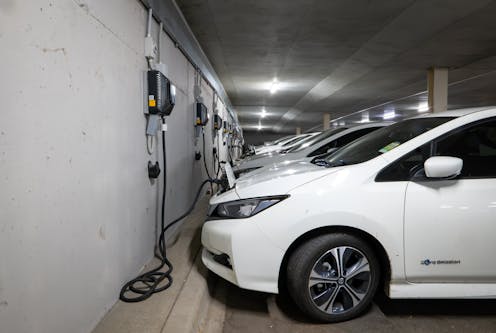
Electric vehicles are an increasingly common sight on Australian roads. Each one cuts carbon emissions by half compared to fossil fuel vehicles, but increases household electricity use by 50%.
This extra electricity demand could be a major strain on the grid unless the charging of vehicles is coordinated. But the large batteries in electric vehicles could also be enlisted to discharge power to the power grid when needed. The average electric vehicle battery stores more than two days worth of household electricity, so this could have a big effect.
Over the past five years I’ve been a part of the Realising Electric Vehicle-to-grid Services (REVS) project to establish the technology to do this in Australia.
This project utilised 50 ACT government-owned Nissan LEAF electric vehicles and chargers across Canberra. Another project partner, JET Charge, set up the chargers to monitor the state of the electricity system. Electricity retailer ActewAGL programmed the chargers to discharge short bursts of power to the national grid on the rare occasions it rapidly loses power generation.
Such a grid emergency happened on February 13 this year. A storm blew over high-voltage transmission towers west of Melbourne, triggering the disconnection of Loy Yang coal power station and two wind farms.
The results of this real-world test prove a vehicle-to-grid system can work. The vehicles quickly discharged power when the generators disconnected. However, the results also highlight the need to be smarter about how all electric vehicles charge, especially during such emergencies.
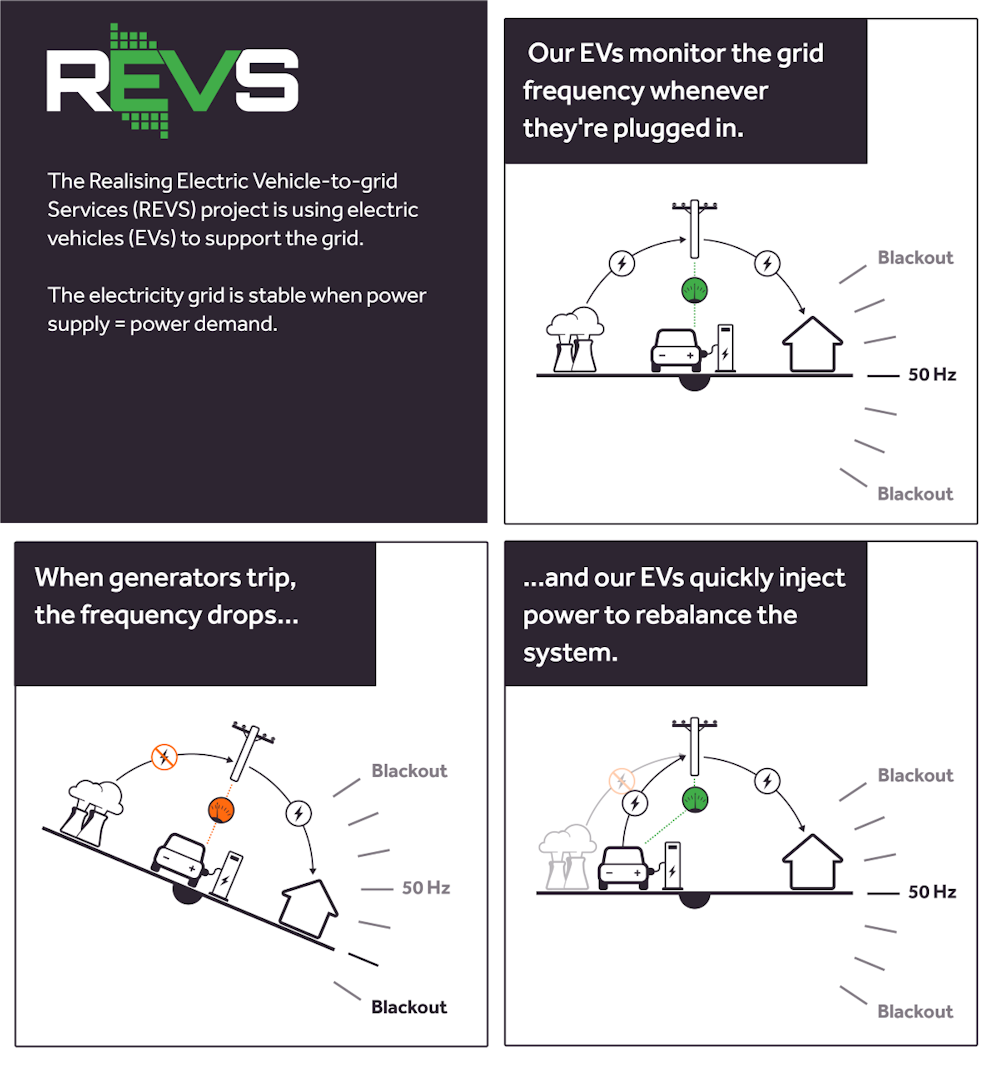
Vehicle discharging to the rescue
At the time of the event, around 1pm, 16 electric vehicles from our fleet were plugged in to chargers at six properties across Canberra. Four vehicles were charging, 12 were idle.
When the power generators disconnected, that created an immediate shortage of power supply in the national grid.
The chart shows how the 16 vehicle-to-grid-enabled vehicles responded. They quickly switched from charging to discharging power into the grid, as our system set them up to do.
In total, the 16 vehicles provided 107kW of support to the grid. This was the first time in the world such a vehicle-to-grid response to a grid emergency has been demonstrated.
For context, we would need only 105,000 vehicles providing such a response to fully cover the typical spare capacity in the NSW and ACT system used to balance supply and demand when an unexpected event occurs. We already have more than 200,000 electric vehicles on Australian roads. Of these, 98,436 new electric vehicles were sold last year and more than 40,000 in the past five months.
The REVS vehicles kept discharging for ten minutes. This is in line with the electricity market rules, which specify that devices should respond for ten minutes.
What came next is a warning that more needs to be done to manage electric vehicle charging.
Timing makes all the difference
The growing demand for vehicle charging raises the question: how can we manage charging to meet the needs of both drivers and the electricity system?
Part of the answer is to manage the rate and timing of charging. The grid won’t be able to cope with everyone charging their vehicles at the same time when they get home of an evening.
And grid security and disconnected customers don’t benefit from vehicles charging when there’s not enough power to supply all customers.
In February, once the vehicles had discharged power for ten minutes, nine vehicles started charging. This is because their default behaviour is to charge when their batteries are below a certain level. It’s the last thing the power system needs while trying to stabilise.
The six vehicles that switched to an idle state after ten minutes must have still had enough energy in their batteries. That one vehicle kept discharging for ten more minutes was due to a software bug.
What’s more, when we looked at data from other ACT government vehicles parked in these properties, we found 23 were charging throughout the event. Again this directly obstructs power system recovery.
There would have been absolutely no inconvenience or cost for the vehicles to delay charging for an hour or two.
Stopping 6,000 vehicles charging (at 5kW) could have kept the power on for the 90,000 customers whose power was cut that afternoon. However, electric vehicles in Australia have not been set up to respond to grid emergencies.
Securing the grid in an all-electric future
Electrifying our homes’ stoves, vehicles, space and water heaters is essential for the transition to a zero-emissions future. But we need to better design how all these devices interact with the electricity system that powers them.
Devices that aren’t needed urgently should not use power when the grid is stressed. Instead, they should use power when there is ample renewable supply.
Our results show vehicle-to-grid can be a powerful contributor to power system security. At the same time, they highlight the need to make better use of any available flexibility in the timing of when certain appliances use power.
Electric vehicle charging is the largest opportunity but electric hot water heaters could also make a big contribution without causing inconvenience. These vehicles and heaters offer exceptionally efficient and effective ways to create a more resilient and clean electricity system.
For vehicles, our related research indicates that better engaging the auto industry is a crucial missing link. Car salespeople and fleet managers introduce drivers to electric vehicles and shape their expectations of how these vehicles are to be used.
Approaching the issue from the auto side, we could update the Australian Design Rules to require that vehicle manufacturers make electric vehicles stop charging automatically during a grid emergency (with a driver override for urgent charging).
Authors: Bjorn Sturmberg, Senior Research Fellow, Battery Storage & Grid Integration Program, Australian National University


















