

here’s what’s in NSW’s biodiversity reforms
- Written by Hugh Possingham, Professor of Conservation Biology, The University of Queensland
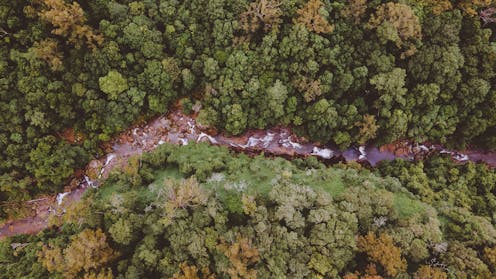
The laws designed to protect the environment in New South Wales are completely ineffective, according to the scathing Henry Review in 2023.
In response, the state government this week announced a major overhaul of the Biodiversity Conservation Act, introduced in 2016. The Minns govermment has committed to introducing 49 of 58 recommendations made by the review, either in full or in part.
First up will be reform of biodiversity offsets – the easily gamed and largely ineffective requirement for developers to offset their destruction of vital habitat with gains elsewhere.
The state government is also promising to align reformed biodiversity laws with national and international goals, and set goals and targets to tackle threats, bring species back from the brink, and conserve landscapes at scale.
Good news? Certainly – especially given the federal government has delayed reforms to national biodiversity laws. But there are still big gaps – especially around how to actually stop land clearing, which is a major driver of species and ecosystem loss in the state.
These changes are essential, if we are to curb rapid and increasing rates of nature loss. Without them, around 500 species are predicted to become extinct in NSW over the next century and many nature-dependent industries – such as tourism, water supply and agriculture – will suffer.
How do you fix the offset problem?
Offsets are popular with governments because they offer the possibility of having your cake and eating it too. You want to develop a prime chunk of waterfront land, even though there are endangered koalas feeding in the trees? That’s fine, as long as you protect and improve koala habitat elsewhere to create an environmental gain equal to your destructive impact.
Well, that’s the theory. In reality, research has demonstrated offset projects rarely achieve their promise of enabling development with no net-loss of biodiversity.
Researchers have found biodiversity offsets in NSW are permitting major biodiversity losses to occur now in return for a “promise” of uncertain future gains.
The biodiversity value of 21,928 hectare of habitat already cleared under this policy in exchange for averting loss’ elsewhere is estimated to need 146 years to be regained.
The Minns government committed to reforming the biodiversity offsets scheme before winning the election. It will be the first nature law reform pushed through NSW parliament this year, while other reforms are not expected to reach state parliament until 2025.
So what are these proposed reforms? Key measures include:
requiring developers to take genuine steps to avoid and minimise impacts on biodiversity, before moving to offset their impact
making payments into a biodiversity conservation fund only as a last resort. At the moment, developers often just make a payment to the government fund to “balance” their impact
closing a loophole where mining companies can claim a “discount” against their environmental impact if they have plans to rehabilitate the mine site in future
increasing transparency through public reporting.

What else has the government promised?
Other important promises in the NSW government’s plan include:
bringing the state’s Biodiversity Conservation Act in line with national and international biodiversity conservation goals
introducing a new nature strategy with targets for tackling threats, recovering threatened species, conserving landscapes and working to restore and connect fragmented landscapes across public and private land
reviewing conservation programs to boost restoration efforts and support the goal of no new extinctions
increasing recognition of First Nations cultural values and connection to Country, including bringing traditional ecological knowledge into environmental assessment processes
expanding private land conservation agreements to recognise and protect Aboriginal cultural values and traditional ecological knowledge.
What was missed?
While these measures are positive, there’s one big gap – the failure to take stronger action against native vegetation clearing.
The speed at which intact natural habitat is being destroyed in NSW has actually increased since the current biodiversity laws were introduced in 2016.
The NSW Government’s own data show almost 100,000 hectares of native vegetation was cleared every year after the act was introduced.
This is equivalent to a strip of land the entire length of the NSW coastline and almost 1 kilometre wide being cleared – every year.
The lion’s share (83%) of the clearing was done for farming, though infrastructure claimed 10,000 hectares and forestry claimed more than 6,000 hectares a year.
This week’s announcements included a commitment to review vegetation clearing codes. This is a welcome step but much more needs to be done to stop the large scale loss of habitat for native animals and plants in the state.
Stopping the routine clearing of native vegetation will require both carrots and sticks – incentives and regulations.
Clashing laws
There’s another unresolved problem. The Henry Review found the effectiveness of the state’s biodiversity laws are being actively undermined by other state laws. When environmental conservation and economic growth clash, the economy usually wins.
While the environment minister can comment on major projects with environmental impact, such as mine sites, in many cases their concerns can be ignored by other ministers and the project can be approved even if the environment minister objects. This needs to change.
Genuinely protecting native species and ecosystems in NSW means the government has to elevate the environment as a priority with an equal seat at the table during decision making.
 The Darling River near Brewarrina, NSW was in a poor state in 2019, as natural low flows combined with extraction for irrigation.
Jaana Dielenberg
The Darling River near Brewarrina, NSW was in a poor state in 2019, as natural low flows combined with extraction for irrigation.
Jaana Dielenberg
No-go zones for development
The Minns government announced it would increase the consideration of biodiversity in planning by producing maps which identify areas of current and future high biodiversity value.
This is a step in the right direction. But the government did not take up the review’s recommendation to institute development no-go zones around natural places of particular value, such as vital Ramsar-listed wetlands and critical habitat of threatened species.
No-go zones would provide clarity for developers and protect the habitat of our most critically threatened native species.
Progress – from a very low base
So how should we see these reforms? It’s progress, most certainly – but starting from a very low base.
The natural infrastructure (functioning ecosystems, habitats and species) that underpin the economy and wellbeing of NSW has been steadily eroding since European arrival. The health of 90% of Murray Darling Basin rivers is rated poor or worse. Some 78 species have been driven to extinction and at least 1,000 more risk the same fate.
Without major reform, half of these species are projected to go extinct over the next century, according to the Henry Review.
We often take biodiversity for granted. Trees, shrubs, mammals, birds, insects, fish – they’ll always be there. But the natural world can only take so much punishment. Humans are also part of the natural world. We rely much more on functioning ecosystems than we would like to think, to provide clean water and air, pollinate and grow our crops, and attract tourist dollars.
Read more: What will Australia's proposed Environment Information Agency do for nature?
Authors: Hugh Possingham, Professor of Conservation Biology, The University of Queensland

















