

The Chinese coal 'ban' carries a significant political message
- Written by: Tony Walker, Adjunct Professor, School of Communications, La Trobe University
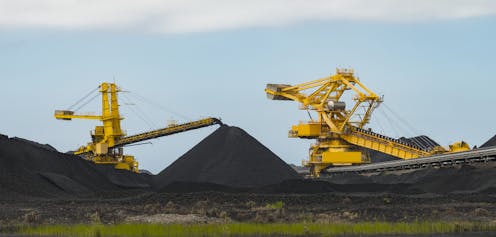
As a standoff over Australian coal shipments through the northern Chinese port of Dalian continues, it underscores the extent of Australia’s economic dependence on China.
One-third of all Australia’s exports globally are China-bound.
Market reaction to a Chinese coal “ban” was telling and reflected concerns about an over-dependence on one client.
The Australian dollar tumbled before recovering. Coal producers were pegged back.
Initially, the decision was attributed to local customs officials, but this misunderstood the nature of the Chinese regime.
No decision to restrain imports from China’s largest supplier of raw materials would be taken without the imprimatur of the leadership in Beijing.
While the freeze on Australian coal imports through Dalian may prove to be a short, sharp shock, what China’s action does convey is a message that Beijing can turn an import spigot on and off at will.
Why it might have chosen now to remind Australia of its vulnerability to central planning decisions, arbitrarily applied, is not clear. But it’s reasonable to speculate that politics is involved.
Read more: Huawei executive's arrest will further test an already shaky US-China relationship
What is notable about China’s action is that it does not, at this stage, affect Russian and Indonesian coal imports. Australia appears to have been singled out.
Australia is far and away the world’s largest coal exporter. It accounts for more than 20% of China’s coal imports, the bulk of it thermal coal for greedy power stations.
China’s foreign ministry has said there is no “ban” on Australian coal imports through the Dalian port. But with demurrage charges mounting on coal carriers obliged to stand offshore for 40 days or more, use of the word “ban” is moot.
If politics is a factor, then several possibilities present themselves in what has been a rocky relationship over the past several years. Beijing could be signalling its displeasure over Australia’s decision to bar the technology company Huawei from participating in the build-out of Australia’s 5G communications network.
Other possible causes of Chinese unhappiness include Canberra’s decision to deny a re-entry permit to Australia for businessman Huang Xiangmo. This follows a decision to deny Huang Australian citizenship on grounds that his links with the Chinese Communist Party render him a security risk.
Delicate late-stage negotiations between the US and China on trade could also be a factor. Beijing might regard meting out a bit of grief to one of America’s closest allies as a reminder of its ability to exact retribution if things do not go its way.
Then there are the twin issues of the South China Sea and China’s push into the southwest Pacific.
Canberra is a persistent – if low-key – critic of Beijing’s militarisation of disputed territory in waters that are subject to claims and counter-claims before international tribunals.
These waters span trade routes through which the bulk of Australia’s seaborne trade passes to its markets in north Asia, including trans-shipment points like Dalian.
Beijing will also not have overlooked a vigorous campaign against its interests being waged by elements of the Australian foreign and security policy establishment.
At the forefront of this criticism is the government-funded Australian Security Policy Institute. ASPI spokespeople have focused particularly on China’s alleged breaches of cyber security.
Sections of the Australian media, feeding off ASPI criticism of cyber breaches, will have added to Chinese displeasure.
Then there are irritants like the continued detention on security grounds of Chinese-Australian writer Yang Hengjun. Yang has been a persistent critic of the Communist Party.
While a freeze initiated by Beijing – during which no senior Australian official visited China for high-level talks for the better part of two years – has been lifted, relations remain problematic.
Foreign Minister Marise Payne went to Beijing late last year for talks with her Chinese counterpart. These were designed to “re-set” the relationship. But episodes like the “ban” on coal shipments foreshadow further difficulties in the Sino-Australia relationship as China’s power and influence grow.
Read more: Australia and China push the 'reset' button on an important relationship
Other explanations offered for what appeared to be, on the face of it, arbitrary action against Australian coal shipments relate to pressures on China’s hard-pressed domestic producers.
In a slowing Chinese economy, competition from higher-quality and competitively priced imports has battered domestic coal producers.
In other words, a number of factors are likely to have been at play in China’s decision to halt Australian coal imports through Dalian, if only temporarily.
Read more: Australian-Chinese author's detention raises important questions about China's motivations
These coal shipments, it should be noted, amount to a relatively small proportion of the 300 million tonnes shipped annually.
About 7 million tonnes passes through Dalian. This is coking or metallurgical coal for the steel industry, to distinguish it from thermal coal for power generation.
In 2017-19 coal exports to China were worth about A$13 billion, second only to exports of A$50 billion of iron ore and concentrates.
However, if the ban spreads to other ports Australian exporters will have cause for much deeper concern.
Uncertainties among Australian exporters are not helped by an opaque Chinese system that denies transparent explanations – unless it suits Beijing – of actions that are unfriendly to its trading partners.
China’s slowdown in imports of Australian wine last year is a case in point. The problem has eased, but the episode unnerved wine exporters whose production is geared significantly to a booming Chinese market.
Australian officials will also be concerned about action taken against Canadian nationals who have been detained in apparent retaliation for Canada’s arrest – pending extradition to the US – of the daughter of the Huawei founder.
Meng Wanzhou, Huawei’s chief financial officer, has been fighting extradition through the courts in Vancouver to prevent her removal to the US, where she has been charged with violations of sanctions against doing business with Iran.
The arrest of two Canadians – former diplomat Michael Kovrig and businessman Michael Spavor – for allegedly endangering China’s national security is widely viewed as retaliation against Canada for the arrest of Meng.
What all this tells us is that dealing with a more nationalistic, assertive and ruthless China in pursuit of what it regards as its national interests will become more, not less, difficult.
Western officials can talk about a rules-based international order until they’re blue in the face, but if the rules don’t correspond with Beijing’s own preferences, then chances are it will disregard them.
This is a reality that has taken some time to impress itself on those who might have believed that encouragement to China to live up to expectations of it becoming a “responsible stakeholder” will survive an encounter with Chinese self-interest.
In that regard, Beijing and Washington are not dissimilar in a new era in which a more nationalist US is shunning multilateral trading agreements like the Comprehensive and Progressive Agreement for Trans Pacific Partnership and looking to a narrower self-interest.
The new US-China trade deal is set to be concluded next month. You can be sure that interruptions to Australian coal shipments to China will be very far from their concerns.
Authors: Tony Walker, Adjunct Professor, School of Communications, La Trobe University
Read more http://theconversation.com/the-chinese-coal-ban-carries-a-significant-political-message-112535

















