

an expert recommends the best books, journals, podcasts and commentators
- Written by Brendon O'Connor, Professor in U.S. Politics and U.S. Foreign Relations, United States Studies Centre,, University of Sydney
Donald Trump apparently prefers to watch television over reading anything at all. As president, some reports claimed, he spent up to seven hours a day watching television news shows, but had little interest in reading the flow of top secret briefings (including tapped phone conversations of various world leaders) that previous presidents had relied on to make decisions.
Since Trump formally entered American politics, however, reading about him has become a widely recognised hobby, accompanied with significant amounts of fear and loathing for most people living outside of the United States. In many ways, reading about Trump and the upcoming US presidential election is a civic duty in such consequential and worrying times.
I have put together this guide to help people follow the presidential election – and better understand the social, cultural and political forces that have led to Donald Trump being viewed by millions of Americans as the answer to their political concerns.
Columnists
The single best journalist covering the US presidential elections this year has been Thomas Edsall. I have been reading his work since I discovered his book The New Politics of Inequality (1984). Edsall has a regular guest column with the New York Times, in which he summarises relevant research from academics on the presidential election and editorialises about these findings based on email exchanges with those academics.
Recent columns on partisanship and the gender gap in voting preferences among the young and the old have been particularly insightful. Reflecting on surveys that consistently show the majority of American men supporting Donald Trump over any likely Democratic candidate, I was reminded of Naomi Alderman’s novel The Power (2016), in which women exact revenge on men for centuries of oppression and stupidity.
The New York Times opinion poll analyst Nate Cohen is also consistently worth reading, as are the columns of Aaron Blake on opinion polling for the Washington Post. For breaking news as well as insider takes, the news service Axios is worth signing up to.
Robert Reich’s regular substack posts are well written and informative. Some get picked up by newspapers, like this piece on Elon Musk’s financial support of Trump’s campaign. Reich was Bill Clinton’s Secretary of the Department of Labor and a fellow Rhodes scholar at Oxford with Clinton back in the 1960s. At 78 years old, he is still as sharp as a tack and writes with a real passion for a fairer America.
Other worthwhile substacks include the Old Goats and Forever Wars, which provide a wealth of information in a short and chatty format delivered right to your inbox. On Middle Eastern politics and its impact on the election, I subscribe to the paid version of Peter Beinart’s substack, which is excellent value for money.
For those wanting prison humour and a spiky take on events, I recommend Guy Rundle’s Crikey columns on US politics. He described the first presidential “debate” between Trump and Joe Biden, which set in train events that led to Biden stepping down as a candidate, as at first an “audition. Then it became a physical fitness examination. By the conclusion, it verged on being a coronial inquiry.”

Magazines and journals
The excellent journal The American Prospect consistently focuses on the most important policy issues and rewards regular reading, as does The Atlantic, which Trump called a “third-rate magazine that’s failing” in the first presidential debate. Jeffrey Goldberg, editor of the Atlantic, has come in for special criticism from Trump at recent rallies for publishing statements from military advisers who claimed that President Trump called Americans who died during World War I in France “losers” and “suckers”.
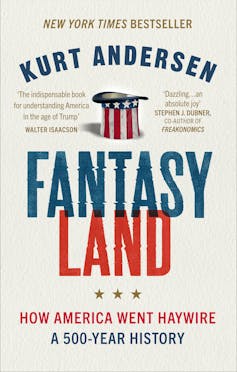
My favourite piece from the Atlantic in recent years is an article by Kurt Andersen on disinformation and conspiracy theories called How America Lost Its Mind, which was subsequently developed into his book Fantasyland: How America Went Haywire (2017).
 Andersen makes the fascinating argument that America is particularly open to lies and conspiracies in politics and public life because of its history of evangelical religion. The development of the counterculture in the 1960s, with its emphasis on uncovering conspiracies in the American government and interest in alternative medicine and spirituality, has also played a role. Andersen sees the current crisis of legitimate authority and the power of disinformation in America as the result of a heady mix of these two seemingly contradictory forces.
Andrew Marantz in the New Yorker has done an excellent job of exploring the role of the internet in spreading disinformation and political hatred. His book Antisocial: Online Extremists, Techno-Utopians, and the Hijacking of the American Conversation (2019) is also a must read on this topic, as it offers particular insight into alt-right internet communities, with their culture of trolling and ability to spread disinformation very widely.
There is almost a “punk” spirit to this destructive element of Trump’s success, as James Parker has argued. Marantz shows how a small and motley collection of internet trolls, who are racist, sexist and dishonest, have had an outsized influence on American politics – all the while claiming their acts are either one big joke or motivated by revenge.
Andersen makes the fascinating argument that America is particularly open to lies and conspiracies in politics and public life because of its history of evangelical religion. The development of the counterculture in the 1960s, with its emphasis on uncovering conspiracies in the American government and interest in alternative medicine and spirituality, has also played a role. Andersen sees the current crisis of legitimate authority and the power of disinformation in America as the result of a heady mix of these two seemingly contradictory forces.
Andrew Marantz in the New Yorker has done an excellent job of exploring the role of the internet in spreading disinformation and political hatred. His book Antisocial: Online Extremists, Techno-Utopians, and the Hijacking of the American Conversation (2019) is also a must read on this topic, as it offers particular insight into alt-right internet communities, with their culture of trolling and ability to spread disinformation very widely.
There is almost a “punk” spirit to this destructive element of Trump’s success, as James Parker has argued. Marantz shows how a small and motley collection of internet trolls, who are racist, sexist and dishonest, have had an outsized influence on American politics – all the while claiming their acts are either one big joke or motivated by revenge.
 The best books
Many non-Americans are inclined to ask what is wrong with the Republican party. Why has it become so delusional and destructive? Is it Trump’s fault, or was this happening before Trump?
Nicole Hemmer’s Partisans: The Conservative Revolutionaries Who Remade American Politics in the 1990s (2022), Geoffrey Kabaservice’s Rule and Ruin: The Downfall of Moderation and the Destruction of the Republican Party, From Eisenhower to the Tea Party (2011), and John Ganz’s When the Clock Broke: Con Men, Conspiracists, and How America Cracked Up In The Early 1990s (2024) all persuasively show that the roots of the Republican turn to the hard right date from well before Trump.
On the madness of the Republican party during the Trump years, Tim Alberta has written two of the best deeply sourced books: American Carnage: On the Front Lines of the Republican Civil War and the Rise of President Trump (2020) and The Kingdom, the Power, and the Glory: American Evangelicals in an Age of Extremism.
The best books
Many non-Americans are inclined to ask what is wrong with the Republican party. Why has it become so delusional and destructive? Is it Trump’s fault, or was this happening before Trump?
Nicole Hemmer’s Partisans: The Conservative Revolutionaries Who Remade American Politics in the 1990s (2022), Geoffrey Kabaservice’s Rule and Ruin: The Downfall of Moderation and the Destruction of the Republican Party, From Eisenhower to the Tea Party (2011), and John Ganz’s When the Clock Broke: Con Men, Conspiracists, and How America Cracked Up In The Early 1990s (2024) all persuasively show that the roots of the Republican turn to the hard right date from well before Trump.
On the madness of the Republican party during the Trump years, Tim Alberta has written two of the best deeply sourced books: American Carnage: On the Front Lines of the Republican Civil War and the Rise of President Trump (2020) and The Kingdom, the Power, and the Glory: American Evangelicals in an Age of Extremism.
 Alberta offers particular insight into why Republican politicians continued to support Trump after everything they know about him and everything he has done. The short answer is that they are fearful of Trump and his supporters. They are fearful that he will make them irrelevant and thus starve them of attention. They are fearful he and his supporters can end their careers by directing support away from them in Republican Party primaries, or just threatening to (this ended the career of Republican senator Jeff Flake, a Trump critic). They are even fearful for their lives and those of their families if Trump sets the mob on them.
Another book that is very good on the Republican Party today is Robert Draper’s Weapons of Mass Delusion: When the Republican Party Lost its Mind (2022), which gives a fascinating account of the lunacy of the Arizona Republican party following the death of long-serving senator John McCain in 2018.
Three books are essential reading for those who have the stomach for revisiting Trump’s presidency, the 2020 election and the events of January 6, 2021. These are Peter Baker and Susan Glasser’s The Divider: Trump in the White House 2017-2021 (2023), Maggie Haberman’s Confidence Man: The Making of Donald Trump and the Breaking of America (2022), and Bob Woodward and Robert Costa’s Peril: Trump, Biden and a Nation on the Brink (2021).
Alberta offers particular insight into why Republican politicians continued to support Trump after everything they know about him and everything he has done. The short answer is that they are fearful of Trump and his supporters. They are fearful that he will make them irrelevant and thus starve them of attention. They are fearful he and his supporters can end their careers by directing support away from them in Republican Party primaries, or just threatening to (this ended the career of Republican senator Jeff Flake, a Trump critic). They are even fearful for their lives and those of their families if Trump sets the mob on them.
Another book that is very good on the Republican Party today is Robert Draper’s Weapons of Mass Delusion: When the Republican Party Lost its Mind (2022), which gives a fascinating account of the lunacy of the Arizona Republican party following the death of long-serving senator John McCain in 2018.
Three books are essential reading for those who have the stomach for revisiting Trump’s presidency, the 2020 election and the events of January 6, 2021. These are Peter Baker and Susan Glasser’s The Divider: Trump in the White House 2017-2021 (2023), Maggie Haberman’s Confidence Man: The Making of Donald Trump and the Breaking of America (2022), and Bob Woodward and Robert Costa’s Peril: Trump, Biden and a Nation on the Brink (2021).
 In my view, these three books are necessary to understand the extent of Trump’s lack of respect for democratic norms and the lengths he will go to in order to maintain power. Also well worth reading for its satirising of Trump’s trolling political persona, and for reminding us of Trump’s unapologetic misogyny, is Laurie Penny’s brilliant Bitch Doctrine (2017).
On the question of the loyalty of Trump’s staffers and the wider Republican Party, two books are interesting: Mark Leibovich’s breezy Thank You for Your Servitude: Donald Trump’s Washington and the Price of Submission (2022) and Jonathan Karl’s Betrayal: The Final Act of the Trump Show (2021). The latter makes the bold claim that a number of Trump’s staffers saved America from an attempted coup against democracy after his 2020 election defeat.
The witty and snarky Leibovich is always a lot of fun to read, particularly his earlier book about the Obama era, This Town (2014). Thank You for Your Servitude skewers Republican politicians in the Congress for being sycophantic in their support of Trump. The greatest single error of judgement Republican politicians made from 2017-2021, in my opinion, was not finding Trump guilty during the second impeachment trial and barring him from ever running for office again. Instead, enough of them were cowed by threats and sufficiently concerned about the possible end of their political careers to vote to save him.
For anyone wanting the analysis of academics rather than journalists, I would highly recommend Steven Levitsky and Daniel Ziblatt’s two excellent books How Democracies Die: What History Reveals About Our Future (2018) and Tyranny of the Minority: How to Reverse an Authoritarian Turn and Forge a Democracy for All (2023). These books wisely take a comparative approach to the decline of American democracy during recent times.
In my view, these three books are necessary to understand the extent of Trump’s lack of respect for democratic norms and the lengths he will go to in order to maintain power. Also well worth reading for its satirising of Trump’s trolling political persona, and for reminding us of Trump’s unapologetic misogyny, is Laurie Penny’s brilliant Bitch Doctrine (2017).
On the question of the loyalty of Trump’s staffers and the wider Republican Party, two books are interesting: Mark Leibovich’s breezy Thank You for Your Servitude: Donald Trump’s Washington and the Price of Submission (2022) and Jonathan Karl’s Betrayal: The Final Act of the Trump Show (2021). The latter makes the bold claim that a number of Trump’s staffers saved America from an attempted coup against democracy after his 2020 election defeat.
The witty and snarky Leibovich is always a lot of fun to read, particularly his earlier book about the Obama era, This Town (2014). Thank You for Your Servitude skewers Republican politicians in the Congress for being sycophantic in their support of Trump. The greatest single error of judgement Republican politicians made from 2017-2021, in my opinion, was not finding Trump guilty during the second impeachment trial and barring him from ever running for office again. Instead, enough of them were cowed by threats and sufficiently concerned about the possible end of their political careers to vote to save him.
For anyone wanting the analysis of academics rather than journalists, I would highly recommend Steven Levitsky and Daniel Ziblatt’s two excellent books How Democracies Die: What History Reveals About Our Future (2018) and Tyranny of the Minority: How to Reverse an Authoritarian Turn and Forge a Democracy for All (2023). These books wisely take a comparative approach to the decline of American democracy during recent times.
 The Tyranny of the Minority lays out the argument that anti-majoritarian institutions in the US have far too much power, contending that the MAGA movement, which they estimate to make up 30% of American voters, has disproportionate power given its size.
For those fretting about the 2024 election, books by John Sides and Lynn Vavreck with Michael Tesler and Chris Tausanovich – Identity Crisis: The 2016 Presidential Campaign and the Battle for the Meaning of America (2018) and The Bitter End: The 2020 Presidential Campaign and the Challenge to American Democracy (2023) – are comprehensive accounts of which demographic groups voted for Trump and why.
Identity Crisis focuses on what the authors call the “diploma divide”. Their hunch was that whites without college degrees had abandoned the Democratic party in support of Trump. Subsequent data showed this to be the case. Trump had a 39% advantage among whites without a college degree in 2016. A key reason Biden was chosen as the Democrats’ candidate in 2020 was to combat this Democratic party weakness. The support of male voters of all races without a college degree may take Trump to victory in November this year.
The go-to book on Trump’s likely opponent Kamala Harris is currently her autobiography The Truths We Hold: An American Journey (2019).
The Tyranny of the Minority lays out the argument that anti-majoritarian institutions in the US have far too much power, contending that the MAGA movement, which they estimate to make up 30% of American voters, has disproportionate power given its size.
For those fretting about the 2024 election, books by John Sides and Lynn Vavreck with Michael Tesler and Chris Tausanovich – Identity Crisis: The 2016 Presidential Campaign and the Battle for the Meaning of America (2018) and The Bitter End: The 2020 Presidential Campaign and the Challenge to American Democracy (2023) – are comprehensive accounts of which demographic groups voted for Trump and why.
Identity Crisis focuses on what the authors call the “diploma divide”. Their hunch was that whites without college degrees had abandoned the Democratic party in support of Trump. Subsequent data showed this to be the case. Trump had a 39% advantage among whites without a college degree in 2016. A key reason Biden was chosen as the Democrats’ candidate in 2020 was to combat this Democratic party weakness. The support of male voters of all races without a college degree may take Trump to victory in November this year.
The go-to book on Trump’s likely opponent Kamala Harris is currently her autobiography The Truths We Hold: An American Journey (2019).
 The subtitles “American Journey” or “American Story” or “American Life” are a common way to suggest a life story is the personification of the nation’s story. They have been used in biographies written by or about Ronald Reagan, Sarah Palin, Jerry Garcia, Andrew Mellon, George Kennan, Condoleezza Rice, Burt Lancaster, Martha Washington, Ben Hogan, George Washington, Jesse Owens, Oral Roberts, Bill Clinton, Colin Powell and Benjamin Franklin.
No one person can stand in for a nation’s story or journey, but Harris undoubtedly represents a multicultural America – and an America where immigrants come to seek greater opportunities. Both of her parents gained PhDs in the US and went on to work at leading North American universities.
One of the most interesting chapters of Harris’ book describes the teenage years she spent living with her mother in Quebec. Personal experiences in that period set her on the path to becoming a prosecutor committed to protecting women and children from violence. Harris is well placed to emphasise to Americans just how vile, and criminal, Trump’s record of comments and behaviour towards women has been.
Podcasts
Strictly speaking, listening to podcasts is not reading, but given their rise and rise, a few are worth mentioning.
The Ezra Klein Show and Chris Hayes’ Why is this happening? have great guests. Two recent shows have been particularly insightful about the history and structures of American politics and how these have made the rise of Trump possible – and so frightening. One was Klein interviewing John Ganz about his book When the Clock Broke; the other was Hayes interviewing Ari Berman about his book Minority Rule.
The New Yorker’s Political Scene, which features the excellent Jane Mayer, also helps keep me up to date. To delve deeper, certain episodes of the New Books in Political Science podcast are worth looking out for, such as Stephanie Ternullo talking about her fascinating book How the Heartland Went Red (2024).
The subtitles “American Journey” or “American Story” or “American Life” are a common way to suggest a life story is the personification of the nation’s story. They have been used in biographies written by or about Ronald Reagan, Sarah Palin, Jerry Garcia, Andrew Mellon, George Kennan, Condoleezza Rice, Burt Lancaster, Martha Washington, Ben Hogan, George Washington, Jesse Owens, Oral Roberts, Bill Clinton, Colin Powell and Benjamin Franklin.
No one person can stand in for a nation’s story or journey, but Harris undoubtedly represents a multicultural America – and an America where immigrants come to seek greater opportunities. Both of her parents gained PhDs in the US and went on to work at leading North American universities.
One of the most interesting chapters of Harris’ book describes the teenage years she spent living with her mother in Quebec. Personal experiences in that period set her on the path to becoming a prosecutor committed to protecting women and children from violence. Harris is well placed to emphasise to Americans just how vile, and criminal, Trump’s record of comments and behaviour towards women has been.
Podcasts
Strictly speaking, listening to podcasts is not reading, but given their rise and rise, a few are worth mentioning.
The Ezra Klein Show and Chris Hayes’ Why is this happening? have great guests. Two recent shows have been particularly insightful about the history and structures of American politics and how these have made the rise of Trump possible – and so frightening. One was Klein interviewing John Ganz about his book When the Clock Broke; the other was Hayes interviewing Ari Berman about his book Minority Rule.
The New Yorker’s Political Scene, which features the excellent Jane Mayer, also helps keep me up to date. To delve deeper, certain episodes of the New Books in Political Science podcast are worth looking out for, such as Stephanie Ternullo talking about her fascinating book How the Heartland Went Red (2024).
 For many American politics junkies, the New York Times podcast The Daily is a deserved favourite. A few recent episodes have been the most insightful podcasts I have listened to on the election this year. A recent Daily podcast, for example, explained why Biden was generally behind the widely disliked Trump in most opinion polls. The short answer is that Biden was the status quo candidate in a year where 70% of voters say they want significant change.
Lots of voters do not want the change that Trump is promising, but plenty do, including a group that might decide the election: men of all races who are low information voters. Members of this demographic generally identify as being “conservative”, but do not have particular policy changes in mind when they say they support “change”.
The next administration?
Another worrying Daily podcast examined what the next Trump administration might look like. According to this podcast, and many other accounts of the first Trump administration, the biggest regret Trump had was the lack of loyalty of his staff. Books by Bob Woodward and others have emphasised this. As a result, a second Trump administration is likely to be staffed with younger, more loyal people.
Most commentators are concerned about how Trump will attempt to pervert the Justice Department by mass sackings and unprecedented political interference. But the most disturbing plan associated with a possible second Trump administration is the idea of setting up detention camps for supposedly illegal immigrants. Trump has stated that, if re-elected, many thousands, and possibly millions, of people would be rounded up and put in detention camps before being deported.
Many commentators are also concerned that Trump might put into action the truly frightening and fascistic ideas advocated by the Heritage Foundation’s road map, known as Project 2025: Mandate for Leadership: The Conservative Promise. Emma Shortis has done an excellent job of summarising the 900 page plus blueprint in the Conversation.
But with so many insightful analyses to inform us and help us navigate this worrying time (to misquote a line from REM), it’s the end of the world as we know it – and I’m reading online!
Authors: Brendon O'Connor, Professor in U.S. Politics and U.S. Foreign Relations, United States Studies Centre,, University of Sydney
For many American politics junkies, the New York Times podcast The Daily is a deserved favourite. A few recent episodes have been the most insightful podcasts I have listened to on the election this year. A recent Daily podcast, for example, explained why Biden was generally behind the widely disliked Trump in most opinion polls. The short answer is that Biden was the status quo candidate in a year where 70% of voters say they want significant change.
Lots of voters do not want the change that Trump is promising, but plenty do, including a group that might decide the election: men of all races who are low information voters. Members of this demographic generally identify as being “conservative”, but do not have particular policy changes in mind when they say they support “change”.
The next administration?
Another worrying Daily podcast examined what the next Trump administration might look like. According to this podcast, and many other accounts of the first Trump administration, the biggest regret Trump had was the lack of loyalty of his staff. Books by Bob Woodward and others have emphasised this. As a result, a second Trump administration is likely to be staffed with younger, more loyal people.
Most commentators are concerned about how Trump will attempt to pervert the Justice Department by mass sackings and unprecedented political interference. But the most disturbing plan associated with a possible second Trump administration is the idea of setting up detention camps for supposedly illegal immigrants. Trump has stated that, if re-elected, many thousands, and possibly millions, of people would be rounded up and put in detention camps before being deported.
Many commentators are also concerned that Trump might put into action the truly frightening and fascistic ideas advocated by the Heritage Foundation’s road map, known as Project 2025: Mandate for Leadership: The Conservative Promise. Emma Shortis has done an excellent job of summarising the 900 page plus blueprint in the Conversation.
But with so many insightful analyses to inform us and help us navigate this worrying time (to misquote a line from REM), it’s the end of the world as we know it – and I’m reading online!
Authors: Brendon O'Connor, Professor in U.S. Politics and U.S. Foreign Relations, United States Studies Centre,, University of Sydney 
















