

how fans can best cope with sleep deprivation during major overseas events
- Written by Shona Halson, Associate professor, school of Behavioural and Health Sciences, Australian Catholic University
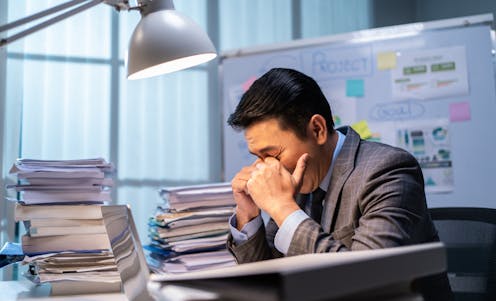
Although the Olympics are an exciting time for sport enthusiasts worldwide, you may be faced with the gruelling test of lining up your viewing schedule with the Paris time zone.
Your sleep schedule might be challenged with late nights and early mornings to catch the live action.
Although thrilling at the time, you may have regrets when the alarm sounds the following day and sleep feels like a distant memory.
Such a scenario is a prime example of sleep deprivation.
What is sleep deprivation?
Sleep deprivation occurs when you do not get the amount and quality of sleep that you need.
The amount of sleep an individual needs can vary but it is typically recommended that healthy adults sleep for seven to nine hours per night.
During this time, you will experience different stages of sleep. Getting the optimal amount of sleep in each stage results in good quality sleep.
But when experiencing sleep deprivation, the duration and quality of sleep is often reduced, which can reduce reaction time and decision-making abilities, disrupt mood and increase risk of accident and injury.
Essentially, you might feel less alert, less productive and a little bit flat after some late night viewing.
Importantly, the negative consequences of sleep deprivation can accumulate over time. You should consider this if you repeatedly cut sleep short when glued to the coverage across the Olympic period.
Sleep deprivation can have many negative impacts on your health.But I have Olympic fever – how can I minimise sleep deprivation?
In similar ways to how athletes compete at night, those of us supporting from home might consider strategies to prepare for late nights and early mornings.
One approach is “banking sleep” which involves extending sleep in the week leading into the period of sleep deprivation. You can think of it as frontloading your sleep prior to the event.
By adding an extra hour or so to your normal sleep period, you may lessen the acute symptoms you experience from sleep deprivation.
Another thing to consider is evening light exposure. Your body’s natural rhythm for sleep and wake is affected by the amount and timing of light exposure. When viewing in the evening and night, consider turning off or dimming overhead lights and other sources of unnecessary light.
Finally, you should consider what you are going to eat and drink while viewing.
Although alcohol may be a popular choice, it can reduce your sleep quality and may worsen sleep deprivation.
Also, when you are sleep deprived, your appetite can change and you may crave foods that are high in sugar. Preparing and having healthy food readily available might minimise the chances of you making poor diet decisions.
By considering the challenges of late nights and early mornings, you can aim to promote good sleep quality even if your duration is cut short.
What about napping … or coffee?
Napping can be a helpful tool if you are sleep deprived.
However, as sleepiness is driven by a brain chemical called adenosine, which increases while you are awake and reduces when you are asleep, it is important to be mindful of the timing and duration of your nap.
The ideal nap time is between 1pm and 4pm, as napping too late in the day can make it harder for you to sleep at night.
Similarly, if you nap for too long, it can also make it more challenging to sleep at night – the ideal nap duration is 20 to 90 minutes. Napping longer than this can be helpful if you are sleep deprived but it can increase the chance that you will experience sleep inertia (the groggy feeling upon waking).
If you are sleep deprived and can’t nap, caffeine may be a suitable alternative to reduce sleepiness.
Caffeine works by blocking adenosine in your brain. This means caffeine can improve mood and performance.
It’s important to be aware that caffeine doesn’t reduce the amount of this chemical, so when it wears off, you can feel extra sleepy and may experience the dreaded caffeine crash.
Another important consideration is the timing and amount of caffeine you consume – caffeine can reduce the quantity and quality of your next sleep episode, so try to limit your intake to the morning if possible.
How long will it take to ‘get back to normal’?
Losing sleep to enjoy the Olympics may mean you will be dealing with added daytime fatigue, and it is important to understand it can increase your risk of having an accident or injury during this time.
This is particularly important if you need to perform tasks that require you to focus and react, such as driving – fatigue is responsible for about 20% of road accidents.
So, if you’re going to sacrifice your sleep to catch the Olympic action, it might be useful to consider public transport options if available.
When the Olympics are finished, the time it will take to re-establish your normal sleep and wake schedule will depend on how different the timing of your interrupted sleep was – that is, if you usually fall sleep at 10pm but stayed up until 11pm, it will take less time to adapt than if you were awake until 1am.
A good idea is to focus on consistent sleep timing as soon as possible. A regular sleep and wake schedule will give you the best chance of getting good quality sleep.
In the meantime, just as the athletes are preparing to give their best performance, prepare your strategies to give yourself the best chance at minimising the effects of sleep deprivation.
Authors: Shona Halson, Associate professor, school of Behavioural and Health Sciences, Australian Catholic University

















