

your heater may be harming your health. What are your safest choices?
- Written by Christine Cowie, Senior Research Fellow, Centre for Air Quality and Health Research and Evaluation, Woolcock Institute of Medical Research, University of Sydney; Senior Research Fellow, South West Sydney Clinical School, UNSW Sydney
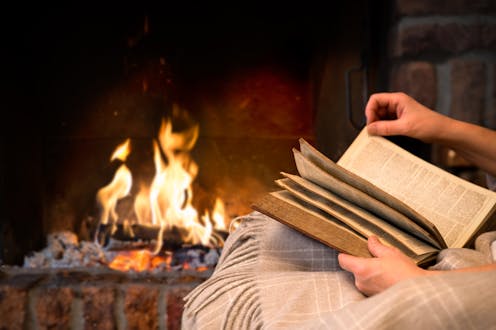
We now have a dizzying array of heating technologies to consider, besides the fire that warmed our ancestors.
Salespeople will highlight any number of features and minor conveniences. You will be made aware of limited-offer discounts, product warranties, trends in certain Nordic countries, or their low cost (at least in the short-term). What you are less likely to read on the box is, well, the stuff that really matters: the long-term effects on your health and the health of your family, your neighbours and the environment.
Yes, a heater should keep you warm affordably. After all, a warm home is vital for your health. But would you run a heater that you knew was increasing the likelihood of your child developing asthma, your partner developing lung cancer, and your neighbour or your grandparent suffering a stroke or heart attack?
Many peer-reviewed studies have found domestic heating to be a major source of air pollution and of ill health in Australia. So which heaters are high-risk and which are low-risk? Let’s consider, firstly, the most dangerous heaters.
Extreme-risk heaters
Two rules reduce the risks:
never burn anything (wood, gas or other fuel) in your home without adequate ventilation such as a chimney, exhaust or flue
never use an outdoor appliance (heater, cooker, barbecue) inside.
Concerningly, a 2022 Asthma Australia survey found 7% of Australians used an unflued gas heater.
When gas or other fuel is burnt indoors it releases a range of particles and toxic gases. Most dangerous of all is carbon monoxide (CO). This colourless, odourless gas can build up in unventilated homes, resulting in serious poisoning and death.
A recent case of carbon monoxide intoxication left three people unconscious in a Sydney home after an outdoor barbecue was used inside as a heater. Outdoor heaters, cookers and barbecues are especially potent sources of carbon monoxide and should never be brought inside.
If you have a gas appliance in your home, even if it is ventilated, install a carbon monoxide alarm for as little as $30.
High-risk heaters
The evidence is now very clear: wood heater smoke is a potent source of air pollution and significant cause of ill-health in Australia.
The more often you burn, the greater the risk. One large population study found even infrequent wood heater use (30 days or more each year) increases the risk of lung cancer by 68%.
Wood heaters spill smoke into the home when refuelling. They also suck smoke from outside back into the home as air is drawn up the chimney.
If you can smell your wood heater, it is harming your health and exposing you to a toxic mix of particles and gases.
For the wider community, the cumulative health impacts of wood heaters are significant.
Less than 10% of Australian households use a wood heater. Yet they are the largest source of particulate air pollution in most Australian cities and towns, including Sydney, Melbourne, Canberra, Adelaide and Hobart. Even in temperate Sydney, wood heaters emit more of this pollution than all the cars, trucks, boats and buses combined, and more than coal-fired power stations and industry.
Centre for Safe Air researchers estimate wood heaters cause between 558 and 1,555 excess deaths a year in Australia. That’s roughly equivalent to the annual road toll.
Fine particles (2.5 microns or less in diameter – also known as PM2.5) are a major component of wood smoke. PM2.5 increases rates of heart disease and stroke, lung disease, dementia and other neurological conditions and asthma attacks. Risks of adverse pregnancy outcomes and poorer learning outcomes in children are also increased.
Low-risk heaters
Evidence suggests there is no “safe” level of air pollution, with health effects seen at very low levels.
Even ducted gas heating, where most of the toxins are ventilated, can expose residents to low levels of PM2.5, nitrogen dioxide (NO2), carbon monoxide and formaldehyde. Over time, this can have a range of health impacts, including worsening asthma and respiratory symptoms.
Burning gas for heating also adds to greenhouse gas emissions.
As Australia transitions to a zero-carbon society, some states and territories are phasing out installation of new wood heaters, such as in the ACT, and gas connections, such as in Victoria. Subsidies to help people replace unhealthy heaters are excellent investments in the environment, public health and health equity.
Healthy heaters
Ultimately, heaters that do not rely on burning fuel inside the home are the safest, and often more affordable, heating option.
A well-maintained reverse-cycle air conditioner, sometimes called a heat pump, actually cleans the air inside your home.
These air conditioners have the additional benefit of cooling your home in summer. As heatwaves become more severe and frequent, efficient cooling is increasingly important for health.
As for affordability, an efficient reverse-cycle air conditioner can be up to seven times as efficient as a gas wall heater in the energy it uses for a given amount of heat.
There are many other electric heating technologies – such as fan heaters, oil column heaters, panel heaters, or infrared heaters – that do not release toxins into the home.
Heater manufacturers are often reluctant to talk about the health impacts of their products, and regulators are slow to catch up with the science.
By thinking about heating in terms of health, you can make your home safer for yourself and the people around you.
After all, there’s nothing cosier than a healthy home.
Authors: Christine Cowie, Senior Research Fellow, Centre for Air Quality and Health Research and Evaluation, Woolcock Institute of Medical Research, University of Sydney; Senior Research Fellow, South West Sydney Clinical School, UNSW Sydney

















