

Queensland’s premier wants publicly owned petrol stations – is that a good idea?
- Written by Graeme Hodge, Adjunct professor, Faculty of Law, Monash University
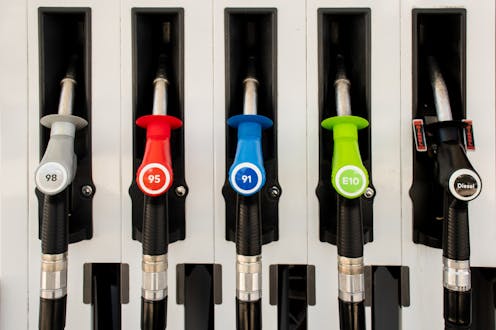
Queensland’s Labor government turned heads last week with a bold new election promise. If returned to power, it would set up 12 state-owned petrol stations and limit fuel price rises to just five cents a litre on any given day.
The proposal certainly tapped into a pain point for Queenslanders – Brisbane topped national petrol price rankings last year.
But it was quickly met with a predictable pile on from opposing political commentators, industry bodies and some economists, attracting labels like “risky” and “dumb and stupid”.
Mark McKenzie, chief executive of the Australasian Convenience and Petroleum Marketers Association, called it a “wildly bizarre intervention” in the retail fuel market.
So is the Queensland premier really out of his mind, trying to win votes less than three months out from an election? Or is there actually some merit to this proposal?
Despite all the alarmism, I strongly suspect the latter.
Our love affair with privatisation
When I first travelled to Denmark two decades ago, I was surprised to discover government-owned petrol stations operating all around the place. At the time, Statoil Fuel and Retail was majority-owned by the Norwegian government.
But there was also little belief that governments ought to privatise and contract out the functions of the public sector.
While the 1990s and early 2000s saw Australia sell off an array of utilities and start up the national electricity market, for example, the Danish were more cautious of such public sector reforms.

History tells us that both our privatisation policies and the economic regulation they entailed were naive and simplistic. Our electricity regulators, for example, were so focused on the detailed structure of our markets that they lost sight of the very thing that mattered most to consumers – the price of electricity.
Investors certainly did well overall through Australia’s privatisations, and financial markets were thrilled. But more often than not, Australia’s citizens found themselves little better off if at all. This turned out to be a common international experience for other countries privatising their utilities.
As it turned out, it was easier to advocate for private markets than to implement them.
Queensland trying to change direction
The Queensland government’s proposal is certainly a bold policy initiative, and it’s worth unpacking.
For a start, it is not a promise to wholly nationalise retail fuel supplies. To the premier’s credit, he reportedly clarified:
We want to first support independents into the market, but where that fails, or where that doesn’t happen quickly enough, we are going to set up state-owned petrol stations.
In other words, the threat of state-owned petrol stations is a warning to existing market players; it’s an option of last resort.
And while it is unclear how a price rise cap would operate and whether this on its own would reduce prices in any case, let’s be honest here. Loud complaints from an industry currently enjoying high petrol prices are completely predictable.
A shifting philosophy
This announcement is best understood as a symbolic move from a government in tune with the views of many voters still grappling with the high cost of living.
It may even be a smart move politically, like we saw with the Victorian government’s promise to reboot the publicly owned State Electricity Commission (SEC) after years of unnecessarily high electricity prices, or the federal government’s 2022 intervention in the national commercial gas market to limit prices.
These policies tapped into voters’ increasing distrust in neo-liberal market ideology – and in the efficiency-obsessed promises of economic advisers and financiers who push the “private sector is always better” rhetoric while taking their cut.
The bigger picture here is important, too. We now live in an age where governments are increasingly constrained by current expenditures, and yet are also subject to higher expectations than ever before.
They come under intense daily pressure from educated and active interest groups and citizens, amid demands for answers in a voracious media cycle full of colourful crises.
It seems like a paradox. While governments today deliver fewer utility services than they ever did historically, we expect them to provide policy directions and solve an expanding array of new policy issues.
These directions range from fixing an already privatised internet dominated by powerful platforms to dealing with private banks who refuse to quickly pass on lower interest rates. Not to mention the colossal new challenges presented by climate change.
What should the public own?
What belongs in the public and private sectors, and the role our government should play in capitalist markets, continue to be issues of immense public interest. It is great to see these debates.
It is also inevitable that governments – whether facing looming elections or not – will search for novel policy ideas, particularly those that resonate with the growing scepticism of Australians.
The use of over-the-top rhetoric and distorted exaggerations by critics of this proposal is disappointing, but in some ways not surprising.
There is no doubt that the Queensland announcement is a modest initiative that punches well above its weight in terms of visibility and power to attract votes.
The reality is that the threat of increasing competition by building 12 petrol stations is hardly an earth-shattering socialist revolution. It is more likely a symbolic slap in the face for market ideologues which has hurt their pride.
Authors: Graeme Hodge, Adjunct professor, Faculty of Law, Monash University

















