Industry push to earn carbon credits from Australia’s native forests would be a blow for nature and the climate
- Written by David Lindenmayer, Professor, Fenner School of Environment and Society, Australian National University
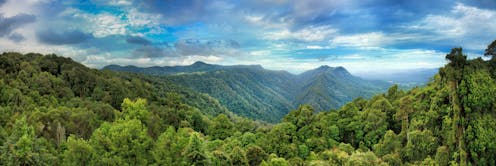
Australia’s forestry industry raised eyebrows this month when it released plans to remove trees from native forests, potentially including national parks, and claim carbon credits in the process.
Forestry Australia, the industry body behind the plan, claims it would make ecosystems more resilient and help tackle climate change. But decades of research findings clearly suggest the proposal, if accepted, will have the opposite effect.
Scientific evidence shows some proposed practices make forests more fire-prone and undermine forest health. And the carbon released when cutting down and processing trees would undercut any climate benefits of the plan.
Australia cannot risk any more declines in biodiversity resulting from harvesting native forests, or actions that further threaten its emissions-reduction goal. On this basis, the Forestry Australia proposal should be rejected.
Understanding Australia’s carbon credit scheme
Under a federal government scheme, people and businesses can undertake projects that reduce greenhouse gas emissions or store carbon, in exchange for financial rewards known as carbon credits.
Projects can include changing the way vegetation is managed, so it removes and stores more carbon from the atmosphere.
The government has invited proposals for new ways to generate carbon credits under the policy.
Forestry Australia’s proposal involves a number of activities conducted in national parks, state forests and on private land. In return for conducting these activities, land managers – such as government agencies and private landowners – would be granted carbon credits.
One part of the method involves “adaptive harvesting”. Forestry Australia says the approach would reduce carbon emissions and improve carbon storage in forests “while allowing for a level of ongoing supply of wood products”.
Adaptive harvesting purports to reduce environmental impacts but still produce wood products. Techniques can include delaying logging until trees are older, resting areas from harvesting and minimising areas cleared for roads and log landings.
The proposal also involves “forest thinning”, or removing trees. In a statement to The Conversation, Forestry Australia’s acting president William Jackson said thinning involves “selectively reducing the number of trees to enable the healthy trees to grow”.
Forestry Australia says it has not proposed timber production from national parks. However, it did not say what would happen to trees cut down in thinning operations, including whether they would be sold or left on the forest floor.
Forestry Australia has also proposed to change the way harvested wood is used, so it stores carbon for longer.
So, instead of harvesting low-grade logs used for woodchips and paper, it would harvest more valuable logs to be made into longer-lived timber products, such as roof trusses and floorboards.
However, plantation forests already produce about 90% of logs harvested in Australia, raising questions over the demand for native forest logs.
Logging does not make forests resilient
Announcing Forestry Australia’s proposal, its president Michelle Freeman said forests were “more resilient if they are actively managed”.
But several adaptive harvesting practices are scientifically shown to harm native forests.
For example, analyses following the 2009 wildfires and after the 2019-2020 wildfires show thinning generally makes forests more fire-prone. Foresters have themselves highlighted this problem. And the heavy equipment used to log forests disturbs and degrades soil and the understorey.
What’s more, young trees – the usual targets of thinning – provide understorey habitat for many species, including endangered mammals, such as Leadbeater’s Possum and many species of birds.
And thinning undermines a forest’s ability to withstand other threats, such as climate change.
A big climate risk
Forestry Australia’s proposal is problematic if Australia hopes to achieve its emissions-reduction target of 43% by 2030, based on 2005 levels.
First, logging releases carbon stored in trees and soil. So, even if some carbon was stored under the plan – through activities such as regeneration – this would be undermined by carbon released when removing trees.
Second, there is a risk carbon credits may be granted for activities and emission reductions that would have happened anyway.
Take the proposal to provide carbon credits for adaptive harvesting. Most of these activities, such as forest regeneration, are already required by regulation and forestry codes of practice.
And in the case of the proposal to conduct regeneration activities after bushfires, forests will regenerate naturally if they are left alone.
A similar issue arises if forest managers are offered carbon credits to encourage timber to be turned into long-lived wood products. These products are more lucrative than, say, woodchips. So the financial incentive to create them already exists – and there’s a good chance suitable logs would have been used for these products regardless of whether carbon credits were offered.
What’s more, the average life of these longer-lived timber products is still far less than the standing trees.
Rules under Australia’s carbon credit scheme are meant to prevent credits being given for activities that would have occurred anyway. However, serious concerns have been raised over the effectiveness of these rules.
The answer is clear
Australia’s native forest logging industry has long been in decline and operates at a financial loss in most states.
Adding to the industry’s demise, Victoria and Western Australia have called an end to logging in public native forests and southeast Queensland is reportedly set to follow.
The flailing, damaging native forest logging industry is on the way out and plantations already provide almost all our sawn wood supply. Propping up the industry via a badly designed carbon credit method does not make economic or climate sense.
In response to the points raised in this article, Forestry Australia’s acting president William Jackson provided the following statement. It has been edited for brevity.
Adaptive harvesting practices are proposed only for state forests and private native forests, within areas where timber harvesting is expressly permitted and regulated under state-based legislation.
Thinning is conducted for ecological reasons, cultural values or fire management or other reasons. Forestry Australia disagrees with the view that thinning makes forests more fire prone. The inclusion of thinning in native forests in the method is supported by clear evidence from Australian and international research showing that thinning of forests, when combined with prescribed burning to reduce fuel hazards, can significantly reduce wildfire risks and impacts in dry forests.
Not all forests are in the condition to regenerate naturally due to the impacts of climate change, invasive species and wildfire. The method encourages active and adaptive management to assist in restoring the health and resilience of these forests.
This method would maximise carbon market opportunities to more landowners, from state government agencies managing state forests and national parks, as well as community groups, not-for-profits, private landowners and First Nations Peoples.
Authors: David Lindenmayer, Professor, Fenner School of Environment and Society, Australian National University