Modern Australian
The Times

How can you help your child tidy up their room (without having a massive fight every time)?

  • Written by Elizabeth Westrupp, Associate Professor in Psychology, Deakin University
How can you help your child tidy up their room (without having a massive fight every time)?

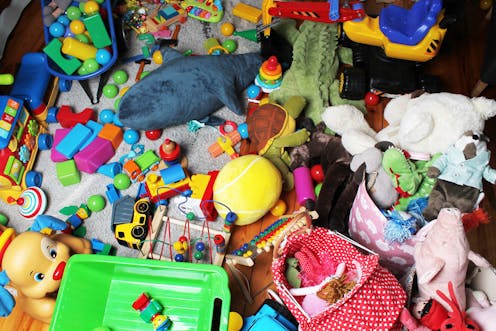
If you’ve ever opened the door to your child’s room only to be greeted by a sea of clothes, toys and who knows what else, you’re not alone.

Among countless reminders, pleading and threats, parents often find themselves in battle with their children when it comes to tidying up. For so many of us, it is an endless cycle of “try and let it go” and then “triggered and explode”. The ongoing conflict this creates can be stressful for everyone.

But you are not doomed to live with piles of Lego, collected sticks and stones – or rooms full of old food and unwashed dishes until your children leave home. There is a different way to approach this.

Why are children and teens messy?

There are developmental reasons for children being messy.

Children and teens don’t fully develop the part of their brain needed for high-level organisation until adulthood, and can be easily overwhelmed by a tidying job.

This should not get them off the hook, though. Practising organisation skills is great for the brain. Research shows helping with tidying up from as early as 18 months is associated with improved prosocial skills (the ability to work with others).

It can also be hard to keep a room tidy if children have too many toys in their room. This means they have to riffle through things or tip out toy baskets to find a toy. Too much choice can also lead children to quickly move from one toy or activity to the next.

Clothes, papers and books on the floor, near a desk chair and shelves.
Even teenagers are still developing the part of the brain that helps with organisation (and tidying rooms). Delpixel/Shutterstock, CC BY

Why you shouldn’t just clear it up yourself

As a parent we can get caught in a cycle of feeling overwhelmed and frustrated and become disconnected from our child’s perspective. For younger children, play is work – much of their learning happens as they play.

When we interrupt their play and tidy up their masterpiece, or throw out a special object, it can break trust and feel devastating for them.

For teenagers (and even younger children), having personal space is important to develop a healthy identity and sense of control in their world.

So when parents barge into their room and move their things, this can feel like a violation.

How can make tidying up easier?

  • Make time to talk to your child about tidying up at a calm moment (when you’re not asking them to clean anything). Don’t make it a lecture – acknowledge how hard it is to keep their room tidy, ask for their ideas on what might help and decide together on a regular routine (perhaps they always give their room a quick tidy before TV, or it’s a job on a certain day). Discuss what could get in the way and how you will work together.

  • Have fewer toys in your child’s room and a special place for these. This can make the room more appealing and organised, inspire play and creativity, and make tidying up easier.

A bookshelf with neatly arranged toys and boxes.
Having fewer toys in a child’s room and designated spots can make it easier to keep rooms organised. Igisheva Maria/Shutterstock, CC BY
  • Notice moments when your children are doing any kind of cleaning up and acknowledge their efforts. Children love to feel noticed – we all do!

  • Break the task down into smaller parts for older kids. For example, you could suggest, “what about packing all the Lego into that box” rather than just saying “clean up your room”.

  • Be playful with younger children. Cleaning up can be a time for connection. Get them to find all the red toys first, then see how fast they can bring you any socks that need washing.

  • Notice the emotions your child feels when you are asking them to tidy up. See these emotions as an opportunity for connection and guidance. For example, “It’s hard to clean up this amazing fort, you worked so hard on this. I love how cosy it is”. And name emotions as you go. For example, “It’s overwhelming when there is so much to clean. Are you worried about where to start?” Or problem solve together: “What could we clean up first?”

  • With teenagers, use single word reminders, starting with just one thing that needs cleaning (for example, “washing?” Or “plates?”). Single word reminders allow a teen to save face and prevent battles. Watch your tone of voice and body language – try to stay warm, firm and kind.

Authors: Elizabeth Westrupp, Associate Professor in Psychology, Deakin University

Read more https://theconversation.com/how-can-you-help-your-child-tidy-up-their-room-without-having-a-massive-fight-every-time-235517

10 Benefits of Choosing Professional Tutoring Penrith Services

Every student has unique learning strengths, challenges, and academic goals. While classroom teaching provides essential knowledge and structure, so...

Sunshine Coast Baby Classes Prove Big Hit Among First-Time Mums

There's a movement gaining traction on the Sunshine Coast, providing a village of support, socialisation and relief for first-time mothers and babie...

Father's Day Gift Ideas for Men Who Are Hard to Buy For

Some dads are easy to buy for. Others do not want anything, already have everything, or give you the classic "don't worry about me" answer every yea...

Top 5 Mistakes That Wear Out Your Brakes Faster

Brakes don't need frequent replacements like oil changes do.   But a lot of the wear happens quietly, over months, because of habits most drivers...

Plantation Shutters vs Curtains: Which Is Better for Your New Home?

Moving into a new home is an exciting opportunity to personalise your space and make it your own. While many homeowners focus on furniture, flooring...

Celebration of Life vs Traditional Funeral: What's the Difference?

When saying goodbye to someone you love, there is no single way to honour their life. Every family has different traditions, beliefs, and preference...

Building Approval for Roofing Projects: What Homeowners Need to Know

Roofing projects are an important part of maintaining and protecting your home. Whether you're repairing storm damage, replacing an ageing roof, or ...

Chatswood Tutoring And Its Role In Academic Achievement

Academic success often requires more than classroom attendance alone. Students face increasing expectations as they progress through school, particu...

Why Laser Hair Removal Treatments Continue Growing In Popularity

Managing unwanted hair can become time-consuming and frustrating for many people, especially when shaving, waxing, and other temporary methods requi...

Choosing the Right Devices for a Flexible Workplace

For IT leaders managing large fleets, the device layer is where workforce productivity and security policy meet. The shift towards flexible and hybrid...

How Business Advisory Services Help Companies Achieve Sustainable Growth

Every business owner aims to build a profitable and sustainable organisation. While dedication, innovation, and hard work are important, achieving l...

Why Body Contouring Has Become A Popular Cosmetic Treatment

Many people maintain healthy lifestyles through regular exercise and balanced eating habits but still struggle with stubborn areas of fat that are d...

How to Choose the Right POS Hardware for Your Business in Australia

A lot of Australian business owners spend weeks researching POS software but buy hardware almost as an afterthought. That's a mistake. The wrong har...

Why Material Handling Hose Is Critical for Industrial Efficiency

A high-performance material handling hose is an essential component in industries that transport abrasive, dry, or bulk materials on a daily basis...

How to Choose the Right Lawyer in Melbourne for Your Situation

Choosing legal support can feel difficult, especially when the stakes are personal or business-related. The right lawyer in Melbourne should underst...

Hoteliers Look to Clever Value Adds to Increase Revenue

The Australian hospitality industry is still in recovery mode after a notoriously rough patch in recent years. While there has been a post-COVID tra...

Moving to Queensland? Here’s How to Prep Your Car for the Big Move North

There’s no sign of the northern migration slowing down, with thousands of southerners fleeing from chaotic lifestyles and cooler climates for a brig...

Diesel Shortage to Impact Trades and Contractors

Strait of Hormuz blockage affecting all major parts of trades and construction Trades and construction across residential, commercial and industria...