RSV is linked to asthma in children – but we can’t say one causes the other yet
- Written by Jane Tuckerman, Senior Research Officer, Murdoch Children's Research Institute
As winter rolls on in Australia, respiratory viruses are everywhere. One of the main culprits is respiratory syncytial virus, or RSV, which has caused more than 145,000 infections around the country so far this year. Most are in children under five.
RSV is the leading cause of bronchiolitis and pneumonia (both chest infections) in young children. Each year, at least one in 200 children under five are hospitalised with RSV in Australia. Babies under six months, and especially under three months, are at highest risk.
RSV infects the airways and lungs, making airway mucus very sticky. Young babies may develop cough, wheeze, difficulty breathing and poor feeding.
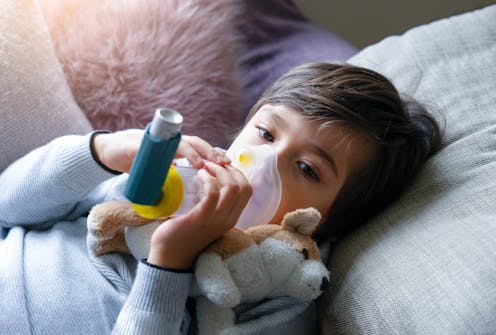
Research indicates severe RSV infection in infancy may also increase the risk of children developing asthma. So, what is the evidence linking RSV with asthma? And why might this association exist?
Association or causation?
Asthma is a chronic lung condition which affects 11% of Australians. People with asthma often have difficulty breathing, and experience coughing and wheezing. This is due to their airways becoming narrower temporarily, usually because of triggers (for example, viral infections, dust or pollen). Asthma often starts as wheezing at preschool age. But in some people, it starts in adulthood.
When we talk about RSV and asthma it’s important to consider the differences between association and causation. An association exists when two events commonly occur together (for example, smoking and drinking coffee), whereas causation is when we know one can cause the other (for example, smoking and lung cancer). While the association between RSV and asthma is well established, causation has not yet been proven.
To prove causation, certain criteria must be met. These include a temporal relationship (in this case, RSV infection needs to come before asthma) and a plausible explanation (biological mechanism).
Some evidence suggests RSV infections alter the developing airway cells of infants and young children. This can mean the protective or barrier function of the airway lining is altered, predisposing the child to allergen sensitisation – where their immune system produces an antibody to something they encounter, such as grass or dust.
Allergen sensitisation is a significant risk factor for asthma, so severe RSV infection may contribute to the development of asthma through sensitisation to common environmental allergens. This represents a possible biological mechanism, but we still need more research to confirm this.
Several studies show an association between severe RSV and recurrent wheezing and asthma later in childhood.
But which comes first? In one study, children aged under 12 months who developed RSV bronchiolitis were followed for six years. Almost half (48%) were diagnosed with asthma before their seventh birthday.
Similarly, in another study, children hospitalised with RSV infection before turning two were more likely to develop asthma by age 18 than those not hospitalised.
In contrast, researchers who carried out a twin study concluded the data more likely pointed to reverse causation. That is, it was the children with a predisposition to asthma who were more likely to develop RSV requiring hospitalisation.
We could be getting closer to an answer
The pendulum may be swinging towards causation. Recent findings from a South African birth cohort study showed severe RSV infections were associated with both recurrent wheeze and later impairment in lung function.
An earlier study by this group showed that hospitalisation for any respiratory infection, but especially for RSV, was associated with recurrent respiratory infections and wheezing. Recurrent wheezing and reduced lung function are predictors of future asthma.
Another recent study of more than 1,700 children in the United States showed avoiding RSV infection during infancy could prevent up to 15% of childhood asthma.
The recent availability of maternal vaccination and monoclonal antibodies to prevent RSV will likely help answer this question once and for all.
Earlier this year, nirsevimab (a long-acting monoclonal antibody) was made available to infants and young children through state-based programs in Western Australia, Queensland and New South Wales. Nirsevimab works a bit differently to a vaccine, but is similarly given as an injection.
Additionally, the RSV vaccine Abrysvo has this year been registered in Australia for use during pregnancy, to protect the baby once it’s born. It’s available for pregnant women to buy privately with a prescription from their doctor, while South Australia recently announced it would provide Abrysvo to pregnant women for free next year.
With these measures, hopefully in the years to come we’ll see a population-level reduction in RSV. If at the same time we see a reduction in asthma, this could finally answer the question of causation.
Protecting kids and communities
While the jury may still be out on whether RSV causes asthma, RSV and other viral infections can particularly be a problem for people who have asthma already. For both adults and children with asthma, viral respiratory illnesses can be more severe and trigger a flare-up of their asthma symptoms.
RSV is spread via coughing, sneezing and close contact. And there are many other viruses that spread in similar ways. Parents can help keep their kids and others healthy by encouraging children to cover their mouths and noses when coughing or sneezing, and regularly wash their hands.
Ensuring kids stay away from school, childcare or other children when sick helps prevent the spread of many viruses, including RSV. Finally, staying up to date with vaccinations and receiving the flu vaccine annually can make a big difference to our health and to those around us.
Authors: Jane Tuckerman, Senior Research Officer, Murdoch Children's Research Institute