Citizen scientists can help save Australia’s threatened species if we give them more direction
- Written by Erin Roger, Sector Lead, Atlas of Living Australia, CSIRO
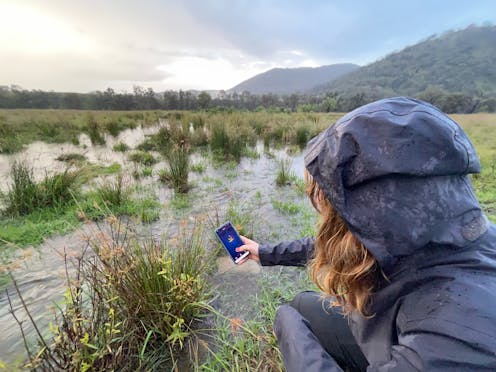
Across Australia and around the world, citizen scientists are protecting species by recording sightings, surveying landscapes and collecting samples. No job is too big or too small. As wildlife ecologists, we are indebted to this army of volunteers.
Citizen scientists are everyday people, who are not necessarily experts but who conduct scientific research. There are more than 100,000 citizen scientists in Australia alone. As a nation, we’re the third-biggest contributor to the global citizen science platform iNaturalist. This is staggering considering our relatively small population.
We wanted to find out how citizen science data contributes to decisions by governments and conservation organisations about which species are at risk of extinction, and how they can be conserved.
One of the main ways to help conserve biodiversity is through species extinction risk assessments. These allow scientists and decision-makers to determine how threatened a species is and the best ways to protect it.
Because citizen scientists collect so much data on biodiversity, this information could dramatically improve our ability to accurately assess species. But how useful is citizen science data in achieving this goal? Our new research set out to answer this question.
While we found room for improvement, it’s important to recognise and celebrate the immense value of citizen science data. We would be lost without it.

5 types of citizen science data
Our first step was to summarise what types of data citizen scientists are collecting. We found five key types:
evidence that a species occurs at a specific location (usually an image or sound recording including the date and time)
evidence that a species has not been recorded at a specific location
answers to a set of questions about a species and its environment
physical samples such as scat (poo), soil or water samples
collected stories or oral histories, including the voices of First Nations people.
We then considered each data type in terms of its use in addressing the globally accepted criteria for assessing extinction risk. The criteria are set by the International Union for the Conservation of Nature (IUCN), an international organisation devoted to nature conservation and the sustainable use of natural resources.
 Searching for fungi with coauthor Jasmin Packer in the Adelaide Hills.
University of Adelaide/Nelson Da Silva
Searching for fungi with coauthor Jasmin Packer in the Adelaide Hills.
University of Adelaide/Nelson Da Silva
Room to improve
We found the data citizen scientists typically collect were often not what was most needed to assess extinction risk under IUCN criteria.
Meeting the criteria requires more than just a record of a species occurring at a given location. Detailed information such as geographic range, and evidence of population decline, is also required.
So simply encouraging citizen scientists to record more ad hoc observations of species is not the best way to inform threatened species listing. Unfortunately, this means the assessment process can’t always benefit from the great work being done.
People charged with assessing a species’ conservation status could make better use of citizen science data. While this wasn’t an explicit finding of the research, the IUCN recognises this. Its recent white paper examines how Indigenous and local knowledge could be better harnessed.
There are ways to ensure citizen science data is better used to inform IUCN assessments. They can include:
planning projects from the outset to ensure the required data is captured
asking citizen scientists to complete structured ecological surveys or collect specific samples
integrating citizen scientist data with that collected by professional scientists.
But our research also revealed good news! We found new methods of data analysis – such as extracting population numbers – are helping scientists use citizen science more effectively.
Australian success stories: Fungimap and FrogID
Some citizen science projects in Australia are feeding into threatened species assessments. We described two of them in our research.
 Getting a closer look at a colourful Cortinarius sinapicolor mushroom for Fungimap.
University of Adelaide/Nelson Da Silva
Getting a closer look at a colourful Cortinarius sinapicolor mushroom for Fungimap.
University of Adelaide/Nelson Da Silva
The first is Fungimap, which coauthor Jasmin Packer is involved with. Members record and map fungi through iNaturalist. These records have enabled threat assessments for at least 13 species.
In Fungimap, scientists have added extra information to the data collection fields – such as habitat and what the fungus is growing in (animal, soil or wood) – to make records more useful for assessing whether a species is threatened.
 New England tree frog (Litoria subglandulosa)
Jodi Rowley/Australian Museum
New England tree frog (Litoria subglandulosa)
Jodi Rowley/Australian Museum
The second is FrogID, led by coauthor Jodi Rowley. It’s a free smartphone app that enables people to record frog calls. Frog experts then identify which species is making the call. More than one million frog records have been collected this way in about six years.
FrogID data helped scientists understand frog persistence after the catastrophic 2019–20 bushfires in southeast Australia. Several species, including the sphagnum frog, have now been listed as threatened using FrogID data alongside professional data.
In both projects, scientists review the images and sound recordings. This ensures their accuracy and means the data is more likely to be included in government databases. Professional scientists also tell citizen scientists what they need to help provide the knowledge needed to assess a species’ extinction risk.
Here’s how to get involved
Citizen science observations are now the largest source of open-source biodiversity data in Australia. It’s important to ensure the data we’re collecting keeps growing.
There are many ways to get involved. The Australian Citizen Science Association website hosts a helpful project finder. You can search for projects in your local area, on a particular subject or theme, or focus on projects suitable for children or beginners.
Authors: Erin Roger, Sector Lead, Atlas of Living Australia, CSIRO