Lower speeds on local streets cut deaths and injuries by a quarter in Wales. Over 100 experts want Australia to do the same
- Written by Jennifer L. Kent, Senior Research Fellow in Urbanism, University of Sydney
The Bureau of Infrastructure, Transport and Research Economics (BITRE) has released its latest road deaths bulletin. The results are terrifying.
Each month, someone at the bureau has the bleak task of contacting state police to determine how many people have been killed on our roads. If the bureau had a tendency to shoot its messengers (and I’m not saying it does), this month’s courier would have tabled the stats and quickly ducked for cover.
In July, 124 people died on Australian roads. This toll was 31.6% higher than the July average for the past five years. In July 2024, 40 more people died on our roads than in July 2019. That’s 40 daughters, sons, brothers, sisters, mothers and fathers.
The July figures were not a monthly blip. The 1,327 lives lost in the year ending July 2024 marked a 10.2% increase from the preceding 12 months. It was the worst 12-month toll since 2012.
And for every death, an estimated 20 people are hospitalised for serious road trauma. These numbers are not only shocking, they are shameful. More than 100 of Australia’s top transport and urban researchers have now signed an open letter calling for lower speed limits on local streets. The evidence they cite from overseas is clear: lower speed limits will save lives.
Why is the road toll rising?
Road casualties are on the increase for multiple reasons.
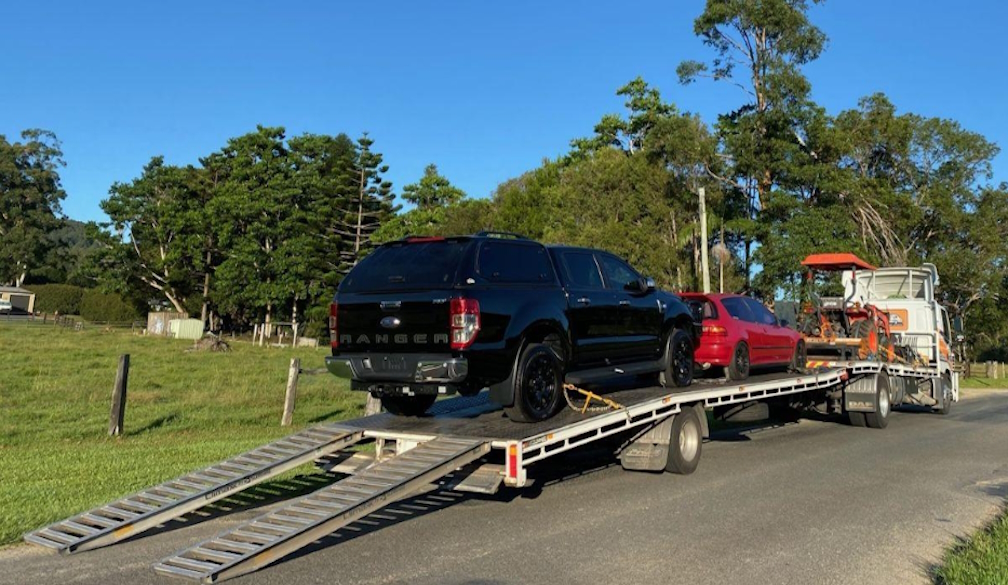
The most obvious one is the bigger cars we are driving. Our large SUVs and twin-cab utes are much safer – but only if you’re on the inside. Their sheer mass can make a mess of any vulnerable human flesh that gets in their way.
Which brings me to the real tragedy here: we know exactly what to do to reverse this trend; we just don’t have the political will to do it.
You see, road trauma is actually a straightforward matter of physics. The embedded kinetic energy in a moving vehicle is released on impact – whether it be with a street sign, tree or child. The faster a vehicle is travelling and the greater its mass, the more energy is released. And it’s the energy that kills – either as it’s dispersed through a vehicle or through someone’s body.
This means that if a child is hit by a car doing 50km/hour, there is a 90% chance that child will die. But if that car is doing 30km/h, the child has a 90% chance of living. Yes, it is simple physics, with devastating implications when ignored.
Speed is the key to reducing road trauma. Yet here in Australia we maintain the third-highest default local speed limit in the OECD. In most Australian states, the limit is 50 kilometres per hour (km/h). That’s well above the World Health Organization’s recommended 30km/h wherever cars and vulnerable road users interact.
We have tinkered around the edges with slower speeds in school zones and areas with particularly high numbers of pedestrians. Some forward-thinking local councils have reduced speed limits across their area, usually to 40km/h. But we know the real gains come when speeds of 30km/h are applied not just in specific locales, but across the entire local road network. Just ask Wales…
Welsh experience is compelling
In September 2023, Wales decreased the default speed limit for local roads to 20 miles per hour (roughly equivalent to 30km/h). As a result, this new speed limit applied to the vast majority of these roads, whereas before the change the vast majority had a 30mph (50km/h) limit.
The politician responsible for this change, Lee Waters, has been touring Australia this month, speaking about this and other game-changing sustainability and wellbeing legislation enacted on his watch. His courage in pushing this unpopular move through paid off. In just three months, the casualties (combined death and serious injury rates) on local roads in Wales dropped by 26% to 377, from 510 in the same period for the previous year.
What’s also notable about the Welsh experience is that, in terms of the blockbuster budgets typical of road projects, it hardly cost a penny. Authorities simply educated the public and changed the road signs. There wasn’t even much legal enforcement.
Instead, the public responded to the message and started driving more slowly. While it’s not quite as slow as the Welsh government’s ultimate aim, it’s a good start. Because it’s slow enough to save lives.
So what’s stopping Australia?
This is very different to the story in Australia. Here, our policies and politics imply that the only way to slow cars is to radically redesign our roads. Apparently, we need to make our streets “intuitively” slow by narrowing them and putting in speed humps.
This kind of intervention needs funding – which is currently tied up in more politically palatable programs of road building and maintenance. As a result, our vehicle speeds remain fast – and fatal.
But Wales has clearly shown that streets can be slowed by reducing the posted speed limit, backed up by community education and strategic enforcement. Of course, road safety infrastructure is also needed, but while we wait for it to be funded and constructed, road trauma continues to tear people’s lives apart.
Coinciding with Lee Waters’ visit to Australia, the open letter from more than 100 academic experts concludes:
The urgency of the epidemic of road trauma in Australia demands a more proactive and timely response, and political leaders are at the helm of change. The evidence is unequivocal that Australian lives are in your hands. Please, slow speeds on local streets.
Authors: Jennifer L. Kent, Senior Research Fellow in Urbanism, University of Sydney