how wearable tech can help older Indigenous people catch heart problems – and save lives
- Written by Connie Henson, Cojoint Senior Lecturer, Indigenous Studies, UNSW Sydney
Many people with atrial fibrillation don’t have any symptoms. But this heart condition – which involves an irregular and often rapid heartbeat – increases the risk of stroke and heart failure, especially if untreated.
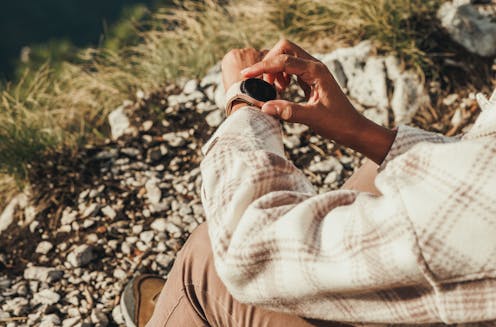
Wearable devices such as smart watches are playing an increasing role in monitoring heart conditions like atrial fibrillation.
Our recently published study is the first to examine how older Indigenous people living remotely can use wearables to monitor their health.
Although it was only a small study – with 11 people over five days – in that time one woman was able to realise her husband could be at risk. And her knowledge ended up saving his life.
Using wearables for heart health
Research has rarely explored the potential of wearables in monitoring atrial fibrillation for Indigenous people. That’s despite them being affected at a higher rate and younger age than non-Indigenous Australians – and with worse outcomes.
Indigenous people are three times more likely to be diagnosed with atrial fibrillation after they have already had a stroke or heart attack, compared to non-Indigenous Australians. Using wearables is one way to detect and treat the condition before it escalates.
In previous research with Indigenous people in rural, remote and regional New South Wales, a majority (92%) of older women participants told us they wanted to try a wearable to track their health and fitness.
This aligned with other research showing Indigenous people can be enthusiastic adopters of new technology.
What we did
In our new study, we collaborated with an Aboriginal-controlled health service in remote New South Wales. We worked side-by-side to co-design and evaluate a health program using wearable technology.
Evidence shows health programs for Indigenous people tailored to local culture, and designed in collaboration with community, are more effective.
Together we recruited 11 Indigenous people aged between 55 and 78 who had high blood pressure and were at risk of developing atrial fibrillation. Participants had at least one other risk factor:
another chronic disease
heart disease affecting the heart’s structure (for example, its walls or valves)
previous stroke
history of alcohol use disorder.
Those with diagnosed atrial fibrillation, or another irregular heartbeat condition, could not take part.
For five days, participants wore a chest patch that monitored their heartbeat and blood pressure. Nine people also wore a smart watch which recorded heart rate and fitness measures such as step count.
In daily meetings at the clinic, the researcher downloaded and reviewed the data, and the participant discussed their experience. We asked participants about four issues: comfort, cultural safety, convenience and any concerns.
To collect data our study used traditional research methods (such as a survey), alongside yarning. This Indigenous conversational process encourages people to share stories, reinterpret questions and add information. Compared to the pre-determined structure of a survey, yarning prioritises what the participant finds most important.
What we found
Despite challenging conditions – including variable internet connection and temperatures above 36°C – participants were enthusiastic about the program. Their responses showed the watches and patches were a comfortable, convenient and culturally safe way to monitor heart health.
Many participants reported the program increased their confidence and knowledge about their health. The study also suggested increased knowledge may have flow-on benefits for other community members.
Similar to our previous research, older women in particular spontaneously shared health information they acquired with family and community members. This underlines the influential role of mature Indigenous women in their communities.
The knowledge gained helped one participant, Aunty Mary, to recognise her husband Lindsay’s risk for atrial fibrillation.
She encouraged him to attend the clinic for testing where he was found to have the condition. Not long after, Lindsay underwent urgent quadruple bypass surgery that saved his life. Aunty Mary told us:
I was really amazed by how things happened and happened really fast for Lindsay. […] He had no symptoms, he had no pain. Nothing. No pain to say […] he was (at risk) for a heart attack.
Participants were also keen to see the program be offered to more and younger people in their community. Aunty Mary told us she’d been speaking to people about how important testing is:
It just takes 30 seconds, you put your fingers on this little machine. 30 seconds, it’ll save your life. I recommend it to my people.
For a future clinic-based program, participants suggested health education sessions in person or online, in small groups if not individually.
Although it wasn’t part of the study, we also found participants used the watches as motivation to be more active, for example, by monitoring step counts.
Concerns about the wearable program were minimal. Two participants indicated some concern about how tech companies handle privacy. One told us they trusted the universities to keep their data private but were less sure about the companies that made the wearables.
This has prompted us to create a phone application to extract data from the devices and a new research database to store the data. This database provides greater autonomy, allowing participants to decide whether or not they share data with researchers.
What’s next?
Several participants said they believed they hadn’t historically been prioritised for new health technologies because they lived remotely. But our research suggests older Indigenous people can be keen adopters of health technology, and want to share its benefits.
Our study is a first step in showing how this kind of program could work. But as it included only 11 people for five days, we are keen to investigate further. Participants expressed interest in a program that combines personalised health data from wearables with fitness.
Our new project will do this through online health education and using wearables to monitor heart activity, blood pressure and exercise (such as step count) over 28 days.
Authors: Connie Henson, Cojoint Senior Lecturer, Indigenous Studies, UNSW Sydney