long before Meredith Grey or Doogie Howser, this show shaped the modern medical drama
- Written by Kit MacFarlane, Lecturer, Creative Writing and Literature, University of South Australia
Most of us can think of a TV medical drama that stood out at some point in our lives.
The Good Doctor (2017–24) is finishing its seven-year run. Grey’s Anatomy (2005–) is in its 20th year. ER (1994–2009) dominated the 1990s.
The 1980s brought St Elsewhere (1982–88) and Doogie Howser, M.D. (1989–93), and the 1970s a legendary 11 years of M*A*S*H (1972–83).
Dr Kildare and Ben Casey had similar TV lifespans, both running from 1961 to 1966, in a decade capped with Marcus Welby, M.D. (1969–76).
Even if you don’t like TV medical dramas, they’re about as easy to avoid as hay fever in Canberra. But one of the most interesting and influential shows isn’t as well remembered.
Medic was created by James Moser and first broadcast on NBC in September 1954. It only lasted for two years but played a key role in shaping not only the TV medical drama, but also the image of the medical industry itself. So what was Medic, and how does it look 70 years later?
No romantic compromises with truth
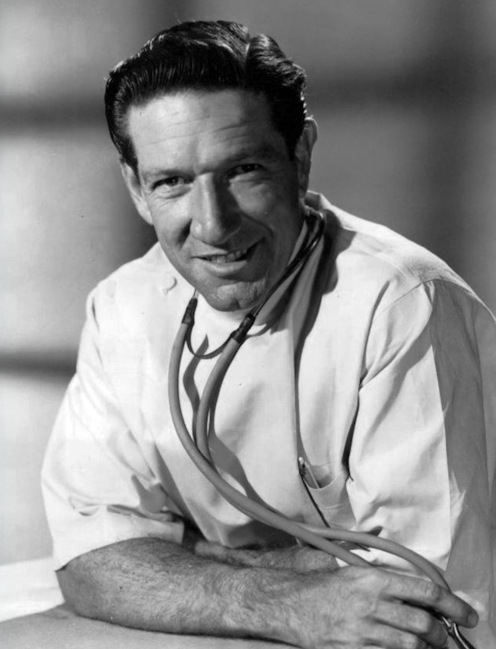
Using an anthology format, Medic would present a different medical case or concept each week. The episodes regularly focused on the process of diagnosis, treatment and fighting social stigmas. The only regular presence was Richard Boone as Dr Konrad Styner, who introduced each episode but would only sometimes appear in the stories.
What set Medic apart from other medical dramas at the time was its intense focus on medical technology and procedure.
Rather than just using a hospital as a general setting for character conflicts, Medic sought to portray the drama that is an inherent part of illness and treatment. It combined this with extensive use of actual hospital resources.
Its first episode portrays a young woman diagnosed with terminal leukaemia shortly before she is due to give birth. It’s a bold debut, including footage of a real birth and not shying away from end-of-life scenarios as part of medical care.
The episode introduction states its goal bluntly:
there’s too much dignity and too much suffering in the fact of life to justify any romantic compromises with truth. There’s excitement enough and triumph enough in truth.
Horrified fascination
Medic’s first episode had an immediate impact.
One newspaper response declared “horrified fascination. I’m not at all sure I was enjoying myself but I couldn’t tear myself away”.
Others described “the most outspoken dialogue and shocking scenes ever offered the general public” with “no cushion for the over-sensitive viewer to fall back upon”, “simple yet explosive immediacy” and “strong, gutty, graphic medicine for the average television viewer […] a record of events that happen every day to people like the next-door neighbour, the fellow at the office – and sometimes you”.
It was called “a stunner” that “may well prove to be one of the few really worthy programs on television”.
Elements may seem outmoded to a modern viewer (a couple of moments will definitely raise an eyebrow!) but the underlying human turmoil isn’t a thing of the past.
Tremendous impact
Decades before the famous ripples caused by 1980s TV productions The Day After and Threads, Medic episode Flash of Darkness presented a grim vision of a nuclear strike.
Like those later productions, the episode sparked public discussions, one report describing a
much-discussed program […] hailed as one of the most powerful and moving ever televised.
Its “tremendous impact” meant “requests from civil defense leaders for prints of the heart-tugging drama […] poured into the Medic’s production offices”.
It was said to be “directly responsible for a 200% increase in volunteers offering their services to Civil Defense”.
Not every episode of Medic had the same impact, but the approach remained largely consistent. Some episode topics could appear “for the first time on TV” such as a story on sterility. The broadcast of an episode showing a caesarean section birth for the first time was cancelled by NBC, resulting in letters of support for the series.
Doctorganda?
Medic’s legacy has some notable problematic elements.
Establishing connections with medical authorities, Medic could use real hospitals, equipment and even doctors in its weekly episodes. This made Medic a powerful tool for social influence.
Recognising this, The Los Angeles County Medical Association provided resources – but this came with the proviso of substantial control over scripts and the portrayal of doctors.
As Joseph Turow writes in his detailed study, Medic became the first time
the interests of individual producers, organised medicine, and the commercial television industry began to come together around prime-time storytelling.
This unfortunately also connected to “[enforcing] the overwhelmingly male and white complexion of their profession”.
Later medical series softened Medic’s austere tone and abandoned its anthology format. But what Turow calls the “symbiotic relationship between doctor-show producers and powerful medical organisations” stuck around.
Storytelling in today’s medical dramas remains a powerful lever for influence.
With its carefully controlled portrayal of health care, Medic is a case study for why viewers need to remain alert to the shaping of the lingering images pop culture presents.
Health and storytelling
Watching Medic 70 years later can be an austere experience – but an interesting one.
Despite social and technological changes, Medic still has a lot to offer a thoughtful viewer. Its frank presentations ultimately focus on removing social stigma and prejudice in support of physical, mental and social health.
Outdated elements are worth studying, too. They’re a sign of where we’ve been, what’s changed, and what hasn’t.
The Age may have called it “that frightening program for hypochondriacs”, but Medic’s combination of health and drama may still have things to teach us.
Storytelling can be a key method for health communication and helping doctors and patients connect. We still face serious public health challenges that require effective communication for social awareness and action.
Day 10, a Medic episode about containing an infectious outbreak despite political resistance, isn’t just a history lesson.
Medic’s socially focused approach to storytelling may not be quite so outdated after all.
Authors: Kit MacFarlane, Lecturer, Creative Writing and Literature, University of South Australia