The government has a target for Indigenous digital inclusion. It’s got little hope of meeting it
- Written by Bronwyn Carlson, Professor, Critical Indigenous Studies and Director of The Centre for Global Indigenous Futures, Macquarie University
Digital inclusion for Indigenous communities is important. It’s so important, in fact, that the government has made it one of the targets under the Closing The Gap plan. The goal is:
by 2026, Aboriginal and Torres Strait Islander people have equal levels of digital inclusion.
Digital exclusion is the continuing unequal access and capacity to use digital technology that is essential to participate fully in society.
It severely stifles Indigenous creativity. It restricts access to essential tools, skills and platforms that are crucial for digital expression and innovation.
For many Aboriginal and Torres Strait Islander peoples, this exclusion leads to missed opportunities, particularly in areas linked to economic prosperity, such as employment and education. As the government’s policy focus is on economic empowerment, this is a major barrier.
Measuring progress towards the 2026 deadline is challenging because there are simply no recent data.
But given how big the gap was to start with, the lack of importance based on gathering relevant data and the insufficient government action since, we know the target is highly unlikely to be met.
What’s being done?
To support the goal, the First Nations Digital Inclusion Plan offers a comprehensive strategy focused on three key pillars:
access (to telecommunication services, devices, and data)
affordability (the cost of services, devices, and data)
ability (skills, attitudes, and confidence with technology).
Focused mostly on remote communities, initiatives such as the Australian Digital Inclusion Index highlight persistent challenges across all three areas.
Although digital inclusion is an urgent issue in remote areas, research also shows Indigenous populations face widespread digital exclusion across the nation, regardless of remoteness.
Some 84.6% (832,800) of Indigenous people live in non-remote areas. Many of these people are also excluded.
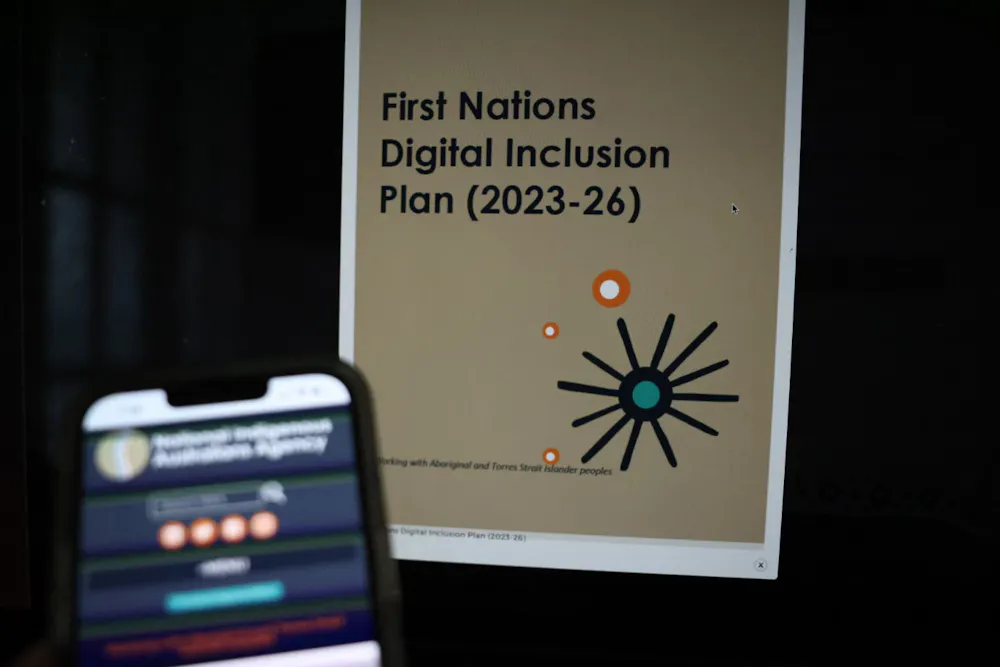
Last year, the government established an advisory group to drive progress.
It has developed a “road map”. This involves travelling to Indigenous communities across Australia to ensure their diverse needs, aspirations and environments are fully considered.
Despite these ongoing government initiatives and policies, efforts to close the digital divide for Indigenous peoples remain insufficient. As technology continues to advance, Indigenous communities are left in an increasingly precarious situation.
The rise of artificial intelligence
The government’s current plans do not explicitly address the role of artificial intelligence (AI). This oversight is particularly concerning given the rapid advancement of AI technologies.
A recent report on adult media literacy in Australia reveals 48% of Aboriginal and Torres Strait Islander participants do not understand what AI is or the risks and opportunities it presents. This knowledge gap could further exacerbate the digital divide and deepen existing inequalities.
AI presents both opportunities and challenges. When led by Indigenous people, it holds transformative potential across multiple sectors.
It could enhance learning tailored to Indigenous knowledge systems, help in the revitalisation and preservation of languages, and improve healthcare delivery. It could also empower Indigenous businesses by optimising operations and market reach.
Read more: AI affects everyone – including Indigenous people. It’s time we have a say in how it's built
Indigenous people are already collaborating on research that combines Indigenous knowledge with AI to support land-management practices.
There are very few Indigenous-led AI projects underway nationally, but there’s great potential. With Indigenous people helping develop AI, these technologies could contribute to meaningful, self-determined growth across Indigenous communities.
But only if we’re included.
Avoiding exploitation
Indigenous digital exclusion, especially in policy development and regulation, can result in AI being used by non-Indigenous people to tell our stories without our permission.
They can profit from appropriation of our culture, including art and languages.
The government needs to adopt a more comprehensive and forward-thinking approach. This should involve expanding the scope of digital inclusion initiatives beyond the current limited focus to encompass Indigenous communities across the entire country.
The development of Indigenous-led digital literacy programs that respect learning styles and culture is also essential.
The government should incorporate AI and other emerging technologies into planning to ensure Indigenous communities are not left behind.
Establishing long-term partnerships with technology companies, educational institutions and Indigenous organisations to create sustainable digital inclusion programs is vital.
The focus should be on creating Indigenous-led opportunities that leverage digital technologies for economic empowerment without exploiting or harming.
Underrepresented in tech
One barrier to this is there are very few Indigenous peoples involved in the tech industry, especially in decision-making roles and policy development.
As of 2022, Aboriginal and Torres Strait Islander people accounted for less than 1.4% of tech workers. There urgently needs to be more support to boost this figure.
That’s because technology like AI presents potential careers for Indigenous people.
Currently however, Indigenous peoples are not employed in the industries involved in AI. Of the global study of people working in this specific industry, Indigenous participation was not noted.
The fact the government recognises digital inclusion as a national priority is a positive step. The current approach, however, is piecemeal and limited. We need a more holistic strategy.
By developing more inclusive, technologically advanced policies led by Indigenous people, the government can ensure they are not left behind in the digital age. We need to be at the decision-making table.
Closing the digital divide requires a multifaceted, long-term commitment from government. This means a national strategy recognising the diverse needs and aspirations of Indigenous communities across the country.
By harnessing the full potential of digital technologies, including AI, and addressing the unique challenges faced by Aboriginal and Torres Strait Islander people, the government can create lasting positive change and truly empower Indigenous communities in the digital era.
Authors: Bronwyn Carlson, Professor, Critical Indigenous Studies and Director of The Centre for Global Indigenous Futures, Macquarie University