

Going to the beach this Easter? Here are four ways we're not being properly protected from jellyfish
- Written by Lynda Crowley-Cyr, Associae Professsor of Law, University of Southern Queensland
The Easter long weekend marks the last opportunity this year for many Australians to go to the beach as the weather cools down. And for some, particularly in Queensland, it means dodging bluebottle tentacles on the sand.
In just over a month this summer, bluebottles stung more than 22,000 people across Queensland, largely at beaches in the southeast. At least eight of these stings required hospitalisation.
To make matters worse, there were more than twice the number of Irukandji jellyfish stings in Queensland than is typically reported for this time of the season. Irukandjis – relatives of the lethal box jellyfish – cause “Irukandji syndrome”, a life-threatening illness.
Read more: There are many ways to treat jellyfish stings – peeing on them isn't one
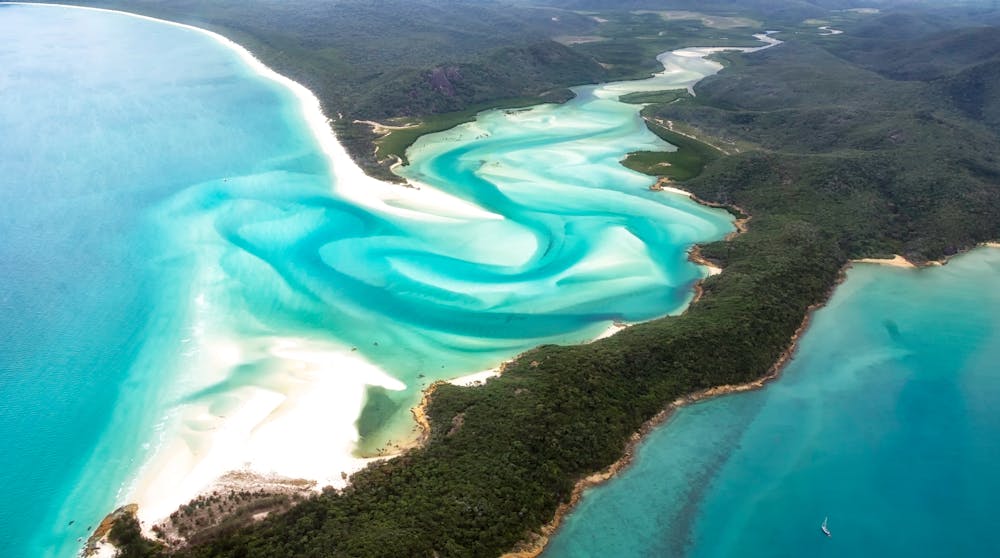 Venomous jellyfish can lurk beneath Australia’s picturesque beaches, including in the Whitsundays. Better public awareness is vital.
alexmgn/Shutterstock
Venomous jellyfish can lurk beneath Australia’s picturesque beaches, including in the Whitsundays. Better public awareness is vital.
alexmgn/Shutterstock
There have also been widespread reports that Irukandjis have been migrating southwards. Many reports have assumed there is a southward migration linked to climate change. But Australia’s jellyfish problem is far more complex. Despite the media hype, there exists no evidence that any tropical Irukandji species has migrated, or is migrating, south.
In addition, many people find it surprising to learn there are Irukandji species native to southern waters. Many cases of Irukandji syndrome have been recorded in Moreton Bay (since 1893), New South Wales (since 1905), and even as far south as Queenscliff, near Geelong (in 1998).
So amid the misinformation, pain and misery, why is this jellyfish problem not more effectively managed?
Read more: Jellyfish have superpowers – and other reasons they don't deserve their bad reputation
What is being done to manage jellyfish risks?
In North Queensland, coastal councils have grappled with jellyfish risk for decades.
At popular beaches in the Cairns, Townsville, and Whitsunday regions, visitors are offered protection in the form of lifeguard patrols and stinger nets. Beaches are also peppered with marine stinger warning signs.
But these strategies are not as effective as intended. Stinger nets, for instance, protect people against the larger, deadlier box jellyfish, but not against the tiny Irukandji.
 Stinger nets are less likely to protect beach-goers from tiny Irukandji jellyfish.
WA Department of Parks and Wildlife/AAP
Stinger nets are less likely to protect beach-goers from tiny Irukandji jellyfish.
WA Department of Parks and Wildlife/AAP
There’s a lack of public awareness about many aspects of stinger safety. For example, that Irukandji can enter the nets; that Irukandji may be encountered on the reefs and islands as well as in many types of weather conditions; and that both Irukandjis and box jellies are typically very difficult to spot in the water.
To make matters worse, visitors, especially international tourists, are completely unaware of these types of hazards at all. This was confirmed in a recently published study that found marine stinger warning signs are not effectively communicating the true risk.
These signs comply with the requirements established by Standards Australia, but do not fully meet research-based design guidelines for effective warning signage.
The high number of stings that continue to occur at patrolled beaches highlights the need for a redesign.
Read more: The blue bottles are coming, but what exactly are these creatures?
Reef operators share a similar problem.
Workplace Health and Safety legislation requires businesses for recreational water activities to do all they reasonably can to protect their staff and customers from health and safety risks.
Jellyfish risk management is only mentioned in the Code of Practice applying to diving and snorkelling businesses. But jellyfish stings continue to be widely reported, raising questions about the effectiveness of this law and its applicability to businesses for other water activities like jet skiing, kayaking, and resort watersports.
Can jellyfish risk management improve?
Absolutely! But only with more data and communication about the risks of jellyfish.
A newly established independent Marine Stinger Authority, based in Cairns, will be well positioned to provide all coastal councils, government and tourism organisations, and the wider public with updated research, information and consultation on jellyfish risks in Australia.
Read more: Why your tourist brain may try to drown you
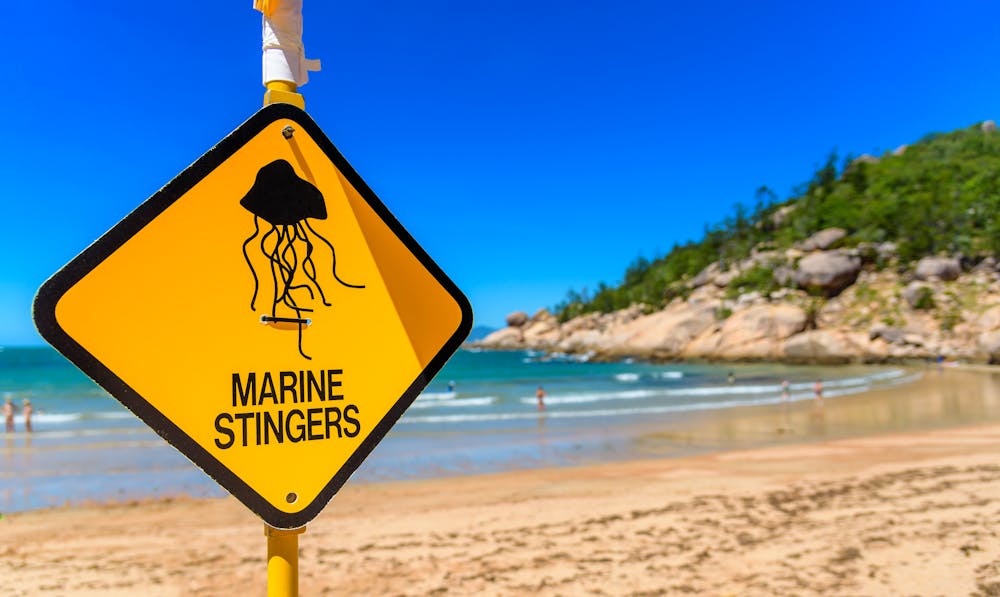 A warning sign at a Queensland beach.
Shutterstock
A warning sign at a Queensland beach.
Shutterstock
It’s a good start, and all current strategies provide a level of protection, but there is room for improvement. We have identified the following points as the highest priority:
1. a national reporting system
A national reporting system to capture real-time data about stings. This would inform coastal councils, tourism operators and other stakeholders so they can better protect the public and meet their duty of care.
Such a system has been partially developed by CSIRO, but this has ceased. We are seeking funding to resume development and implementation of this critical public safety tool.
2. improved warning signage
Modification of jellyfish warning signs should be consistent with research-based design guidelines.
Effective signs should, among other things: be noticeable and include a signal-word panel with “WARNING” in appropriate size and coulours to alert of the hazard; be easy to read, including by international visitors; include a well-designed pictogram indicating scale of hazardous jellyfish; and include hazard information, its consequences and how to avoid it.
Any modifications would also need to be monitored to ensure the signs are properly understood where deployed.
3. an updated Code of Practice
The Work Health and Safety Code of Practice should be amended to include all businesses for recreational water activities and make jellyfish risk management mandatory.
4. safety messaging research
More research is needed to better understand the effectiveness of jellyfish management strategies, taking into account the diverse cultural expectations and languages of visitors at different destinations.
For this Easter break, here a few safety tips for beachgoers:
plan ahead and be aware of local conditions
don’t touch bluebottles or other jellyfish (they can still sting out of the water)
wear stinger protective clothing like a full body lycra suit (a “rashy”) or neoprene wet suit (especially in tropical areas)
pack a bottle of vinegar in your beach bag, boat or boot of the car
get local advice on recent stings (from lifeguards or tour operators).
Authors: Lynda Crowley-Cyr, Associae Professsor of Law, University of Southern Queensland

















