Gillian Anderson explores women’s hidden sexual fantasies
- Written by Anna Szorenyi, Lecturer in Gender Studies, University of Adelaide

In 2023, the actor, producer and director Gillian Anderson, best known for playing FBI agent Dana Scully in The X-Files and therapist Jean Milburn in Sex Education, called for women to send her their sexual fantasies:
I want women across the world, and all of you who identify intrinsically as women now – queer, heterosexual and bisexual, non-binary, transgender, polyamorous – all of you, old and young, whatever your religion, and married, single or other, to write to me and tell me what you think about when you think about sex.
Anderson promised all submissions for her proposed anthology would be treated as anonymous. “I will, of course, be including my own letter, anonymously,” she added. “I look forward to reading yours.”
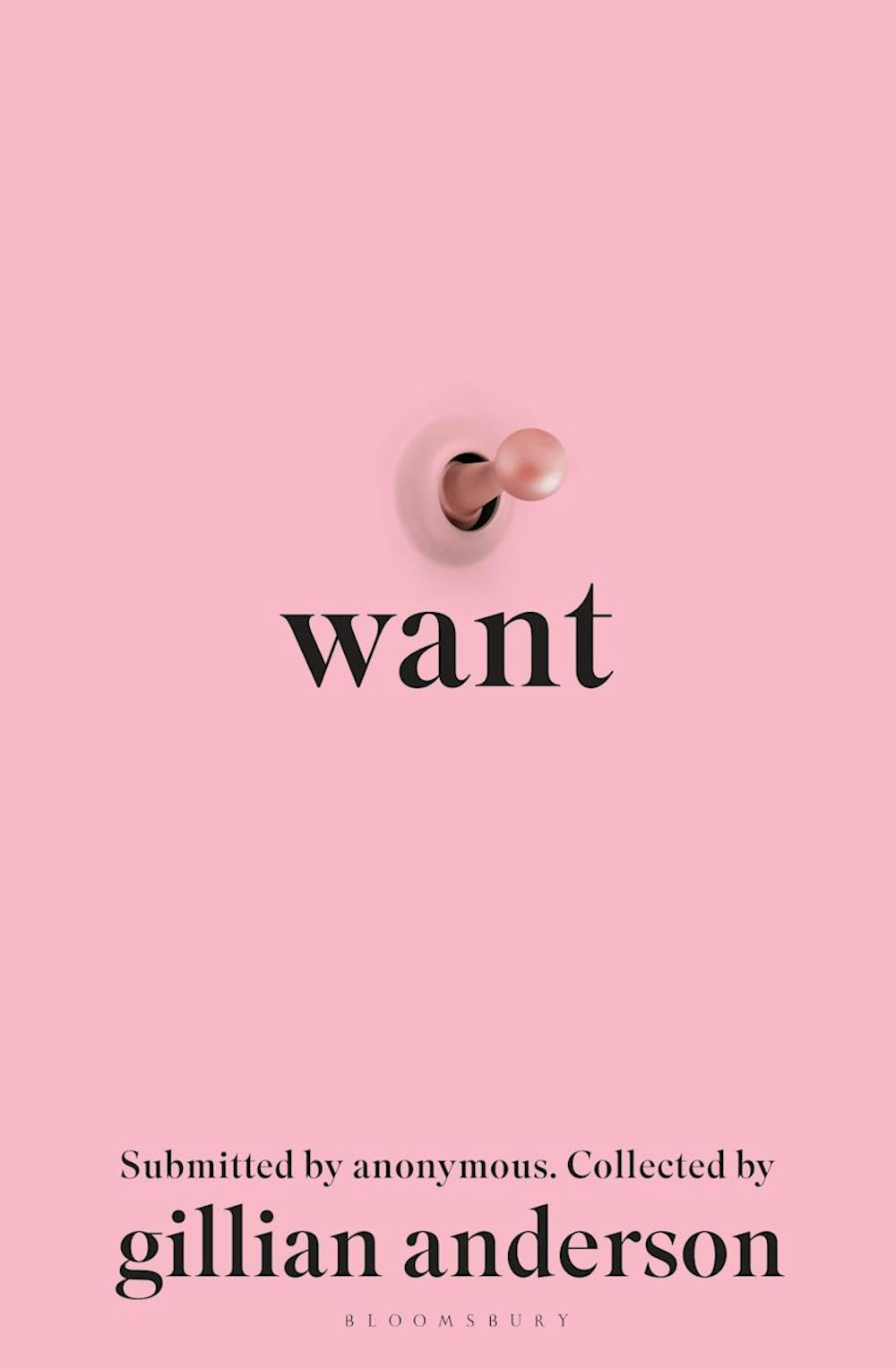
The resulting submissions were carefully selected and arranged by Anderson and have been published in Want, a collection of the anonymous sexual fantasies of women around the world.
Review: Want: Sexual Fantasies by Anonymous – edited by Gillian Anderson (Bloomsbury)
Anderson styles the project as a 21st-century continuation of Nancy Friday’s My Secret Garden: Women’s Sexual Fantasies (1973). She states in her introduction that she wanted to find out whether the kinds of sexist constraints that structured women’s fantasies in 1973 have lessened, or merely changed form.
The check-in seems especially relevant now, given that Roe v. Wade, the US Supreme Court ruling on abortion, was decided in 1973 and overturned in 2022.
One of Want’s primary themes is that women’s desire has historically been silenced. Anderson speculates that 21st-century women are still beholden to patriarchal assumptions that cast their desires as, at least, private and, at most, shameful – especially non-heterosexual and non-procreative desires. The fantasies in Want often wrestle with shame, but the book itself is designed to counter it.
But if the internalisation of fantasy as a private phenomenon harms women, Anderson also notices that the privacy of fantasy worlds is one of their most liberating dimensions:
For some of us, the sex we have in our heads may be more stimulating than the physical nuts and bolts of any coupling, no matter how hot.

In fantasy, we can be as transgressive as we want. We can take on any role and imagine our bodies, and the bodies of others, in new shapes and forms. Each fantasy presented in Want constitutes both erotica and a fragment of data, which together form a kind of survey of women’s most secret, most hidden desires.
Short statements at the end of each entry list the contributors’ ethnic groups and nationalities, religions, annual income, sexual orientations, relationship status, and “yes” or “no” to children. Strikingly, age is not listed – perhaps it is rude to ask women their age?
Multiple races, ethnicities, nationalities and religions are represented, although white and middle-class are noticeably dominant. As Anderson hoped, there are also many genders and sexual identities, including lesbian, queer, trans, polyamorous and asexual.
The stories themselves run from the exotic to the mundane. There are entries that find the erotic in the tentacular, a Bigfoot-like figure, and sex with trees. A particularly speculative story imagines new bodily textures and shapes: “she attaches her transforming alien genitalia to my privates”. One contributor wildly imagines her husband saying he has hired a cleaner and done the grocery shopping.
The book is a truly collective effort, and the cacophony of voices is one of its more striking dimensions. Reading it is an intense experience. Want is a book designed for dipping into, rather than reading from cover to cover. Its 13 sections – which have titles like Rough and Ready, To be Worshipped, Strangers, and Gently, Gently – allow readers to select according to mood or personal preference.
Fantasies and realities
Anderson has written an introduction and overviews of the sections. These occasionally read as a string of references to her own acting roles. She name-drops Margaret Thatcher, Agent Scully, Jean Milburn and Stella Gibson. Her own anonymous fantasy is also somewhere in the book, which will no doubt prompt fans to play guessing games.
While not pretending to be an expert, Anderson explores questions about the relationship between fantasy and reality. How do fantasies shape reality, and how do realities shape fantasy? The book shows the complexity of this question.
Fantasies can both mirror and subvert reality, and often both at once. Many women contrast their fantasies with their everyday lives, or construct antidotes to their real-life roles, though one contributor writes of a scenario that “involves the dentist chair and being tied down” that she would probably be “super-upset” if her actual dentist tried this. The book has plenty of humour.
Many of the stories speak to the attraction of transgression. Non-consensual fantasies are included. As Anderson notes, there is more than a little evidence of the influence of E.L. James’ erotic novel Fifty Shades of Grey. Several self-declared feminists admit to fantasies of domination or exploitation that do not align with their real-world values.
 The articulation of women’s erotic lives does not always lead to the undoing of patriarchal norms, which cast men as the active doers and women as passive receivers. Fantasy is not so easily split off from the worlds in which it is conceived and imagined.
This may be why, in an unequal world, danger and unequal power are recurring themes. One author writes: “Is it crazy that my wildest sexual fantasy is to feel safe?”
The four selections in the section titled Captive depict not-quite-consensual scenarios of terror. Anderson does not pretend to have the expertise to explain these, but is careful to point out that they should not be taken to “normalise any form of kidnapping or violence towards women”. To recentre consent, she recommends readers choose whether to read these four inclusions.
Multi-voiced desires
Want does omit some fantasies. The guidelines barred anything racist, sexist or homophobic, or advocating any activity that is illegal in the United Kingdom. In an article on LitHub, Ellie Broughton asked whether this intervention might compromise Anderson’s ability to provide a comprehensive review of women’s true desires.
But as the reader moves through Want, it becomes clear that while the guidelines may have been restrictive, they were also enabling. The book has a lighter tone than Nancy Friday’s collection. It does not centre normative or harmful sexual fantasies. There are already expansive archives elsewhere of racist, sexist and homophobic fantasies, and sexual fantasies that find pleasure in the non-consensual and the harmful.
In Want, women write about queer, disabled, winding, multi-voiced desires that are unfamiliar, provocative and sometimes truly new. Fantasies about sex between women are commonplace, as are fantasies from lesbians about sex with (or as) men. Sex, gender and sexuality become fluid, both literally (blood, urine and excrement are reimagined as erotic) and metaphorically: “Sex and gender is confusing and continues to be a journey with a changing destination,” writes one young contributor about her emerging desires.
Binaries are pleasurably unsettled. “The ability to seamlessly switch between perspectives that are typically considered mutually exclusive – like below/above, disabled/empowered, passive/active – are at the core of my most intimate fantasies,” writes a Danish lesbian with “a severe neurodegenerative disease”.
The articulation of women’s erotic lives does not always lead to the undoing of patriarchal norms, which cast men as the active doers and women as passive receivers. Fantasy is not so easily split off from the worlds in which it is conceived and imagined.
This may be why, in an unequal world, danger and unequal power are recurring themes. One author writes: “Is it crazy that my wildest sexual fantasy is to feel safe?”
The four selections in the section titled Captive depict not-quite-consensual scenarios of terror. Anderson does not pretend to have the expertise to explain these, but is careful to point out that they should not be taken to “normalise any form of kidnapping or violence towards women”. To recentre consent, she recommends readers choose whether to read these four inclusions.
Multi-voiced desires
Want does omit some fantasies. The guidelines barred anything racist, sexist or homophobic, or advocating any activity that is illegal in the United Kingdom. In an article on LitHub, Ellie Broughton asked whether this intervention might compromise Anderson’s ability to provide a comprehensive review of women’s true desires.
But as the reader moves through Want, it becomes clear that while the guidelines may have been restrictive, they were also enabling. The book has a lighter tone than Nancy Friday’s collection. It does not centre normative or harmful sexual fantasies. There are already expansive archives elsewhere of racist, sexist and homophobic fantasies, and sexual fantasies that find pleasure in the non-consensual and the harmful.
In Want, women write about queer, disabled, winding, multi-voiced desires that are unfamiliar, provocative and sometimes truly new. Fantasies about sex between women are commonplace, as are fantasies from lesbians about sex with (or as) men. Sex, gender and sexuality become fluid, both literally (blood, urine and excrement are reimagined as erotic) and metaphorically: “Sex and gender is confusing and continues to be a journey with a changing destination,” writes one young contributor about her emerging desires.
Binaries are pleasurably unsettled. “The ability to seamlessly switch between perspectives that are typically considered mutually exclusive – like below/above, disabled/empowered, passive/active – are at the core of my most intimate fantasies,” writes a Danish lesbian with “a severe neurodegenerative disease”.
 Some of the most striking fantasies are grounded in disability. Rather than being imagined away, it is carefully and specifically attended to as erotic. Wheelchairs, assistive technologies, scars and even sickness are enabling and facilitate particular kinds of pleasure. As the Danish lesbian adds: “a powered wheelchair seat and other mechanical aids can come in handy”.
Want is vast: sometimes cliched and sometimes subversive; sometimes feminist and sometimes traditional. There are stories of lone pleasure and stories of caring for others. There is embodiment and dissociation, brutality and subtlety, wild fiction and raw, gritty honesty.
Ultimately, the book demonstrates one thing incontrovertibly: many, many women love the idea of sex, although a few do not love the actual sex they are getting.
One of the most valuable things about a collection like this might be the sense of recognition it can foster. “I would give anything to know if someone else has these same thoughts, solely so I can know I’m not alone,” writes one contributor.
It seems likely many will be able to find evidence in Want’s pages that they are not alone. Others will find new and exciting scenarios to borrow and embellish for themselves. In Want, readers can discover the sheer diversity, joy and intensity that gathers under the contested label “woman”.
As Anderson writes in her conclusion:
I’ve come to see that there is no one type of fantasy, just like there is no one typical ‘woman’ […] We are all different, we all contain multitudes.
Authors: Anna Szorenyi, Lecturer in Gender Studies, University of Adelaide
Some of the most striking fantasies are grounded in disability. Rather than being imagined away, it is carefully and specifically attended to as erotic. Wheelchairs, assistive technologies, scars and even sickness are enabling and facilitate particular kinds of pleasure. As the Danish lesbian adds: “a powered wheelchair seat and other mechanical aids can come in handy”.
Want is vast: sometimes cliched and sometimes subversive; sometimes feminist and sometimes traditional. There are stories of lone pleasure and stories of caring for others. There is embodiment and dissociation, brutality and subtlety, wild fiction and raw, gritty honesty.
Ultimately, the book demonstrates one thing incontrovertibly: many, many women love the idea of sex, although a few do not love the actual sex they are getting.
One of the most valuable things about a collection like this might be the sense of recognition it can foster. “I would give anything to know if someone else has these same thoughts, solely so I can know I’m not alone,” writes one contributor.
It seems likely many will be able to find evidence in Want’s pages that they are not alone. Others will find new and exciting scenarios to borrow and embellish for themselves. In Want, readers can discover the sheer diversity, joy and intensity that gathers under the contested label “woman”.
As Anderson writes in her conclusion:
I’ve come to see that there is no one type of fantasy, just like there is no one typical ‘woman’ […] We are all different, we all contain multitudes.
Authors: Anna Szorenyi, Lecturer in Gender Studies, University of Adelaide