

Get set for take-off in electric aircraft, the next transport disruption
- Written by Jake Whitehead, Research Fellow, The University of Queensland
Move aside electric cars, another disruption set to occur in the next decade is being ignored in current Australian transport infrastructure debates: electric aviation. Electric aircraft technology is rapidly developing locally and overseas, with the aim of potentially reducing emissions and operating costs by over 75%. Other countries are already planning for 100% electric short-haul plane fleets within a couple of decades.
Australia relies heavily on air transport. The country has the most domestic airline seats per person in the world. We have also witnessed flight passenger numbers double over the past 20 years.
Infrastructure projects are typically planned 20 or more years ahead. This makes it more important than ever that we start to adopt a disruptive lens in planning. It’s time to start accounting for electric aviation if we are to capitalise on its potential economic and environmental benefits.
Read more: Why aren't there electric airplanes yet?
What can these aircraft do?
There are two main types of electric aircraft: short-haul planes and vertical take-off and landing (VTOL) vehicles, including drones.
The key issue affecting the uptake of electric aircraft is the need to ensure enough battery energy density to support commercial flights. While some major impediments are still to be overcome, we are likely to see short-haul electric flights locally before 2030. Small, two-to-four-seat, electric planes are already flying in Australia today.
An electric plane service has been launched in Perth.A scan of global electric aircraft development suggests rapid advancements are likely over the coming decade. By 2022, nine-seat planes could be doing short-haul (500-1,000km) flights. Before 2030, small-to-medium 150-seat planes could be flying up to 500 kilometres. Short-range (100-250 km) VTOL aircraft could also become viable in the 2020s.
If these breakthroughs occur, we could see small, commercial, electric aircraft operating on some of Australia’s busiest air routes, including Sydney-Melbourne or Brisbane, as well as opening up new, cost-effective travel routes to and from regional Australia.
 Possible short-haul electric aircraft ranges of 500km and 1,000km around Melbourne, Sydney and Brisbane.
Author provided
Possible short-haul electric aircraft ranges of 500km and 1,000km around Melbourne, Sydney and Brisbane.
Author provided
Why go electric?
In addition to new export opportunities, as shown by MagniX, electric aviation could greatly reduce the financial and environmental costs of air transport in Australia.
Two major components of current airline costs are fuel (27%) and maintenance (11%). Electric aircraft could deliver significant price reductions through reduced energy and maintenance costs.
Short-haul electric aircraft are particularly compelling given the inherent energy efficiency, simplicity and longevity of the battery-powered motor and drivetrain. No alternative fuel sources can deliver the same level of savings.
With conventional planes, a high-passenger, high-frequency model comes with a limiting environmental cost of burning fuel. Smaller electric aircraft can avoid the fuel costs and emissions resulting from high-frequency service models. This can lead to increased competition between airlines and between airports, further lowering costs.
Read more: Don't trust the environmental hype about electric vehicles? The economic benefits might convince you
What are the implications of this disruption?
Air transport is generally organised in combinations of hub-and-spoke or point-to-point models. Smaller, more energy-efficient planes encourage point-to-point flights, which can also be the spokes on long-haul hub models. This means electric aircraft could lead to higher-frequency services, enabling more competitive point-to-point flights, and increase the dispersion of air services to smaller airports.
While benefiting smaller airports, electric aircraft could also improve the efficiency of some larger constrained airports.
For example, Australia’s largest airport, Sydney Airport, is efficient in both operations and costs. However, due to noise and pollution, physical and regulatory constraints – mainly aircraft movement caps and a curfew – can lead to congestion. With a significant number of sub-1,000km flights originating from Sydney, low-noise, zero-emission, electric aircraft could overcome some of these constraints, increasing airport efficiency and lowering costs.
The increased availability of short-haul, affordable air travel could actively compete with other transport services, including high-speed rail (HSR). Alternatively, if the planning of HSR projects takes account of electric aviation, these services could improve connectivity at regional rail hubs. This could strengthen the business cases for HSR projects by reducing the number of stops and travel times, and increasing overall network coverage.
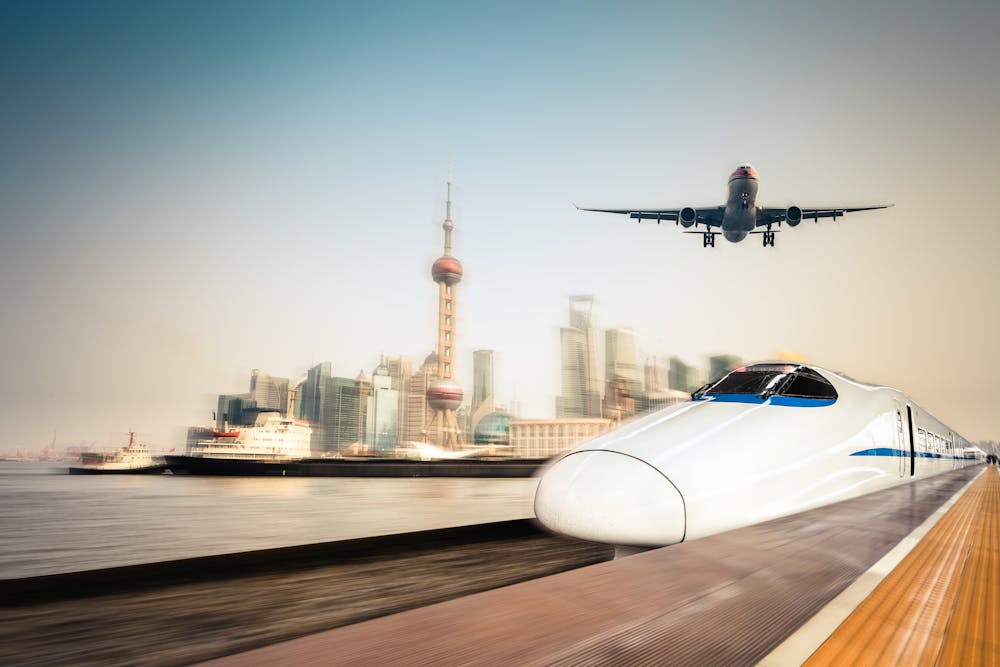 Synchronised air and rail services could improve connections for travellers.
Chuyuss/Shutterstock
Synchronised air and rail services could improve connections for travellers.
Chuyuss/Shutterstock
What about air freight?
Electric aircraft could also help air freight. International air freight volumes have increased by 80% in the last 20 years. Electric aircraft provide an opportunity to efficiently transport high-value products to key regional transport hubs, as well as directly to consumers via VTOL vehicles or drones.
If properly planned, electric aviation could complement existing freight services, including road, sea and air services. This would reduce the overall cost of transporting high-value goods.
Plan now for the coming disruption
Electric aircraft could significantly disrupt short-haul air transport within the next decade. How quickly will this technology affect conventional infrastructure? It is difficult to say given the many unknown factors. The uncertainties include step-change technologies, such as solid-state batteries, that could radically accelerate the uptake and capabilities of electric aircraft.
What we do know today is that Australia is already struggling with disruptive technological changes in energy, telecommunications and even other transport segments. These challenges highlight the need to start taking account of disruptive technology when planning infrastructure. Where we see billions of dollars being invested in technological transformation, we need to assume disruption is coming.
With electric aircraft we have some time to prepare, so let’s not fall behind the eight ball again – as has happened with electric cars – and start to plan ahead.
Read more: End of the road for traditional vehicles? Here are the facts
Authors: Jake Whitehead, Research Fellow, The University of Queensland

















