

Could keeping native species as pets save them from extinction? Here’s why it’s not that simple
- Written by: Meg Edwards, Lecturer in Wildlife Science, University of Southern Queensland
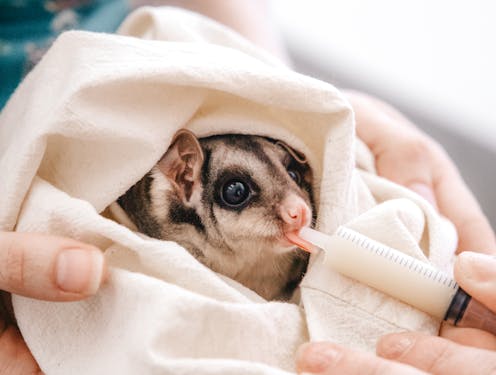
Humans have been turning wild animals into pets for thousands of years. Pets – animals kept for companionship, not for food or work – were widespread in ancient Egypt.
In Australia, First Nations groups favoured dingoes, a naturalised canine arriving perhaps 5,000 years ago. “Dingo” is derived from din-gu, the Dharug word for domesticated dog – wild dingoes were known as “warrigal”.
To begin with, early colonial settlers often saw native wildlife as competitors to livestock. But over time, some began keeping native animals as pets. In the early 20th century, officials began warning people not to take animals such as koalas from the wild to become pets. Over the next few decades, state and territory governments restricted the practice.
A few common native species such as budgies can be kept without a license regardless of where you live. But having a pet koala is either banned outright or heavily restricted.
In recent years, states such as South Australia have moved to liberalise native wildlife ownership laws. Could this be good for threatened species? That depends. Turning threatened species into pets may keep the species alive – but unable to survive without us.

What wildlife can be kept as pets in Australia?
These days, most Australian pet owners have a dog or a cat and wouldn’t think to consider a native pet other than a budgie. Is it even legal, you might wonder. Well, it depends where you live.
In South Australia you can keep most native animals as a pet, though you might need a permit depending on the type.
Residents keep animals such as fat-tailed dunnarts, sugar gliders, rufous bettongs, and a long list of reptiles and birds – even emus. But there are rules – native pets have to be sourced from captive populations, not the wild.
In Queensland you can keep species such as black-throated finches, types of rainbowfish and crimson rosellas without a licence. A standard licence opens the door to bird-eating spiders, tree frogs, land mullet and bearded dragons.
Other states and territories list a few dozen common species which you don’t need a license to keep.
In the Northern Territory residents can keep species such as spinifex hopping mice without a permit.
In Victoria residents have to get a license for all native species bar 45 common ones such as king quail, blue-tongue lizards and spinifex hopping mice.
In New South Wales residents have a similar list of 41 common species and license requirements for others.
In Western Australia, residents can keep any invertebrate as a pet, as well as 12 bird species. A standard license opens the door to dozens of bird and reptile species.
Tasmania is more restrictive. Rainbow lorikeets, turtles, snakes and ferrets are banned as pets. The island state wants to avoid issues with introduced species – and even native species such as sugar gliders can do real damage once they’re introduced.
The rules can be quite different overseas. The sugar glider is largely restricted to permit-holders in Australia, but is commonly kept as a pet in the United States without restrictions. Similarly, you can buy a kangaroo as a pet in some US states.
Wild pets can be hard work
Cute, furry gliding marsupials like sugar gliders make for great social media content. But sugar gliders are nocturnal and have specialised diets. They’re not an easy pet.
Most Australian species will pose similar challenges. Special diets. Different waking hours. The need for specific types of enclosures and enrichment.
If a native pet is fed the wrong food, such as fruits high in sugar, they can quickly become overweight, ill and have dental problems.
Some species like gliders also have complex social structures which can be tricky to manage, and without suitable companions may become stressed or depressed.
Could domestication help conservation?
It’s not uncommon to hear people asking whether keeping threatened native species as pets could help bring them back from the brink.
Conservationists have long used captive breeding to boost dwindling populations and reintroducing captive-born individuals back to the wild. Not long ago, the eastern barred bandicoot was extinct in the wild in Victoria. But a sustained captive breeding and release program on fox-free islands has been remarkably successful.
But conservation projects like this are done carefully. They need strict breeding, genetic and health management, alongside significant funding and planning commitments. Some animals undergo antipredator training to give them a better chance in the wild.
Using native pets for conservation is a different story.
When animals are domesticated, their anatomy and appearance begins to change. We select pets for a range of appealing traits, resulting in a wide variety of coat colours, body shapes and temperaments. This is how we ended up with hundreds of varieties of dogs.
In Russia, foxes bred in captivity ended up with floppy ears and different coat patterns. The budgerigar is one of the world’s most popular pet birds. But captive breeding over 150 years has produced pet budgies generally larger and slower than wild individuals.
What if we had pet quolls not cats?
Conservationists have floated the idea of having pet quolls rather than pet cats. Quolls are attractive, carnivores with unique coats, similar in size to cats. But all four species of these native marsupials are under pressure.
If we bred quolls for pet shops, we would likely see them change, as our preferences change how they look and behave. Bitey or drab quolls wouldn’t get to mate. This selection process has already happened to sugar gliders – you can now buy gliders with pure white coats. That’s good for humans – but not for the species.
 Substitute a pet quoll for a cat? It would come with risks to the health of the species.
MindStorm
Substitute a pet quoll for a cat? It would come with risks to the health of the species.
MindStorm
Within 13 captive-bred generations, the northern quoll loses its wariness and other defences against predators. Animals bred for pets would likely find it hard or impossible to survive the wild.
Making animals into pets doesn’t mean wild populations will increase. Around 5,000 tigers now live in captivity in the US, more than those remaining in the wild. But “pet” tigers are rarely reintroduced back to the wild. So wild tiger populations keep falling even while domesticated tiger numbers grow.
So yes, keeping native species as pets could safeguard against complete extinction. But it’s hard to see how owning a pet quoll or other native species would help the species overall.
Authors: Meg Edwards, Lecturer in Wildlife Science, University of Southern Queensland


















