

The Magic Mountain is a sweeping critique of totalitarian Europe. 100 years later, its warnings feel urgent
- Written by: Alexander Howard, Senior Lecturer, Discipline of English and Writing, University of Sydney
This month, Nobel Prize winner Thomas Mann’s The Magic Mountain turns 100. One of the 20th century’s towering literary achievements, it is a sweeping critique of the dangerous totalitarian political forces that shaped – and very nearly destroyed – Europe in Mann’s lifetime.
The novel also reflects Mann’s own dramatic public and political evolution. Initially politically reserved, he became an ardent patriot at the outbreak of World War I, only to become disillusioned by the rise of political extremism in postwar Germany. This shift set Mann on a collision course with Adolf Hitler and the Nazis – and ultimately led to him fleeing Germany in 1933.

This intellectual novel is interested in the weightiest of topics – time, love, mortality, culture – and the fragility of civilisation. There are worrying parallels between 1924, when Mann’s magnum opus was published, and 2024, when we’re seeing a worldwide resurgence of these same impulses.
There is the rise of the far-right in France, Austria and Germany. And then, American president-elect Donald Trump’s apparent admiration for dictatorial and authoritarian modes of governance.
These forces loom ominously over our own era, threatening the democratic ideals Mann ultimately embraced.
Things you’ve never dreamed of
This encyclopedia of a novel (nearly 800 pages) opens in transit:
An unassuming young man was travelling, in midsummer, from his native city of Hamburg to Davos-Platz in the Canton of the Grisons, on a three weeks’ visit.
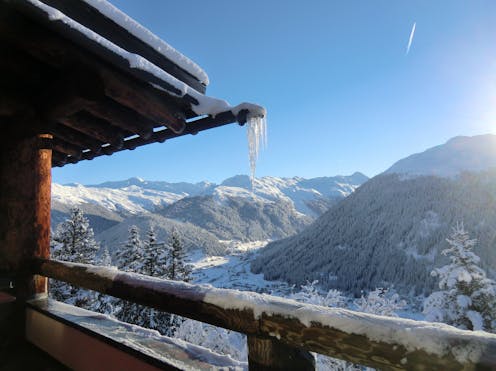
It is August 1907. Hans Castorp, a “perfectly ordinary” 23-year-old from an upwardly mobile merchant family is journeying to meet his cousin, Joachim Ziemssen – a patient at a tuberculosis sanitarium, located (Mann’s narrator estimates) 1,600 metres above sea level in the Swiss Alps.
Mann’s amenable, omniscient narrator outlines the effect on the novel’s youthful protagonist:
This being carried upward into regions where he had never before drawn breath, and where he knew that unusual living conditions prevailed, such as could only be described as sparse or scanty – it began to work upon him, to fill him with a certain concern. Home and regular living lay not only far behind, they lay fathoms deep beneath him, and he continued to mount above them. Poised between them and the unknown, he asked himself how he was going to fare.
This is a sign of things to come. Joachim, who has already been at the Berghof Sanatorium for five months, implores Castorp to get properly “acclimatized” when he meets him at the train station. He continues:
it isn’t so easy, you’ll see. And the climate isn’t the only queer thing about us. You’re going to see some things you’ve never dreamed of – just wait.
Joachim advises his cousin to disabuse himself of the “class of ideas” typical of those who dwell at sea level “down below” – especially assumptions about time. He openly scoffs at Castorp’s woefully naïve assertion that he’ll be “going home in three weeks”.
Soon after his arrival, Castorp catches a cold. Berghof’s medical director spies a suspicious dark spot on his lung and recommends he extend his stay indefinitely. Castorp spends the next seven years living at altitude. Time warps and wends in increasingly strange ways, and the pace of daily life gradually grinds to a near total halt.
 Seasons change. Visitors come and go. Some of the patients die. Castorp falls in love with a Russian temptress resident. When he isn’t pining for her, he spends his time in conversation, gorging on elaborate and seemingly endless meals, listening to records, and occasionally attempting to commune with the spirits. In one memorable and symbolically charged moment, he gets hopelessly lost in a life-threatening blizzard.
It takes the outbreak of World War I to finally shatter the spell the mountain has cast over him. The reader parts company with Castorp on a Flanders battlefield in 1914. The odds of survival don’t seem to be stacked in his favour.
Of course, potted plot summaries of this sort cannot hope to do justice to the sheer ambition, thematic richness and formal rigour of The Magic Mountain.
Origins: world war and political awakenings
The novel’s origins can be traced to May 1912, when Thomas Mann embarked on a three-week trip to Davos, Switzerland. His wife, Katia, had been falsely diagnosed with tuberculosis and was staying at the recently opened Wald Sanatorium.
Mann’s stay served as the catalyst for a new literary venture. Initially conceived as a satire, The Enchanted Mountain was meant to be a comedic counterweight to his just-published Death in Venice, which traces the tragic obsession of Gustav von Aschenbach, an ageing author, with a beautiful young boy during a vacation in cholera-racked Venice.
Mann started in on what should have been a fairly straightforward, small-scale undertaking. But world history had other ideas. On August 4 1914, German troops flooded into neutral Belgium, bringing the British Empire into the week-old World War I – and shattering the cultural ideals and intellectual suppositions of pre-war Europe.
Seasons change. Visitors come and go. Some of the patients die. Castorp falls in love with a Russian temptress resident. When he isn’t pining for her, he spends his time in conversation, gorging on elaborate and seemingly endless meals, listening to records, and occasionally attempting to commune with the spirits. In one memorable and symbolically charged moment, he gets hopelessly lost in a life-threatening blizzard.
It takes the outbreak of World War I to finally shatter the spell the mountain has cast over him. The reader parts company with Castorp on a Flanders battlefield in 1914. The odds of survival don’t seem to be stacked in his favour.
Of course, potted plot summaries of this sort cannot hope to do justice to the sheer ambition, thematic richness and formal rigour of The Magic Mountain.
Origins: world war and political awakenings
The novel’s origins can be traced to May 1912, when Thomas Mann embarked on a three-week trip to Davos, Switzerland. His wife, Katia, had been falsely diagnosed with tuberculosis and was staying at the recently opened Wald Sanatorium.
Mann’s stay served as the catalyst for a new literary venture. Initially conceived as a satire, The Enchanted Mountain was meant to be a comedic counterweight to his just-published Death in Venice, which traces the tragic obsession of Gustav von Aschenbach, an ageing author, with a beautiful young boy during a vacation in cholera-racked Venice.
Mann started in on what should have been a fairly straightforward, small-scale undertaking. But world history had other ideas. On August 4 1914, German troops flooded into neutral Belgium, bringing the British Empire into the week-old World War I – and shattering the cultural ideals and intellectual suppositions of pre-war Europe.
 German soldiers in Belgium during World War I (1915).
Library of Congress
Mann was 39 when the fighting broke out. A prominent figure in the German cultural establishment, Mann, who lived in Munich at the time, was in many senses a model bourgeois citizen.
As intellectual historian Mark Lilla observes, Mann
attended concerts, he befriended composers, he read Goethe, he sent his children to the Volksschule, and he never expressed any views about politics.
That is, until 1914. “From one month to the next Mann became an intransigent and inflammatory defender of the German cause internationally,” Lilla adds, “writing articles and giving speeches that made him a favorite on the volkish nationalist right”.
Rabid patriot to fleeing Nazi Germany
The conflict seems to have absorbed all of Mann’s energy and focus. In 1915, he abandoned work on his novella, which had by then expanded significantly in both scope and size. Instead, he turned his attention to Reflections of a Nonpolitical Man.
Published in October 1918, this 600-page tirade is a reactionary, rabid screed in which Mann lashes out at the progressive political forces and institutions he believed were intent on nothing less than the destruction of the German nation. Indeed, he goes as far as to admit that from the very start of the war, he had been consumed by a patriotic feeling so profound, he would
not want to live anymore if Germany were beaten by the West, humbled, her belief in herself broken so that she would have to “conform” and accept the rationale of her enemies.
Mann’s jingoistic fervour persisted even after Germany’s defeat, carrying over into the spring of 1919, when he finally returned to The Magic Mountain. However, everything had changed for Mann by 1922. Appalled by the waves of extremist political violence coursing through Germany, Mann was forced to take stock and reappraise his beliefs.
German soldiers in Belgium during World War I (1915).
Library of Congress
Mann was 39 when the fighting broke out. A prominent figure in the German cultural establishment, Mann, who lived in Munich at the time, was in many senses a model bourgeois citizen.
As intellectual historian Mark Lilla observes, Mann
attended concerts, he befriended composers, he read Goethe, he sent his children to the Volksschule, and he never expressed any views about politics.
That is, until 1914. “From one month to the next Mann became an intransigent and inflammatory defender of the German cause internationally,” Lilla adds, “writing articles and giving speeches that made him a favorite on the volkish nationalist right”.
Rabid patriot to fleeing Nazi Germany
The conflict seems to have absorbed all of Mann’s energy and focus. In 1915, he abandoned work on his novella, which had by then expanded significantly in both scope and size. Instead, he turned his attention to Reflections of a Nonpolitical Man.
Published in October 1918, this 600-page tirade is a reactionary, rabid screed in which Mann lashes out at the progressive political forces and institutions he believed were intent on nothing less than the destruction of the German nation. Indeed, he goes as far as to admit that from the very start of the war, he had been consumed by a patriotic feeling so profound, he would
not want to live anymore if Germany were beaten by the West, humbled, her belief in herself broken so that she would have to “conform” and accept the rationale of her enemies.
Mann’s jingoistic fervour persisted even after Germany’s defeat, carrying over into the spring of 1919, when he finally returned to The Magic Mountain. However, everything had changed for Mann by 1922. Appalled by the waves of extremist political violence coursing through Germany, Mann was forced to take stock and reappraise his beliefs.
 Early Nazi Party members in Germany’s Weimar Republic during the 1920s – when ‘everything changed’ for Mann.
Wikimedia Commons
That year, in an unprecedented move that shocked his supporters and critics, he wrote and delivered his speech, On the German Republic.
In it, he publicly embraced the postwar Weimar Republic and the principles of its democracy, distancing himself from the types of authoritarian nationalism he had so passionately defended just a few years earlier.
This remarkable development, which led to him fleeing Nazi Germany, left an indelible mark on the development of The Magic Mountain.
Europe teetering on the abyss
By the time he finished writing, the work had been transformed from a satirical novella into a sweeping Bildungsroman, focused on moral education and psychological development. It was now also an allegory of European civilisation teetering on the abyss – a “world festival of death”,
as Mann puts it in the novel’s final sentence.
Specifically, the phrase is a reference to World War I. More broadly – and just as powerfully – it reflects the sense of postwar disillusionment and social malaise that shaped the novel.
Early Nazi Party members in Germany’s Weimar Republic during the 1920s – when ‘everything changed’ for Mann.
Wikimedia Commons
That year, in an unprecedented move that shocked his supporters and critics, he wrote and delivered his speech, On the German Republic.
In it, he publicly embraced the postwar Weimar Republic and the principles of its democracy, distancing himself from the types of authoritarian nationalism he had so passionately defended just a few years earlier.
This remarkable development, which led to him fleeing Nazi Germany, left an indelible mark on the development of The Magic Mountain.
Europe teetering on the abyss
By the time he finished writing, the work had been transformed from a satirical novella into a sweeping Bildungsroman, focused on moral education and psychological development. It was now also an allegory of European civilisation teetering on the abyss – a “world festival of death”,
as Mann puts it in the novel’s final sentence.
Specifically, the phrase is a reference to World War I. More broadly – and just as powerfully – it reflects the sense of postwar disillusionment and social malaise that shaped the novel.
 A poster for the German film of The Magic Mountain.
The intense intellectual debates that unfold in The Magic Mountain, particularly between charismatic humanist Lodovico Settembrini and nihilistic, “terroristic” Jesuit communist Leo Naphta, offer Mann the means to reflect and comment on the totalitarian forces that were threatening to tear the world asunder.
A century after the novel first appeared, its nuanced discussions of ideological conflict, the dangers of extremism and the fragility of civilisation remain, depressingly, as pertinent as ever.
In 2024, the far-right has taken a firm foothold across Europe and the rest of the world, challenging the very democratic principles Mann came – albeit reluctantly – to value to champion.
One can’t help but wonder what Mann, who wrote while the skies were slowly closing in over Europe, might have made of this situation.
Read more:
Germany's post-Holocaust moral remaking is being challenged by wars in Gaza and Ukraine – and the rise of the far-right
History repeating?
Would he, for instance, discern echoes of the same forces he grappled with in his modernist masterpiece, now manifesting in new, yet strangely familiar ways? And would he recognise the dangers of cultural and political polarisation and the allure of authoritarian forms of thought and activity that are currently casting increasingly long shadows over our own precarious moment?
I suspect he might. In any case, these are just some of the questions worth asking as we mark the anniversary of a novel that, much like its creator, challenges us to confront the currents of history and their unsettling tendency to repeat.
Near the end of the book, Mann writes: “These were such singular times.” Viewed from the perspective of 2024, I’m not so sure.
Authors: Alexander Howard, Senior Lecturer, Discipline of English and Writing, University of Sydney
A poster for the German film of The Magic Mountain.
The intense intellectual debates that unfold in The Magic Mountain, particularly between charismatic humanist Lodovico Settembrini and nihilistic, “terroristic” Jesuit communist Leo Naphta, offer Mann the means to reflect and comment on the totalitarian forces that were threatening to tear the world asunder.
A century after the novel first appeared, its nuanced discussions of ideological conflict, the dangers of extremism and the fragility of civilisation remain, depressingly, as pertinent as ever.
In 2024, the far-right has taken a firm foothold across Europe and the rest of the world, challenging the very democratic principles Mann came – albeit reluctantly – to value to champion.
One can’t help but wonder what Mann, who wrote while the skies were slowly closing in over Europe, might have made of this situation.
Read more:
Germany's post-Holocaust moral remaking is being challenged by wars in Gaza and Ukraine – and the rise of the far-right
History repeating?
Would he, for instance, discern echoes of the same forces he grappled with in his modernist masterpiece, now manifesting in new, yet strangely familiar ways? And would he recognise the dangers of cultural and political polarisation and the allure of authoritarian forms of thought and activity that are currently casting increasingly long shadows over our own precarious moment?
I suspect he might. In any case, these are just some of the questions worth asking as we mark the anniversary of a novel that, much like its creator, challenges us to confront the currents of history and their unsettling tendency to repeat.
Near the end of the book, Mann writes: “These were such singular times.” Viewed from the perspective of 2024, I’m not so sure.
Authors: Alexander Howard, Senior Lecturer, Discipline of English and Writing, University of Sydney 

















