

After a disappointing COP29, here’s how to design global climate talks that might actually work
- Written by: Howard Bamsey, Honorary Professor, School of Regulation and Global Governance, Australian National University
Many people long involved in global climate negotiations see the annual United Nations COP climate talks as fundamentally flawed. That includes me.
On Sunday, the 29th round of talks finished in Baku, Azerbaijan. It was likely my 25th COP. I have attended these talks in many different roles, but largely as a climate negotiator for the Australian government. These days I attend in my academic capacity.
COP29 did not achieve a breakthrough. It led to a modest increase in climate finance for developing nations and agreement on carbon market rules. But many issues were kicked down the road.
COP talks are slow. And the once-a-year meetings are seen as “win or lose” moments, which complicates the dynamics. Oil states and lobbyists work to avoid mention of quitting fossil fuels. Host nations need a win, leading to “commitments” which may not lead to substantive change. Ahead of this year’s talks, major climate figures called once more for reform to the COP process.
But however flawed, COP meetings are the only way to get the world’s nations in the same room to hash out what to do about climate change.
In recent years, global leaders have been distracted by COVID, the Ukraine-Russia war and now the Middle East. But climate change is only worsening. It won’t be long before real world events pull our attention back to the single largest threat we face.

Why do these talks matter?
Since 1995, the COP talks have acted as the main driver of global action on climate change. These talks will continue to matter until the transition to clean energy is complete and the burning of fossil fuels is no longer routine.
Climate change has a one-word solution: investment. Every day, companies and governments invest money. They either invest it in status quo technologies which make carbon pollution worse, or they invest in cleaner alternatives.
What the COP talks do is help change the direction of investment. You can see this working very clearly in how much is now being invested in green energy, electricity grid upgrades and energy efficiency – double that for new fossil fuels. (Unfortunately, if you include fossil fuel subsidies, the picture is very different.)
Last year, nations finally included text about the need to transition away from fossil fuels. It was hard-won. But this year, diplomats from Saudi Arabia and petrostate allies were able to block any mention of this.
The text on fossil fuels was not binding. But it was influential in boardrooms where decisions on investment are made.
Process over progress?
The way the COP talks are set up are not ideal.
A new country is chosen every year to take on the presidency role and host the summit. The talks run for a fortnight and the agenda is vast. This year, the hosts, Azerbaijan, struggled to keep control of the agenda. As a result, issues such as the Global Stocktake – which included the calls to quit fossil fuels – were kicked down the road to COP30 in Brazil in a year’s time.
Because these talks are just once a year, everything crowds into them. It is very messy.
Every June, climate negotiators meet for an inter-sessional meeting before the next COP talks in Bonn, Germany, where the UN Secretariat on Climate Change has its headquarters.
At these meetings, we often see efforts to walk back announcements made at the formal COP talks. Sometimes these are successful.
Every delegate sent to COP talks has two reasons for going. The first is because their government is to some extent committed to solving the great problem of climate change. Five or six nations might not be, but that leaves over 190 who are. The second reason is to protect their national interests. You can, of course, do both.
But this brings up a hidden issue. Many people who attend become, in my view, focused on the process, not the outcome. Twice a year, they travel to the COP itself and the Bonn intersessional, where they will meet friends and colleagues. It has become routine. The process has become, for some, the point.
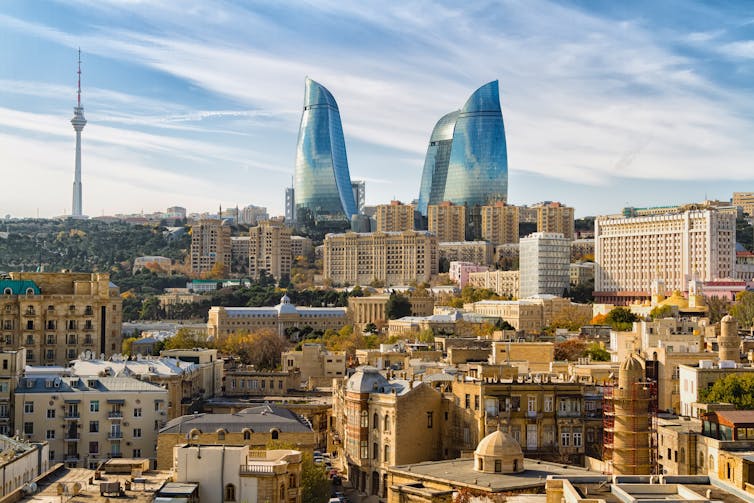
 Every year, a new nation hosts the COP talks. This year, thousands of delegates headed to Baku, Azerbaijan.
Milosz Maslanka/Shutterstock
Every year, a new nation hosts the COP talks. This year, thousands of delegates headed to Baku, Azerbaijan.
Milosz Maslanka/Shutterstock
Five ideas for change
COP talks are flawed but necessary. Could we improve them?
Here are five ideas:
1. Break up the negotiating process
Meetings of COP subsidiary bodies in cities where most nations have established diplomatic missions. These bodies could meet more regularly, creating pressure and momentum for more speed and outcomes.
2. Change COP presidency arrangements
At times, the nation hosting the talks tries to control outcomes as much possible. But this is an all but impossible task. A better option might be to rely on the negotiators from each nation who do most of the work – and make them accountable for achieving outcomes.
3. Make regional meetings more important
COP is big. Hundreds of countries, thousands of delegates, and many from civil society and business. It’s very difficult when everyone tries to talk to everyone. Much better progress would come if the thrust of COP talks was devolved to smaller, more regular regional meetings.
4. Gather more ambitious countries
There have been several gatherings of nations wanting to do more, faster on climate change, such as the High Ambition Coalition. These gatherings can help stimulate action among like-minded leaders. But they need sustained leadership to be effective.
5. Direct action by the largest emitters
In 2015, the Paris Agreement set a joint goal of keeping climate change below 2°C. It was the high water mark for COP talks. Before this agreement was signed, top emitters China and the United States found common ground on climate in direct talks, despite intensifying geopolitical jostling. This helped Paris succeed. In 2025 under President Donald Trump, the US will walk off the climate action stage again. But China is now feeling more confident in shouldering a climate leadership role.
What about preventing oil states from hosting these talks, as prominent climate movers and shakers have called for? You can’t easily shut out countries who have signed treaties and agreements. The solution here is to organise better. Oil-state pressure doesn’t have to win. While oil rich Azerbaijan’s presidency of COP29 drew scepticism, there was no sign that its leaders wanted the process to fail.
Needed: renewed political will
Ten years ago, it felt like the world was largely united on climate. But while the Paris Agreement has helped avert the worst emissions scenarios, it has not yet led to a single year of declining emissions.
Climate change has, by any measurement, slipped down the global list of urgent issues. That will change as more calamitous impacts arrive.
Authors: Howard Bamsey, Honorary Professor, School of Regulation and Global Governance, Australian National University


















