

5 classics to catch up on this summer
- Written by: Sophie Gee, Vice Chancellor's Fellow, University of Sydney
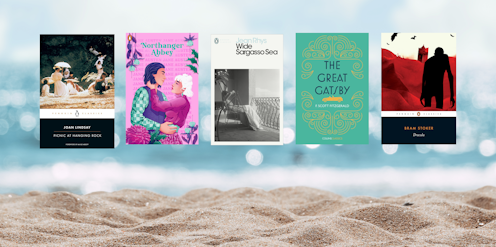
I’ve dedicated my professional life to reading and teaching the English classics. The crucial thing about classics is that they start as cutting-edge literary experiments.
Think about the events that cause classic writers to put pen to paper: the rise and fall of empires, wars, terrorism, revolution, falling in love, homophobia and gay rights, childbirth, plague, enslavement, freedom, rebellion, the wildest places, people’s living rooms.
Like it or not, the whole human world is in these books.
Classics are often not easy reads – but all the books I’ve chosen are, as it happens, page-turners. There’s a richness to them, a depth and sense of perspective that comes from time and history.
My mission is to help new generations of readers learn how great writers have connected with their present, understood their past … and looked into the future.
1. Picnic at Hanging Rock, Joan Lindsay (1967)

 Such a famous character, but a neglected book. While it’s often sensational and pulpy, Bram Stoker’s wildly original novel is an indelible piece of mythmaking that invented a whole new mode of horror.
Dracula is the story of a young English solicitor, Jonathan Harker, who goes to Transylvania to help a mysterious client: Count Dracula. Harker soon discovers that the count is a malignant monster with supernatural powers and finds himself imprisoned in the castle. The action then shifts to England, where Dracula arrives by boat and begins a spree of terror, sucking the blood of his victims – including Lucy, the best friend of Harker’s wife, Mina.
The brilliance of the book is closely connected to Stoker’s day job as a theatre manager. He blended the hottest topics of the day — fears of immigration, female sexuality and Darwinism — into a single, haunting story. Some of these topics are still hot: it’s a double marriage plot, organised around the attempt to root out a foreign epidemic that has invaded England, and to send “immigrant culture” back to its roots.
Best line: “I could feel the soft, shivering touch of the lips on the super sensitive skin of my throat, and the hard dents of two sharp teeth, just touching and pausing there. I closed my eyes in languorous ecstasy and waited, waited with beating heart.”
3. Northanger Abbey, Jane Austen (1817)
Such a famous character, but a neglected book. While it’s often sensational and pulpy, Bram Stoker’s wildly original novel is an indelible piece of mythmaking that invented a whole new mode of horror.
Dracula is the story of a young English solicitor, Jonathan Harker, who goes to Transylvania to help a mysterious client: Count Dracula. Harker soon discovers that the count is a malignant monster with supernatural powers and finds himself imprisoned in the castle. The action then shifts to England, where Dracula arrives by boat and begins a spree of terror, sucking the blood of his victims – including Lucy, the best friend of Harker’s wife, Mina.
The brilliance of the book is closely connected to Stoker’s day job as a theatre manager. He blended the hottest topics of the day — fears of immigration, female sexuality and Darwinism — into a single, haunting story. Some of these topics are still hot: it’s a double marriage plot, organised around the attempt to root out a foreign epidemic that has invaded England, and to send “immigrant culture” back to its roots.
Best line: “I could feel the soft, shivering touch of the lips on the super sensitive skin of my throat, and the hard dents of two sharp teeth, just touching and pausing there. I closed my eyes in languorous ecstasy and waited, waited with beating heart.”
3. Northanger Abbey, Jane Austen (1817)
 If she were alive in 2025, Jane Austen would be 250 years old. Northanger Abbey was published a few months after Austen’s death at 41, but the composition of the novel dates back to when she was in her early twenties – and it is perhaps the most exuberantly youthful and autobiographical of her books.
It tells the story of 17-year-old book nerd Catherine Morland, who travels to Bath with a neighbour, falls in love, gains and loses a friend, visits a not-so-spooky stately home and learns that life doesn’t quite work out as her beloved novels would have her believe.
This is also Austen’s most meta novel. She’s thinking about what this new literary form can and can’t do — Northanger Abbey is both a satire on the silliness of gothic fiction and a brilliantly insightful gothic tale.
One of its many secrets is that it’s set in the age of revolutions – American, French and especially Haitian – and Austen is covertly challenging cliches about British virtue and French corruption. She’s also planting the seeds of her long-term abolitionist beliefs.
Best line: “No one who had ever seen Catherine Morland in her infancy, would have supposed her born to be an heroine.”
4. The Great Gatsby, F. Scott Fitzgerald (1925)
If she were alive in 2025, Jane Austen would be 250 years old. Northanger Abbey was published a few months after Austen’s death at 41, but the composition of the novel dates back to when she was in her early twenties – and it is perhaps the most exuberantly youthful and autobiographical of her books.
It tells the story of 17-year-old book nerd Catherine Morland, who travels to Bath with a neighbour, falls in love, gains and loses a friend, visits a not-so-spooky stately home and learns that life doesn’t quite work out as her beloved novels would have her believe.
This is also Austen’s most meta novel. She’s thinking about what this new literary form can and can’t do — Northanger Abbey is both a satire on the silliness of gothic fiction and a brilliantly insightful gothic tale.
One of its many secrets is that it’s set in the age of revolutions – American, French and especially Haitian – and Austen is covertly challenging cliches about British virtue and French corruption. She’s also planting the seeds of her long-term abolitionist beliefs.
Best line: “No one who had ever seen Catherine Morland in her infancy, would have supposed her born to be an heroine.”
4. The Great Gatsby, F. Scott Fitzgerald (1925)
 Another birthday! 2025 is the year The Great Gatsby turns 100. It’s a short novel about car crashes, exotic cocktails, wild parties, tawdry affairs and the American Dream gone wrong.
The narrator is a young banker, Nick Carraway, who lives on Long Island next door to the mysterious Jay Gatsby. Gatsby entertains compulsively in his vast, faux-French mansion, secretly still in love with beautiful Daisy Buchanan, whom he met five years earlier and who lives in another large house just across the bay. The Great Gatsby wasn’t a huge success when it was published, but its reputation has grown.
This summer is a great time to ask, a century on, did Fitzgerald put his finger on the issues which still define modern American life, politics and culture? What causes the American dream to die in The Great Gatsby? The overreaching ambition and greed of new money, or the complacency and corruption of old money and privilege? Or is it love and passion?
As the endless stage and screen adaptations show, artists cannot leave this Jazz Age fable alone. Or maybe it’s about the unending variety and abundance of drinks and great clothes.
Best line: “Her face was sad and lovely with bright things in it, bright eyes and a bright passionate mouth, but there was an excitement in her voice that men who had cared for her found difficult to forget: a singing compulsion, a whispered ‘Listen,’ a promise that she had done gay, exciting things just a while since and that there were gay, exciting things hovering in the next hour.”
5. Wide Sargasso Sea, Jean Rhys (1966)
Another birthday! 2025 is the year The Great Gatsby turns 100. It’s a short novel about car crashes, exotic cocktails, wild parties, tawdry affairs and the American Dream gone wrong.
The narrator is a young banker, Nick Carraway, who lives on Long Island next door to the mysterious Jay Gatsby. Gatsby entertains compulsively in his vast, faux-French mansion, secretly still in love with beautiful Daisy Buchanan, whom he met five years earlier and who lives in another large house just across the bay. The Great Gatsby wasn’t a huge success when it was published, but its reputation has grown.
This summer is a great time to ask, a century on, did Fitzgerald put his finger on the issues which still define modern American life, politics and culture? What causes the American dream to die in The Great Gatsby? The overreaching ambition and greed of new money, or the complacency and corruption of old money and privilege? Or is it love and passion?
As the endless stage and screen adaptations show, artists cannot leave this Jazz Age fable alone. Or maybe it’s about the unending variety and abundance of drinks and great clothes.
Best line: “Her face was sad and lovely with bright things in it, bright eyes and a bright passionate mouth, but there was an excitement in her voice that men who had cared for her found difficult to forget: a singing compulsion, a whispered ‘Listen,’ a promise that she had done gay, exciting things just a while since and that there were gay, exciting things hovering in the next hour.”
5. Wide Sargasso Sea, Jean Rhys (1966)
 Wide Sargasso Sea is the last novel by Dominican writer Jean Rhys, who composed it in her late 60s and 70s, after a turbulent creative life in the West Indies and England.
The story is an audacious response to Charlotte Bronte’s Jane Eyre. It tells the story of Creole woman Bertha Antoinette Mason, who grows up on a plantation in Jamaica shortly after the Slavery Abolition Act of 1833, which ruined her family.
In Bronte’s Jane Eyre, we glimpse Antoinette (or, the madwoman in the attic) incarcerated in Rochester’s house Thornfield Hall. She appears as a deranged being: “it snatched and growled like some strange wild animal: but it was covered with clothing, and a quantity of dark, grizzled hair, wild as a mane, hid its head and face.” In Wide Sargasso Sea, we see how she came to be married to Rochester and ensconced in his attic – and why she might be deranged.
Wide Sargasso Sea is a book way before its time – and it remains one of the cornerstones in postcolonial literature.
Best line: “Our garden was large and beautiful as that garden in the Bible – the tree of life grew there. But it had gone wild. The paths were overgrown and a smell of dead flowers mixed with the fresh living smell, underneath the tree ferns, tall of forest tree ferns, the light was green.”
Authors: Sophie Gee, Vice Chancellor's Fellow, University of Sydney
Wide Sargasso Sea is the last novel by Dominican writer Jean Rhys, who composed it in her late 60s and 70s, after a turbulent creative life in the West Indies and England.
The story is an audacious response to Charlotte Bronte’s Jane Eyre. It tells the story of Creole woman Bertha Antoinette Mason, who grows up on a plantation in Jamaica shortly after the Slavery Abolition Act of 1833, which ruined her family.
In Bronte’s Jane Eyre, we glimpse Antoinette (or, the madwoman in the attic) incarcerated in Rochester’s house Thornfield Hall. She appears as a deranged being: “it snatched and growled like some strange wild animal: but it was covered with clothing, and a quantity of dark, grizzled hair, wild as a mane, hid its head and face.” In Wide Sargasso Sea, we see how she came to be married to Rochester and ensconced in his attic – and why she might be deranged.
Wide Sargasso Sea is a book way before its time – and it remains one of the cornerstones in postcolonial literature.
Best line: “Our garden was large and beautiful as that garden in the Bible – the tree of life grew there. But it had gone wild. The paths were overgrown and a smell of dead flowers mixed with the fresh living smell, underneath the tree ferns, tall of forest tree ferns, the light was green.”
Authors: Sophie Gee, Vice Chancellor's Fellow, University of Sydney 

















