

Modern Australian
The Times

Regular lessons have paused – but your kids should still practise their swimming this summer

  • Written by Amy Peden, NHMRC Research Fellow, School of Population Health & co-founder UNSW Beach Safety Research Group, UNSW Sydney
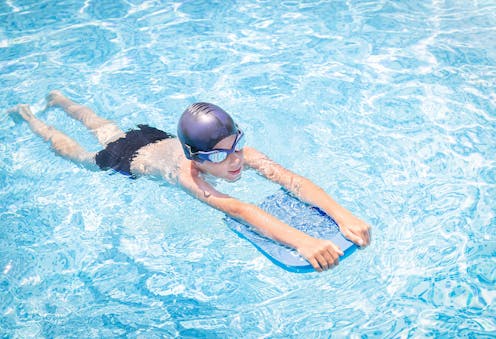
Regular lessons have paused – but your kids should still practise their swimming this summer

Many swimming schools have temporarily closed for the summer holidays. But this doesn’t mean you should take a break from helping your kids learn how to swim.

What can you do during this period to keep your children’s swimming skills up to scratch?

Summer dangers

Remember, summer is a peak time for drowning. Australia records its highest number of drowning deaths in the warmer months and tragically, 134 lives were lost last summer.

Risk is highest at this time, as people head to the water to seek relief from the heat. The school and public holidays also mean people go to areas they are not familiar with.

Children in particular are disproportionately impacted, with their risk of drowning doubling during school holidays, compared to term time.

How to stay safe

Adults need to actively supervise young children around water. This means being within arms’ reach in the water with children under five and older if your children are non or weak swimmers.

Supervision can relax as children grow and improve their swimming. But the safest place for parents is in the water having fun with the kids.

It’s also important to remember “active supervision” means focusing all your attention on your children (so no mobile phones or multi-tasking).

Along with pool fencing and adults learning cardiopulmonary resuscitation (CPR), learning how to swim is a key strategy to reduce the risk of drowning.

This means children have the skills and knowledge to keep them safe in different water environments and scenarios.

A mother and child sit near a pram at St Kilda beach in Melbourne. Small figures play near the water.
Focus all your attention on your children around water. Diego Fedele/ AAP

Any swimming you do helps

Research shows any activity (even informal play) in any type of water can make a positive difference to swimming skills.

My 2016 Australian study with Royal Life Saving Society colleagues showed any time spent in the water – but ideally at least once a fortnight – is linked to higher swimming skills in children (5–12 years) already enrolled in swimming lessons.

Children with a home pool have also been found to be better swimmers than those without a pool.

Although we don’t exactly know why, this is likely due to the increased opportunity to informally practise their swimming skills. It may also be that parents are more conscientious about lessons.

Talk about water safety as well

To understand what children should be able to do by a particular age, check the National Swimming and Water Safety Framework.

This can give you ideas of things to practise and a reminder of a holistic approach to learning to swim, which includes personal survival and rescue skills. For example, by six, it is expected every Australian child should be able to enter and exit shallow water unassisted, float and recover to a standing or secure position and move continuously through the water for five metres.

Talking about water safety with your kids could include setting and reinforcing rules around the water, such as “no going near the water without an adult” or “no climbing on the pool fence”.

If you’re at the beach, always prioritise one that’s patrolled, and explain why we swim between the flags. If lifeguards can’t see you, no one can help you should you get into trouble.

A lifeguard watches swimmers at a public pool.
By six, every Australian child should be able to float and swim for five metres. Chameleonseye/Shutterstock

Think about all types of water

With lifeguards and a controlled environment, local pools are statistically the safest places to swim.

But it is important for children to experience different swimming environments, including cold water and currents. For two decades, rivers have been the leading location for drowning in Australia.

This is why enjoying the water safely with your children this summer is a great opportunity to practise their swimming skills. Plenty of “Christmas swims” (as Bluey calls them) and water play will mean you’ll see a difference when kids head back to swimming lessons for Term 1 next year.

Authors: Amy Peden, NHMRC Research Fellow, School of Population Health & co-founder UNSW Beach Safety Research Group, UNSW Sydney


Read more https://theconversation.com/regular-lessons-have-paused-but-your-kids-should-still-practise-their-swimming-this-summer-245034

Chatswood Tutoring And Its Role In Academic Achievement

Academic success often requires more than classroom attendance alone. Students face increasing expectations as they progress through school, particu...

Why Laser Hair Removal Treatments Continue Growing In Popularity

Managing unwanted hair can become time-consuming and frustrating for many people, especially when shaving, waxing, and other temporary methods requi...

Choosing the Right Devices for a Flexible Workplace

For IT leaders managing large fleets, the device layer is where workforce productivity and security policy meet. The shift towards flexible and hybrid...

How Business Advisory Services Help Companies Achieve Sustainable Growth

Every business owner aims to build a profitable and sustainable organisation. While dedication, innovation, and hard work are important, achieving l...

Why Body Contouring Has Become A Popular Cosmetic Treatment

Many people maintain healthy lifestyles through regular exercise and balanced eating habits but still struggle with stubborn areas of fat that are dif...

How to Choose the Right POS Hardware for Your Business in Australia

A lot of Australian business owners spend weeks researching POS software but buy hardware almost as an afterthought. That's a mistake. The wrong har...

Why Material Handling Hose Is Critical for Industrial Efficiency

A high-performance material handling hose is an essential component in industries that transport abrasive, dry, or bulk materials on a daily basis...

How to Choose the Right Lawyer in Melbourne for Your Situation

Choosing legal support can feel difficult, especially when the stakes are personal or business-related. The right lawyer in Melbourne should underst...

Hoteliers Look to Clever Value Adds to Increase Revenue

The Australian hospitality industry is still in recovery mode after a notoriously rough patch in recent years. While there has been a post-COVID tra...

Moving to Queensland? Here’s How to Prep Your Car for the Big Move North

There’s no sign of the northern migration slowing down, with thousands of southerners fleeing from chaotic lifestyles and cooler climates for a brig...

Diesel Shortage to Impact Trades and Contractors

Strait of Hormuz blockage affecting all major parts of trades and construction Trades and construction across residential, commercial and industria...

Why Holiday Home Owners Turn to Rental Management Agents

The Allure — and the Reality — of Renting Out Your Property Owning a holiday home is a dream for many Australians. Whether it's a beachside sha...

Why Finding Reliable Doctors In Bundoora Is Important For Long-Term Health

Access to quality healthcare plays an important role in maintaining overall wellbeing and managing health concerns early. Trusted Doctors in Bundoor...

Understanding the Different Types of Car Services: Minor vs Major

When it comes to car maintenance, one of the most important things every vehicle owner should understand is the difference between a minor and a maj...

How Superannuation and TPD Insurance Work Together

Superannuation is an essential part of financial planning in Australia. It is designed to provide individuals with income during retirement, helping...

Tiny Towns funding granted for Mt Hotham and Mt Buller upgrades

Alpine Resorts Victoria (ARV) has welcomed funding support from the Victorian Government’s  Tiny Towns Fund, with both Mt Hotham and Mt Buller se...

Locksmith Services: Why Professional Security Solutions Matter More Than Ever

Security is a critical concern for homeowners, businesses, and vehicle owners alike. Whether it involves protecting a property, replacing damaged lo...

Why Tooth Fillings Are Important For Protecting Damaged Teeth

Cavities and minor tooth damage are common dental problems that can worsen if left untreated. Professional tooth fillings help restore damaged teeth, ...















