

From tuxedos to tattoos, Eleanor Medhurst’s Unsuitable traces a hidden history of lesbian fashion
- Written by: Lorinda Cramer, Lecturer, Cultural Heritage and Museum Studies, Deakin University
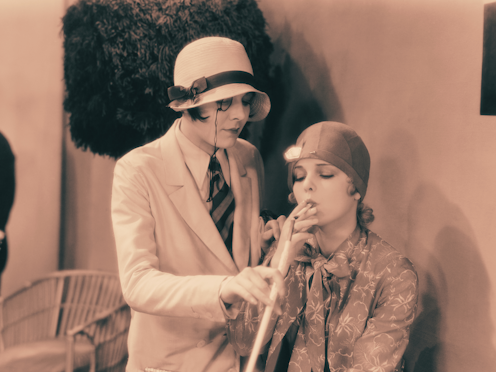
Blues singer Gladys Bentley was a dazzling star of the Harlem Renaissance, a period in the 1920s and ’30s when African American culture flourished in New York City. Bentley’s risqué performances intrigued audiences. So did the entertainer’s relationships with women.
“There are many ways to read Bentley’s life,” fashion historian Eleanor Medhurst explains in Unsuitable: A History of Lesbian Fashion, “but mine is, of course, through clothing.”
She is referring to Bentley’s embrace of men’s attire. The exquisite tuxedo captured in Bentley’s iconic publicity photographs reveals the power of dress for “a masculine woman, a male impersonator, and an unabashed lesbian”.
Review: Unsuitable: A History of Lesbian Fashion – Eleanor Medhurst (Hurst Publishers)
Medhurst began developing her ideas about fashion on her blog Dressing Dykes and has popularised her work on social media via TikTok. In Unsuitable, she offers an engaging history that ranges across centuries and continents, beginning with the ancient Greek poet Sappho and continuing to the present day. Her book draws together lesbian dress styles from monocles and sailors’ attire to “dyke” t-shirts and more.

Medhurst’s preference is for the term “lesbian”, ahead of “queer”, “gay women” or “sapphic”. She acknowledges the relatively recent emergence of the term, which only came into common usage in its contemporary sense towards the end of the 19th century.
Many women in these pages called themselves lesbian, while “others might have used different labels or none at all”. Yet for Medhurst they all “remain part of a heritage that informs the lesbian present”, to which she adds her distinctive voice.
Her aim with Unsuitable is to recover lesbian fashion, though this is not a simple task. Some women strove to blend in rather than stand out. They chose, carefully and deliberately, to fit the feminine conventions of the day to escape detection, and the homophobia and violence that could accompany it.
Medhurst notes that “for much of history, lesbians have had to hide themselves in a way that has made it impossible for new ‘trends’ to arise as they do in mainstream fashion, evolving from those that came before”. She grapples with how to recover this sometimes hidden fashion history. In doing so, she proves that there is plenty to explore, but that it takes a sharp eye and knowing where to look.
Violet flowers and lavender hues
The violet is a recurring motif. Sappho used the flower in her romantic poetry, writing of “crowns of violets”. But Medhurst is also interested in Sappho’s “afterlives”, as the poet’s image was harnessed by lesbians and “her story was retold and reclaimed”.
Violets have appeared in multiple queer cultural contexts. In Paris, in the first decades of the 20th century, they were pinned to clothing as “part of the lesbian vernacular”. Violets continue to feature today as fashionable Sappho-inspired flower tattoos.
The colour purple has also become a powerful symbol. Members of the Lavender Menace, a lesbian activist group from New York founded in 1970, dyed their t-shirts purple in a bathtub. They then emblazoned the group’s name in bold capital letters across the chest. This was part of their protest against the exclusion of lesbians from the women’s movement at the Second Congress to Unite Women.
With their purple t-shirts, the Lavender Menace wore their message of resistance. So did those who donned protest t-shirts in decades to come, including the Lesbian Avengers in the 1990s. But Medhurst reminds her readers that those who wear t-shirts reclaiming the word “dyke” do so not only “to represent struggle – sometimes, they represent joy”.
Masculine looks
 Radclyffe Hall (c.1930)
Public domain, via Wikimedia Commons
Radclyffe Hall (c.1930)
Public domain, via Wikimedia Commons
At the same time as Gladys Bentley was enthralling New York City in her tuxedo, paired with the essential accoutrements of top hat, cane and stiff shirt collar, lesbians in interwar Paris were exploring other “masculine” looks.
Some favoured the monocle. They tucked the single eyeglass under their arched brow as they mingled at Le Monocle, a night club on Paris’s left bank. One photograph capturing a euphoric evening at the club documented a striking preference for this eye-wear. The photograph, Medhurst suggests, might mark the women’s affiliation to the club “or the lesbian culture that had accepted monocles as a tiny part of itself: a shining, glittering truth”.
Others wore sailors’ attire at their favoured Parisian nightspots, but also beyond them. Whether Breton stripes or sailors’ collars, nautical wear became a lesbian look. It was popularised by sea-shanty-singing French performer Suzy Solidor and Mabel Hampton on New York’s queer waterfront.
 Una Troubridge – Romaine Brooks (1924)
Public domain, via Wikimendia Commons
Una Troubridge – Romaine Brooks (1924)
Public domain, via Wikimendia Commons
Some donned starched white collars with sharply tailored suits, like those worn by English author Radclyffe Hall and her partner Una Troubridge. Troubridge’s portrait by Romaine Brooks, in which she posed with her dachshunds, captured the sleek lines of her black suit against a luminous white shirt. Its collar framed her face, with its one monocled eye.
The sartorial line
More than 100 years earlier, Englishwoman Anne Lister navigated a murky sartorial line between masculine and feminine dress. Medhurst tenderly recounts the life of Lister, a landowner and businesswoman born in 1791.
Lister documented her intimate relationships in code across her diaries, leaving behind a remarkably rich account of a woman now considered “the first modern lesbian”. Medhurst’s contribution to the ample commentary on Lister’s writing is to consider how “clothes are a window to her heart”. As Medhurst puts it:
When we consider what she wore and why she chose to wear it, it is easier to see the ways that she was different, and the ways that she strived not to be.
 Anne Lister – Joshua Horner (c.1830)
Public domain, via Wikimedia Commons
Anne Lister – Joshua Horner (c.1830)
Public domain, via Wikimedia Commons
Lister wore black in the period before it became fashionable for women, but was common for men. Her clothes appeared starkly different to “the colourful femininity of her contemporaries”. When she adopted her dramatic look, Lister gifted her coloured gowns to other homes. She also adopted certain men’s accessories, including braces.
Lister explained to a companion that her move to black was a result of trying to better dress her “bad figure”. Few other women would be so bold until Queen Victoria popularised wearing black for mourning in 1861, following the death of her beloved husband Prince Albert.
Femme style
“Butches stand out in lesbian history far more than any femme,” Medhurst observes. Yet women like American-born writer Natalie Barney welcomed bohemian guests to her celebrated Parisian literary salon (for a time) in elegant, white, bias-cut, curve-hugging gowns designed by couturier Madeleine Vionnet.
 Natalie Barney – Alice Hughes (1899)
Public domain, via Wikimedia Commons
Natalie Barney – Alice Hughes (1899)
Public domain, via Wikimedia Commons
A disdain for or suspicion of feminine dress emerged in the 20th century when “femmes, through association with fashion, were considered an enemy to the lesbian cause”. In selecting heels or flat shoes, skirts or baggy pants, makeup or a bare face, lesbians could conform to or resist heterosexual norms.
Medhurst draws her history to a close in the 21st century, with a personal account of her fondness for the colour pink. In 2018, she donated an outfit of her own for the Queer Looks exhibition at the Brighton Museum, which explored 50 years of LGBTQ fashion in the British city. Other contributions by Brighton’s LGBTQ community included drag outfits, fetish gear and protest badges. Medhurst’s outfit “represented my love of the colour and the femininity that – especially in my late teens and early twenties – was integral to my personal expression of lesbian identity”.
“Pink is a colour with baggage,” Medhurst reminds us.
Gender norms tell women that they should be feminine, but also that this makes them lesser than men. They then tell queer women that they are inherently unfeminine – but that this makes them lesser too. For a woman to be queer, yet hyper-feminine, is to reclaim and speak with both sides of her oppression.
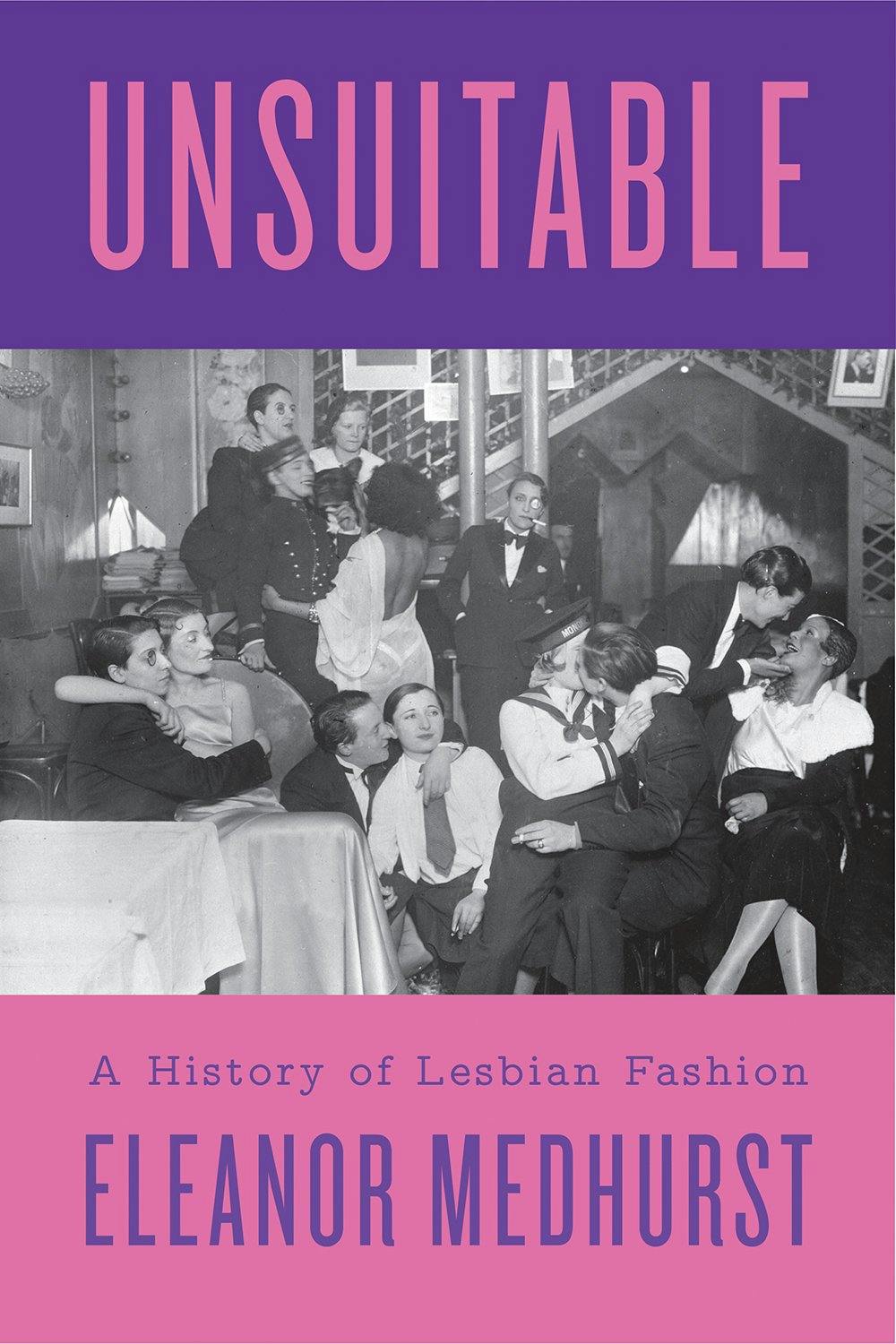 Medhurst’s survey of lesbian fashion does not extend to Australia. Her gaze is firmly focused on Britain, Europe and North America, together with one chapter concentrating on Hiratsuka Raichō and Otake Kōkichi, feminist writers in early 20th century Japan.
This is a result of (among other things) her use of available sources and funding. It is an expensive exercise to undertake a global history. And writing a comprehensive fashion history – of a place, period or group of people – is an unruly task. It involves making difficult decisions about what to bring in, who to leave out, and how to give space to diverse stories, lives and fashions.
Yet Medhurst’s research underlines the exciting potential for further work on Australian lesbian fashion – one that might explore the clothes, accessories and bodily styling that helped to shape and define lesbian identity here. This is especially the case when excellent work on Australia’s queer clothing exists and exhibitions celebrating queer creativity and fashion as a form of queer expression are growing.
“If our selves are evidence of lesbian lives, our clothes spell out our history, our stories sewn into the seams,” Medhurst concludes. As Unsuitable takes its readers on a tour of lesbian clothing across centuries, it reveals the power of dress to shape the lives of those who wear it – and to challenge, provoke and bring people together along the way.
Authors: Lorinda Cramer, Lecturer, Cultural Heritage and Museum Studies, Deakin University
Medhurst’s survey of lesbian fashion does not extend to Australia. Her gaze is firmly focused on Britain, Europe and North America, together with one chapter concentrating on Hiratsuka Raichō and Otake Kōkichi, feminist writers in early 20th century Japan.
This is a result of (among other things) her use of available sources and funding. It is an expensive exercise to undertake a global history. And writing a comprehensive fashion history – of a place, period or group of people – is an unruly task. It involves making difficult decisions about what to bring in, who to leave out, and how to give space to diverse stories, lives and fashions.
Yet Medhurst’s research underlines the exciting potential for further work on Australian lesbian fashion – one that might explore the clothes, accessories and bodily styling that helped to shape and define lesbian identity here. This is especially the case when excellent work on Australia’s queer clothing exists and exhibitions celebrating queer creativity and fashion as a form of queer expression are growing.
“If our selves are evidence of lesbian lives, our clothes spell out our history, our stories sewn into the seams,” Medhurst concludes. As Unsuitable takes its readers on a tour of lesbian clothing across centuries, it reveals the power of dress to shape the lives of those who wear it – and to challenge, provoke and bring people together along the way.
Authors: Lorinda Cramer, Lecturer, Cultural Heritage and Museum Studies, Deakin University 


















.jpg)


