

Renewables, coal or nuclear? This election, your generation’s energy preference may play a surprising role
- Written by: Magnus Söderberg, Professor & Director, Centre for Applied Energy Economics and Policy Research, Griffith University
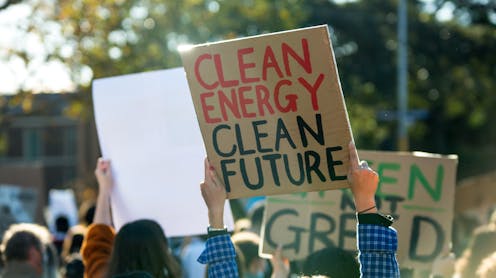
In an otherwise unremarkable election campaign, the major parties are promising sharply different energy blueprints for Australia. Labor is pitching a high-renewables future powered largely by wind, solar, hydroelectricity and batteries. The Coalition wants more gas and coal now, and would build nuclear power later.
So how might these two competing visions play out as Australia goes to the polls this Saturday?
Research shows clear generational preferences when it comes to producing electricity. Younger Australians prefer renewables while older people favour coal and gas. The one exception is nuclear power, which is split much more on gender lines than age – 51% of Australian men support it, but just 26% of women.
While many voters are focused squarely on the cost of living, energy prices feed directly into how much everything costs. Research has shown that as power prices rise, the more likely it is an incumbent government will be turfed out.
Coal, renewables or nuclear?
About half of young Australians (18–34) want the country powered by renewables by 2030, according to a 2023 survey of energy consumers. Only 13% of the youngest (18–24) group think there’s no need to change or that it’s impossible. But resistance increases directly with age. From retirement age and up, 29% favour a renewable grid by 2030 while 44% think there’s no need or that it’s impossible.
On nuclear, the divide is less clear. The Coalition has promised to build Australia’s first nuclear reactors if elected, and Coalition leader Peter Dutton has claimed young people back nuclear. That’s based on a Newspoll survey showing almost two-thirds (65%) of Australians aged 18–34 supported nuclear power.
But other polls give a quite different story: 46% support for nuclear by younger Australians in an Essential poll compared to 56% support by older Australians. A Savanta poll put young support at just 36%.
There’s a gender component too. The demographic most opposed to nuclear are women over 55.
Younger voters remain strongly committed to environmental goals – but they’re also wary of cost blowouts and electricity price rises. Some see nuclear as a zero emissions technology able to help with the clean energy transition.
Older Australians are more likely to be sceptical of nuclear power. This is likely due to nuclear disasters such as Chernobyl as well as the prospect of nuclear war during the Cold War.

It’s an open question how robust support for nuclear would be if the Coalition was elected and began the long, expensive process of construction. New findings by the National Climate Action Survey shows almost 40% of Australians would be “extremely concerned” if a nuclear power plant was built within 50 kilometres of their homes and another 16% “very concerned”.
These energy preferences aren’t just found in Australia. In recent research my co-authors and I found a clear divide in Sweden: younger favour renewables and nuclear, older favour fossil fuels. Why the difference? Sweden already gets about 40% of its power from nuclear, while renewables now provide about 40% of Australia’s power.
We found younger Swedes strongly favoured renewables – but also supported nuclear power, especially when electricity prices rose. That is because nuclear is perceived to stabilise the supply of electricity. They wanted clean energy, as long as it was reliable and affordable. Our study found older people were not necessarily pro-fossil fuels, but were more focused on keeping energy affordable – especially for businesses and industry.
When electricity prices rose in Sweden, our survey respondents broadly became less concerned about climate change and more likely to be favourable to nuclear energy.
In Australia, the cost of the clean energy transition has crept up. While solar and wind offer cheap power once built, there are hidden costs.
If electricity prices keep rising, we should expect to see declining support for the clean energy transition.
Overcoming the energy divide
During Australia’s decade-long climate wars from roughly 2012 to 2022, climate change was heavily politicised and energy became a political football. Under a Coalition government in 2014, Australia became the first nation to abolish a carbon tax.
Labor took office in 2022 pledging to end the climate wars and fast-track the clean energy transition. But the Coalition has opened up a new divide on energy by proposing nuclear power by the 2040s and more gas and coal in the meantime.
This election, the cost of living is the single biggest issue for 25% of voters in the ABC’s Vote Compass poll. But climate change is still the main concern for about 8% of voters, energy for 4% and the environment 3.5%. Here, Coalition backing for fossil fuels and nuclear may attract some older and younger voters but repel others. Labor’s renewable transition may attract younger voters but lose older energy traditionalists.
Energy preferences could play out through a cost of living lens. Parties pushing too hard on green policies this election risk alienating older voters concerned about rising costs. But going nuclear would be very expensive, and keeping old coal plants going isn’t cheap. Downplaying climate action or dismissing nuclear outright could alienate some younger Australians, who are climate-conscious and energy-savvy.

Policymakers should resist framing energy as a zero-sum game. There is a path forward which can unite generations: coupling ambitious climate targets with pragmatic policies to protect consumers. Transitional supports such as energy rebates, time-of-use pricing or community-scale renewables and batteries can soften any economic impact while building public trust.
Our research suggests electricity price rises can quickly erode support even for well-designed energy policies.
As Australia navigates a complex and costly transition, keeping both younger and older generations on board may be the greatest political – and moral – challenge of all.
Authors: Magnus Söderberg, Professor & Director, Centre for Applied Energy Economics and Policy Research, Griffith University


















