

Modern Australian
The Times

Farmers fear dingoes are eating their livestock – but predator poo tells an unexpected story

  • Written by Rachel Mason, PhD candidate in Conservation Biology, Deakin University
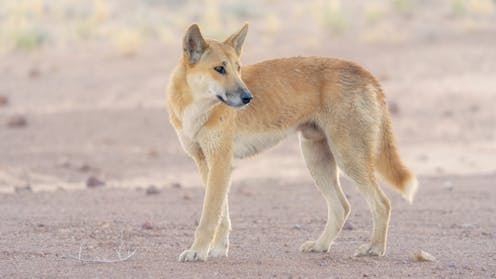
Farmers fear dingoes are eating their livestock – but predator poo tells an unexpected story

Killing carnivores to protect livestock, wildlife and people is an emotive and controversial issue that can cause community conflict. Difficult decisions about managing predators must be supported by strong scientific evidence.

In Australia, predators such as dingoes and foxes are often shot or poisoned with baits to prevent them from killing sheep and cattle. Feral cats and foxes are also killed to protect native wildlife.

But research elsewhere suggests public perceptions of how predators affect ecosystems and livestock are not always accurate.

Our recent study sought to shed light on these controversies. We examined the scat, or poo, left behind by dingoes, foxes and cats. We focused on the mallee region of Victoria and South Australia where there are calls to resume dingo culling to stop them killing livestock.

Sheep in a dry landscape eating in a line.
Culling carnivores to protect livestock is an emotive issue. Rural Aid

A contentious issue

Our study took place in the Big Desert-Wyperfeld-Ngarkat reserve complex in the semi-arid mallee region of Victoria and South Australia. This continuous ecosystem comprises about 10,000 km² of protected native mallee bushland, and is entirely surrounded by crop and livestock farming areas.

Fox-baiting is conducted along the boundaries of Victorian-managed reserve areas. Dingo baiting occurs in the South Australian-managed section of the park.

Since March 2024, the small dingo population has been protected in Victorian-managed areas due to their critically low numbers in the region.

Prior to the change, Victorian farmers and authorised trappers could control dingoes on private land and within public land up to 3km from farms. Farmers say they have lost livestock since dingoes were protected.

Mallee eucalyptus trees and healthy shrubs in the Big Desert-Wyperfeld-Ngarkat park complex.
Typical mallee vegetation in the Big Desert-Wyperfeld-Ngarkat park complex. Rachel Mason

What are predators eating in the mallee region?

We collected and analysed 136 dingo, 200 fox and 25 cat scats to determine what each predator in the area was eating and how their diets differed.

Livestock was not a major part of the diet of dingoes, foxes or cats. Some 7% of fox scats contained sheep or cattle remains. This was more than that of dingoes, at 2% of scats. No feral cat scats contained livestock remains.

The dingo diet was dominated by kangaroos, wallabies and emus, which comprised more than 70% of their diet volume.

Cats and foxes consumed more than 15 times the volume of small native mammals compared with dingoes, including threatened species such as fat-tailed dunnarts.

Diagram showing a breakdown of the frequency of occurrence of threatened and near-threatened species in the diet of dingoes, foxes and cats in this study.
Frequency of occurrence of threatened and near-threatened species in the diet of dingoes, foxes and cats in the Big Desert-Wyperfeld-Ngarkat park complex. R T Mason

Our data must be interpreted with caution. Scat analysis cannot differentiate between livestock killed by predators and those that are scavenged. It also can’t tell us about animals that a predator killed but did not eat.

In 2022–23, when we collected the scats, rainfall in the area was high and prey was abundant. So, while we found livestock were not likely to be a substantial part of these predators’ diets at the time of our research, this can change depending on environmental conditions.

For example, fire and extended drought may force predators to move further to find food and water. They may move from conservation areas to private land, where they could prey on livestock.

Coloured pie-chart figures showing a breakdown of the volume of prey categories in the diet of dingoes, foxes and cats in the Big Desert-Wyperfeld-Ngarkat  complex in the Victorian/South Australian Mallee region.
Volume of prey categories in the diet of dingoes, foxes and cats in the Big Desert-Wyperfeld-Ngarkat complex. Rachel Mason

A taste for certain prey

A predator’s poo doesn’t tell the full story of how it affects prey populations.

To understand this further, we used motion-sensing wildlife cameras to assess which prey were available in the ecosystem. We compared it to the frequency they occurred in predator’s diets. This allowed us to determine if dingoes, foxes or cats target specific prey.

We found foxes and cats both consumed small mammals proportionally more than we expected, given the prey’s availability in the study area. Cats consumed birds at a higher rate than expected, and dingoes consumed echidnas more than expected.

Further intensive monitoring work is needed to determine how these dietary preferences affect the populations of prey species.

Wildlife camera trap images of a red fox (left) and feral cat (right) from the Big Desert-Wyperfeld-Ngarkat park complex in the Victorian/South Australian Mallee region.
Red foxes and feral cats are common in the Big Desert-Wyperfeld-Ngarkat park complex and can have big impacts on native small mammal populations. Rachel Mason/Deakin University

Embracing the evidence

The findings build on a substantial previous research suggesting foxes and cats pose a significant threat to native mammals, birds, reptiles and other wildlife, including many threatened species. Our results suggest foxes may cause more harm to sheep than dingoes overall – a finding consistent with research elsewhere in Victoria.

Dingoes were the only predator species that regularly preyed on kangaroos and wallabies. These species are abundant in the region. They can also compete with livestock for grazing pastures, consume crops and degrade native vegetation.

Currently, dingoes are killed on, or fenced out of, large parts of Australia due to their perceived threat to livestock.

Lethal control of invasive species remains important to protect native wildlife and agriculture. But such decisions should be based on evidence, to avoid unforeseen and undesirable results.

For example, fox control can lead to increased feral cat numbers and harm to native prey. Fewer dingoes may mean more feral goats and kangaroos.

Non-lethal and effective alternatives exist to indiscriminately killing predators to protect livestock, such as protection dogs and donkeys. These measures are being embraced by farmers and graziers globally, often with high and sustained success.

In Australia, governments should better embrace and support evidence-based and effective approaches that allow farming, native carnivores and other wildlife to coexist.

Authors: Rachel Mason, PhD candidate in Conservation Biology, Deakin University

Read more https://theconversation.com/farmers-fear-dingoes-are-eating-their-livestock-but-predator-poo-tells-an-unexpected-story-254787

How the Right Mining Hose Supports Demanding Operations

Mining environments place considerable demands on equipment used for material transfer, water management and processing. Hoses operating in these co...

Simple Ideas for Making Social Gatherings More Memorable

We have all been to those parties where everyone just stands around the kitchen island, staring at their phones, waiting for someone else to make a mo...

Outdoor Wall Lights: Improving Exterior Lighting Around Your Home

Lighting can influence how a room looks, feels and functions, so the right fitting should be selected according to both appearance and practical req...

Commercial Office Cleaning: Combining Routine Office Cleaning With Melbourne Service

Keeping a workplace clean requires a service that can accommodate everyday tasks as well as the particular needs of the business. Professional comme...

Caravan Sales in Queensland: How to Find the Right Caravan for Sale QLD

Caravan ownership is about more than having somewhere to sleep while travelling. For many Queenslanders, it is one of the best ways to explore regio...

What Sir Walter Buffalo Turf Actually Costs in 2026 (And Why Quotes Vary So Much)

Two quotes landed on a Hills District homeowner's kitchen table last spring for the exact same 80-square-metre backyard. One said $12 a metre. The o...

Nearly 1,300 NSW Hospital Beds Are Occupied By People Who Are Ready To Go Home

1,276 people in NSW hospitals have been medically cleared for discharge but remain in hospital because they're still waiting for NDIS or aged care sup...

National Survey Launched to Measure Operational Impacts of Federal NDIS Policy Reforms

The effects of recent NDIS reforms are beginning to move beyond policy papers and into day to day service delivery. A new national survey is asking ...

Beyond the Nappy Cake: Baby Shower Gifts That Get Used

What new Australian parents unwrap, keep, and quietly thank you for months later. Six weeks after my daughter was born, I did an audit of the baby sh...

Parent-Advocates Are Reshaping Frontline Disability Service Delivery

Parents have always been part of the disability sector. They advocate, coordinate services, challenge decisions and often become the person holding ev...

Vista Cruises Enters "Two-Flagship Era" as Vista Aurora Completes Inaugural Voyage

Vista Aurora Sets Sail along the Yangtze. (Photo courtesy of the company)YICHANG, China — August 5, 2026 — Vista Aurora, a high-end interprovinc...

A Digital Preparation Checklist For International Medical Conferences

An international medical conference compresses many responsibilities into a few days. A delegate may need to present research, move between venues, ...

The Growing Popularity of Lab Grown Diamonds in Sydney and Hong Kong

The diamond industry has changed significantly in recent years as more buyers seek ethical, affordable, and sustainable alternatives to mined diamon...

Modern AI SEO Agency vs Traditional SEO: What’s the Difference

Search engine optimisation has changed dramatically over the past few years. Search engines have become smarter, user behaviour has evolved, and bus...

Caravan Travel for Modern Australian Getaways: Plan a Comfortable Holiday

A family road trip is one of the best ways to explore Australia together. And, travelling by caravan gives you the freedom to take your time, stop a...

Mini Excavator and Trailer Package for Sale: What I Buy as One Deal in 2026

The first client who asked me for a mini excavator and trailer package for sale wasn’t trying to save a few hundred dollars on shipping. They we...

Make Dad a Guest in His Own Home This Father’s Day

Father’s Day can accidentally turn Dad into the unpaid event manager of his own celebration. He lights the barbecue, finds extra chairs, checks wh...

Where to Enjoy Your Off-Road Caravan on the Gold Coast

With a caravan, you can travel anywhere and everywhere without battling the rush of the peak holiday season or last-minute reservations. While the r...
















