

Wine is still Australia’s most popular alcoholic drink – but many producers face an uncertain future
- Written by Paul Chad, Honorary Fellow, Faculty of Business and Law, School of Business, University of Wollongong
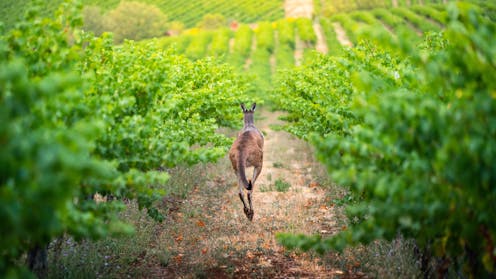
Australia has become world-famous for its wine, but the industry faces an uncertain future. Too many grapes grown amid falling consumer demand, an oversupply of budget wine, and an undersupply of premium wine are just some of the problems besetting the industry.
There are still many small and medium-sized wineries across Australia. But the industry is dominated by a few large players, as well as “vertical integration” with ownership linkages between wineries and retailers.
Just this month, a merger between global drinks giant Pernod Ricard’s Australian, New Zealand and Spanish wine brands and Accolade Wines (one of Australia’s largest winemakers) was completed, creating a new giant – Vinarchy – to be based in Adelaide with A$1.5 billion in annual revenue.
This move will involve an estimated cull of up to 50 wine brands, which speaks to a broader story of growing concentration. Numerous Australian wine companies have come up for sale in recent years, and the industry is undergoing rationalisation.
The current pressures will require an overall reduction in wine production, and a focus on premium over ordinary wines. Grape-growers and some smaller wineries are likely to be most affected.
Still the top drop
According to Wine Australia, the Australian wine industry currently has about 6,000 grape growers and 2,156 wineries. It employs 163,790 people (full- and part-time) and contributes $45 billion to the Australian economy each year.

This large size shouldn’t come as too much of a surprise. Wine is the most popular alcoholic drink in Australia. But troubles have been brewing for the industry for years.
Domestic wine consumption has been in steady decline, down 9% since 2016–17.
This trend isn’t confined to Australia; it is global. The decline reflects cost-of-living pressures, growing health concerns about alcohol, and Gen Z questioning traditional drinking norms.
Shifting tastes
However, the picture is nuanced. Wine isn’t a staple product; it is a discretionary purchase. Prices in Australia can range from less than $5 to well over $1,000 per bottle, and palates vary significantly among consumers.
Price is generally regarded as an indicator of quality. Wine selling in Australia in the “ordinary” price range of less than $15 per bottle is declining, but wine selling in the “premium” ($15 per bottle and above) price range is increasing.
In the face of decreased global wine consumption, Australia’s shrinking domestic market has also been faced with a steady decline in wine exports. This is problematic for producers looking to exports to offset declines in domestic sales.
A warm country
These woes are impacting the wine industry in different ways at different points along the supply chain. Let’s start with grape-growing.
The current challenge is for growers of “ordinary-quality” grapes in the shrinking marketplace. The Riverina and Riverland areas are the main grape-producing areas of Australia and achieve a low price per tonne.
There is still high demand for “premium-quality” grapes but these are generally grown in select regions of Australia, typically with a cooler climate.
Unsurprisingly, grapes from warm inland regions of Australia account for 72% of wine grape production, at an average price of $345 per tonne, whereas grapes from cool temperate regions achieve an average price of $1,531 per tonne.
The future impacts of climate change need to be assessed, and are already playing into growers’ decisions. Cooler regions are becoming more highly sought after for grape-growing.
Coupled with increased demand for premium grapes, this will make warm inland regions increasingly problematic. Unlike seasonally planted crops such as vegetables and grain, new grape vines require three years after planting before bearing decent levels of fruit. Farmers must determine the most appropriate long-term use of their land.

The challenge of standing out
Many of Australia’s 2,156 wineries are small-scale (typically privately owned). Other wineries are much larger, with extensive resources. Most consumers are largely unaware of most of these wineries – how many wine brands can you list?
Such diversity already presents a challenge for various wineries trying to market themselves. Adding to this, a large number of Australian wine brands are owned by just a few large industry players, some with links to retailers via vertical integration.
Retailers such as Endeavour Group (formerly part of Woolworths) and Coles own hundreds of wine brands. Some of these brands are marketed to look like independent wineries. Some commentators have even suggested a wine duopoly exists at the retail level.
 Standing out in a crowded market is a big challenge for small producers.
Sirbouman/Shutterstock
Standing out in a crowded market is a big challenge for small producers.
Sirbouman/Shutterstock
How can wineries survive?
With the trend towards less consumption overall, and towards premium-quality wines instead of ordinary-quality wines, some wineries may need to shift their focus.
On the challenges facing the industry, acclaimed Victorian winemaker Rick Kinzbrunner told me:
We need a better balance of supply and demand and especially more emphasis on top quality wines at reasonable prices.
Why this matters to you
If you’re a wine drinker, current wine industry issues may seem irrelevant. But the ongoing oversupply of ordinary-quality wine for the near future offers plenty of price discounts.
For consumers of premium wines, given current high demand, be wary: does what you’re getting quality-wise match the price? Some wines marketed at high prices don’t have the quality to match.
Consumers may wish to increase direct contact with wineries (via cellar doors, websites and mailing lists) and independent retailers to expand their options.
Winners and losers will emerge as inevitable industry change occurs.
Authors: Paul Chad, Honorary Fellow, Faculty of Business and Law, School of Business, University of Wollongong

















