

The Queensland melioidosis outbreak is still growing. What’s keeping this deadly mud bug active?
- Written by Thomas Jeffries, Senior Lecturer in Microbiology, Western Sydney University
The outbreak of the deadly “mud bug” melioidosis in north Queensland has not yet abated since it began at the start of this year.
So far there have been 221 cases and 31 deaths from the disease in 2025. This encompasses a 400% increase in cases in Cairns and a 600% increase in Townsville compared to the average over previous years.
Fortunately, case numbers have begun to drop. Queensland Health reports new cases weekly, and in the most recent reporting period – up to May 6 – seven new cases were recorded, down from a peak of 29 cases in the week to February 16.
However, people are still contracting and dying from this disease. So what’s keeping it active in Queensland, and are there any promising vaccines on the horizon?
What is melioidosis?
Melioidosis is caused by the bacterium Burkholderia pseudomallei which lives in soil, mud and groundwater, usually not causing any harm. But B. pseudomallei can cause disease in humans and animals if it enters the skin via a cut. Or it can be inhaled in water droplets and enter the lungs.
The disease generally takes one to four weeks to establish itself, meaning people don’t develop symptoms immediately after they’ve been exposed.
Melioidosis most commonly presents as pneumonia. However chronic skin infections, called cutaneous infections, occur in 10–20% of cases. Melioidosis can also lead to blood infections.
Symptoms of the pneumonia form include fever, headache, difficulty breathing, muscle pain, chest pain and confusion.
We don’t understand cutaneous infections as well as we do lung infections with melioidosis. Cutaneous infections are also less responsive to standard antibiotic treatments due to the nature of the chronic wound. For example, the bacteria can form a slimy layer called a biofilm. This can help the bacteria produce proteins which can block the antibiotics from working.
Melioidosis occurs most commonly in tropical areas, such as Thailand. But it’s also regarded as endemic in northern Australia, occurring in Queensland and the Northern Territory. Nonetheless, the scale of the current outbreak in north Queensland is highly unusual.
Anyone can contract melioidosis, but certain medical conditions can increase a person’s risk. These include diabetes, liver, kidney or lung disease, cancer, or other conditions which might compromise the patient’s immune system.
During the current Queensland outbreak 95% of cases have been in people with risk factors such as diabetes or lung disease.
How is melioidosis spreading in Queensland?
Melioidosis increases during periods of high rainfall and flooding, and this has been the case in the current outbreak. However, patterns have begun to emerge suggesting the bacterium may now be spreading in other ways.
Experts have suggested that while the Townsville cases can be explained by flooding and correlate to high levels of rainfall, the Cairns cases do not match with this explanation.
One suggestion is that the construction of the Bruce Highway upgrade south of Cairns has caused an increase in cases due to clay soil particles becoming airborne during construction.
It’s not an entirely new idea. The movement of soil during highway construction and urban expansion has been investigated as a potential mode of transmission during previous spikes of melioidosis cases in far north Queensland.
The infrastructure body responsible for the upgrade has pledged to follow expert health advice as investigations continue.
Could B. pseudomallei be evolving and becoming more deadly?
This potential change in how the disease is spreading, and the increased number of cases and deaths, might indicate the organism is evolving to spread more easily and become more deadly. Genome analysis is ongoing to determine this.
Notably, bacteria found in the environment can acquire genes from other bacteria in soil and water. This may give them enhanced abilities to survive in unfavourable conditions and be more resilient to changes in their natural habitat, as well as potentially infect human hosts more effectively.
In a warming climate with increased rainfall, the bacterium behind melioidosis is likely to be a prime candidate for this kind of change.
How about treatments and protection?
There’s currently only one way to treat melioidosis, which involves receiving intravenous antibiotics in hospital for several weeks, followed by up to six months of oral antibiotics.
Against a backdrop of urgent calls for more research and increased public awareness around melioidosis, there may be hope on the horizon.
Researchers at the University of California have developed a vaccine which produces a protein that mimics the proteins in B. pseudomallei, leading to an immune response against this bacterium. The vaccine has been successful in mouse models and will continue to a further animal trial, which, if successful, will lead to human trials.
It seems melioidosis is a problem that’s not going away.
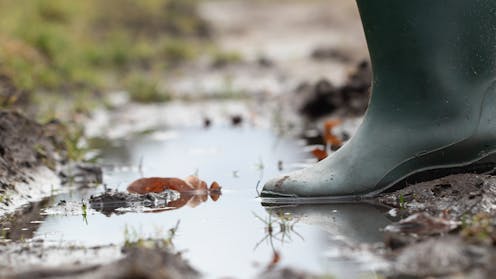
If you live in an affected region such as tropical Queensland or the NT, limit exposure to mud and water as much as possible. If you’re spending time in muddy areas, use appropriate personal protective equipment such as gloves and boots. You can also protect yourself by covering any open wounds and wearing a respirator if you’re working closely with water.
Monitor for symptoms and see a doctor if you feel unwell. More information is also available from Queensland Health.
Authors: Thomas Jeffries, Senior Lecturer in Microbiology, Western Sydney University

















