

Australian roads are getting deadlier
- Written by Milad Haghani, Associate Professor & Principal Fellow in Urban Risk & Resilience, The University of Melbourne
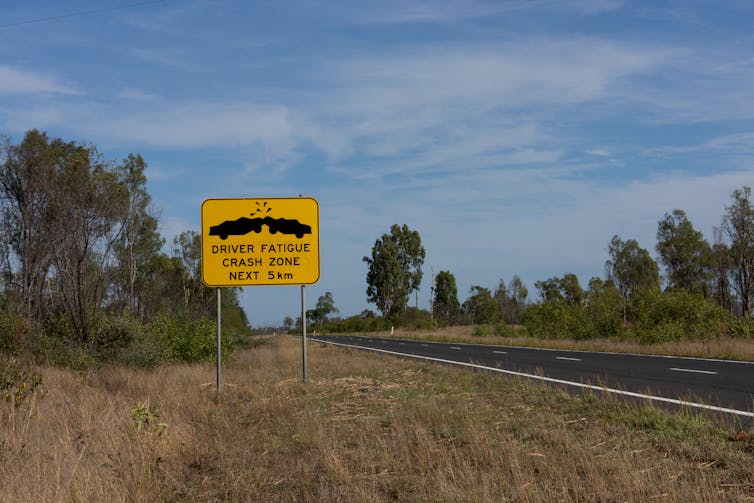
At least ten people died in fatal crashes earlier this month in a single 48-hour period on Victorian roads. It was the latest tragic demonstration of the mounting road trauma in Australia.
In the decade up to 2020, the national road toll was gradually declining, albeit with some fluctuations. But the trend has since reversed, with fatalities rising steadily year after year.
According to the latest official data, 1,296 people died on Australian roads in the year to April. 108 lives were lost last month alone, almost 15% more than the average for April over the previous five years.
While our population has increased by about 6% over this five-year period, our road deaths have gone up by 18.5%.
Road fatalities rarely follow evenly distributed averages. They sometimes spike, as they have in Victoria. And while we must never lose sight of the fact that these are people, and not just data, there is value in interrogating clusters when they occur.
Victoria breakdown
In the 12 months to May 20 this year, 118 lives were lost on Victorian roads, up 8.3% on the previous year and well above the five-year average of 100 annual deaths.
The sharpest increases by transport mode have been among pedestrians (up 24%), one of the most vulnerable road-user groups. And a new threat has emerged with the first publicly reported case in Australia of a pedestrian dying after being struck by an electric bike.
At least one pattern stands out from the recent cluster: five of the eight crashes occurred outside metropolitan Melbourne. This reflects the longstanding reality that fatal collisions remain disproportionately common in regional and remote areas. Over the 12 months, country road deaths have risen by 11%, compared to a 2% increase in metropolitan Melbourne.

Another striking detail is the gender distribution. Male deaths are up 22% on the previous period and now comprise nearly 80% of all fatalities. In contrast, female deaths have declined by 33%.
Another trend that stands out is the rising toll among older road users. In the last 12 months, 40 people aged 60 and over have died on Victorian roads – a 25% increase on the previous period.
4 National trends
The national road fatality data tells us some of these trends are not exclusive to Victoria. They reflect what is happening across the country.
1. Vulnerable road users: Nationally, pedestrians and motorcyclists have experienced sustained increases in lives lost for at least four years in a row. The share of pedestrians in total road deaths has risen from 11% in 2021 to 14% in the latest period. Despite the growing number, motorcyclist fatalities have remained relatively stable at about 20% of all deaths.
2. Gender disparity: Men continue to be disproportionately represented in the national road toll, accounting for approximately 75% of all road deaths in Australia.
3. Older age groups: In the 12 months to April 2025, deaths among individuals aged 75 and over increased by nearly 19% to 185.
4. Regional and remote areas: in the 12 months to April 2024, there were roughly 818 deaths on country roads, compared to 400 in metropolitan areas.
What do the trends tell us?
There are several key points in the data.
First, the persistent over-representation of men in fatalities remains a defining feature of the road toll. This gender imbalance is not specific to Australia.
But put simply, we still know very little about what’s driving this pattern. Known behavioural and physiological sex-based differences don’t fully explain the scale of the disparity.
The rise in fatalities among older Australians does not appear to be particularly abnormal when tracked with demographic changes. From 2020 to 2024, the number of Australians aged 75 and over increased by nearly 31%. In comparison, fatalities in this age group rose by around 25% over the same period. This suggests that the relative risk for older Australians has not necessarily increased.
As for rural and regional areas, approximately two-thirds of road deaths occur in these areas, while only one-third of Australians reside there. Despite years of acknowledgment, this urban–rural divide in road safety remains wide and unresolved.
SUVs a menace?
While vehicles have become safer for their occupants, they have become more dangerous for other road users, especially pedestrians.
One contributing factor could be the fast growing dominance of SUVs and light trucks in Australia.
A recent international review that pooled the findings of 24 studies found SUVs were associated with significantly higher fatality rates in crashes involving vulnerable road users, compared to smaller cars. The effect was particularly pronounced for children.

The dangers are not limited to pedestrians. In two-vehicle collisions, increasing the striking vehicle’s weight by around 450 kilograms raises the probability of a fatality in the other vehicle by 40–50%.
New targets
Australian governments have adopted a Vision Zero goal of no road deaths or serious injuries by 2050.
The complete elimination of fatalities should remain our moral benchmark. But the current data suggests intermediate targets are urgently needed.
A more achievable near-term priority may be to first reverse the rising national toll by focusing on where the greatest preventable harms persist: vulnerable road users, especially pedestrians, males and non-urban roads.
Authors: Milad Haghani, Associate Professor & Principal Fellow in Urban Risk & Resilience, The University of Melbourne

















