

what 17th-century nuns can teach us about coping with loneliness
- Written by Claire Walker, Associate Professor, School of Historical and Classical Studies, University of Adelaide
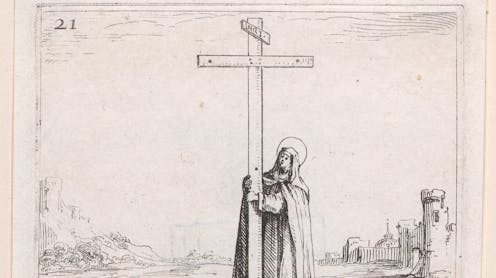
Is loneliness a modern epidemic as we are so often told? Did people in the past suffer similar feelings of isolation?
The word “loneliness” was not common before the 19th century. Cultural historian Fay Bound Alberti argues it was rarely used before 1800.
This does not mean people didn’t feel alone. They just had different names for it – and they didn’t always think it was bad. Modern people living hectic lives in bustling cities often yearn for peace and tranquillity; so did our forebears.
From the hermits of the early Christian church escaping society for lives of solitary prayer, to medieval anchorites in secluded cells, isolation was a prerequisite for spiritual success.
But were isolated monks, nuns and hermits also lonely, as we would understand the word today? And do early modern nuns offer solutions for our own loneliness epidemic?
Searching for solitude
Early Christian religious thinkers and medieval churchmen viewed voluntary loneliness positively, with successful practitioners becoming saints. But religious solitude was not without its problems.
Holy recluses, far from escaping society, were pursued for spiritual advice. Some, like Simeon Stylites (390–459), went to extraordinary measures, living atop a pillar near Aleppo for 30-odd years to achieve solitude.
Monasticism provided an alternative. Monastic rules, like that of Benedict of Nursia (480–547), institutionalised isolation. In Benedictine monasteries, solitude was created through seclusion from society, strict silence, and prohibition of close friendships.
Yet, like hermits, monks and nuns couldn’t escape the world completely. Monasteries constituted vital spiritual resources, providing multiple services and conducting business for wider society.

Over the centuries, reforming bishops believed there was too much interaction between monasteries and the wider community. This led to repeated church reforms from the 10th century onwards to secure separation.
Male members of the clergy were particularly worried about nuns who were considered “less capable” of maintaining holy solitude. As a result, women had to observe strict enclosure behind convent walls, limiting their economic and spiritual capacity. Reforms in the 16th century upheld nuns’ incarceration.
Many women resisted, but others embraced isolation as spiritually liberating.
Isolation in exile
Early modern English convents, exiled in Europe after Henry VIII’s dissolution of the monasteries, shed light on nuns’ experiences of loneliness.
The convents were subject to traditional rules of enclosure and silence. To become nuns, women left their homeland, family and friends. They joined English houses, so they were not alone among strangers, but they had to remain emotionally distant from one another, despite living in a community where they did everything together.
Women wanting spiritual fulfilment often sought additional solitude.
Benedictine mystic Gertrude More (1606–33) praised prescribed periods of silence because in them she might hear her Lord’s whispers.
Carmelite prioress Teresa of Jesus Maria Worsley (1601–42) took time from her busy administrative role and hid from the other nuns to pray in solitude.

Not all women found seclusion and silence so fulfilling, however, with some experiencing bouts of spiritual doubt and poor mental health. Many missed their family and homeland.
This was particularly common among young sisters and those in convent schools. In the 1660s, Catherine Aston returned to England to recover after suffering poor health and depression.
Alone in a crowd
Nuns’ diverse experiences of monastic solitude reflect modern urban loneliness.
In 1812 Lord Byron expressed the contradictory nature of loneliness in the poem Childe Harold, juxtaposing the positive solitary contemplation of nature with its negative counterpart – aloneness “midst the crowd”.
In the present day many people feel alone in cities, even domestic households, as Olivia Laing and Keith Snell have shown.
How might this be countered? Do early modern nuns offer solutions?
A study of 21st century Spanish monks and nuns found monastic training, prayer and silence create feelings of spiritual satisfaction and purpose which lessens loneliness.
Prayer is not the answer for everyone because modern isolation is caused by multiple factors in a largely secular society. There are alternative paths to meditation, however, through yoga or mindfulness which can provide feelings akin to monks’ and nuns’ “spiritual satisfaction”.
Similarly, the nuns’ sense of “purpose” might be achieved through nostalgia. Nostalgia is the longing for an idealised and unobtainable past – a time when life was better. Research by psychologists suggests nostalgia can be beneficial in counteracting loneliness, even enabling forward-looking and proactive behaviours.
 Nuns at Mass, Amedor, Spanish, 1900.
Getty Museum
Nuns at Mass, Amedor, Spanish, 1900.
Getty Museum
This was certainly true for the nuns exiled in Europe following Henry VIII’s abolition of monasticism in England. They dreamt of a future when their convents would return to England, family and friends. All nuns prayed both communally and in private for this outcome.
Some went further, engaging in missionary work and political intrigue to achieve their goal.
We cannot know whether this stifled loneliness, but by combining the benefits of meditation and activism it likely fostered a shared sense of purpose.
Just as Gertrude More and Teresa of Jesus Maria Worsley found solitude essential for spiritual satisfaction, activist nuns believed they might reverse the English reformation from their exiled convents. Solitude, prayer and political engagement gave them a sense of purpose.
Everyone’s situation is unique. There is no single solution for resolving isolation in the contemporary world. But the knowledge that it can be positive is perhaps a step towards countering the modern epidemic.
Authors: Claire Walker, Associate Professor, School of Historical and Classical Studies, University of Adelaide

















