

Being monitored at work? A new report calls for tougher workplace surveillance controls
- Written by Joo-Cheong Tham, Professor, Melbourne Law School, The University of Melbourne
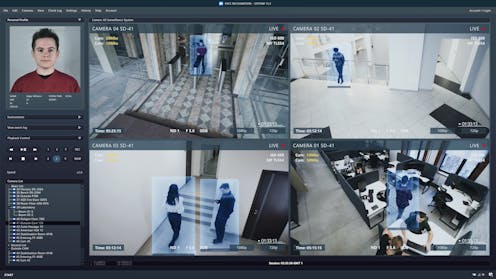
Australian employers are monitoring employees, frequently without workers’ knowledge or consent, according to a new report.
And when workers do know about surveillance, there is little they can do about it. Laws have not kept pace, producing negative impacts for workers and workplaces.
A Labor-chaired Victorian parliamentary inquiry has released a report on workplace surveillance and the need for more effective national regulation.
The growth of workplace surveillance
After public hearings and submissions from major employer, industry and union groups, the inquiry found new technology was enabling workers to be monitored in the workplace and remotely.
Optical, listening, tracking and data recording devices are being used to monitor employees, often without knowledge or consent.
While use varied according to industry, the committee found widespread workplace surveillance including:
jobs by factory workers being monitored with time taken to do tasks recorded
retina, finger, hand and facial features biometric data collected from nurses and construction workers
mobile phone apps used to track location of banking staff
infrared cameras used to scan truck drivers in their cabins for 12 consecutive hours
university workers’ computer usage and emails monitored
sensitive financial and medical data collected.
The committee also considered the use in Australian workplaces of tools with sophisticated surveillance capabilities (including Microsoft Teams), to monitor remote work arrangements.
Some of these tools deployed AI features, including emotional and neuro surveillance. They could be used to determine workers’ moods and level of attention or effort.
The committee found some workplaces were collecting a vast amount of information it considered invasive and posed major cybersecurity risks.
Legitimate surveillance
The inquiry found there were certain circumstances when workplace surveillance was legitimate. These included managing work health and safety risks like fatigue and preventing fraud and theft.
But it also highlighted the lack of evidence workplace surveillance improves productivity. Such surveillance could lead to “function creep” – where surveillance used for one purpose is covertly used for others.
Beyond invading privacy, the committee found surveillance could cause work intensification, increased risks of injury and worker stress from constant monitoring.
Surveillance could also exacerbate the inequality of power between workers and their employers and worsen discrimination.
The monitoring of some tasks could result in certain jobs being dumbed down or degraded. Monitoring often measured the wrong things – like keystrokes – that do not capture real performance of careful thinking or writing.
Poor regulation
Massive regulatory gaps have allowed workplace surveillance to flourish because of the lack of controls on employers’ monitoring and collection of data.
Employers’ ability to monitor workers through their control of work premises and equipment can leave some employees exposed to surveillance without notification.
And there are few laws to check these powers.
Two significant exemptions mean there is scant regulation of surveillance under the federal Privacy Act. Businesses with an annual turnover of less than A$3 million are exempt as are employee records.
The employee records exemption means the Act does not apply to employee data collected when the worker is a current employee with the exemption applying even after the employment relationship has ended.
Individual consent
Only New South Wales and the Australian Capital Territory have dedicated workplace surveillance laws.
They require employers to give employees advance notice of surveillance, and, in the ACT, to consult with employees about introducing surveillance and managing data.
These regimes, however, offer little substantive protection because they rely on “individual consent” – meaning surveillance is authorised if workers agree.
Refusing consent in employment is, however, unrealistic given workers’ dependence on their jobs. This vulnerability is compounded by case law suggesting employees can be dismissed for refusing to provide their data.
Victoria lags behind
Without dedicated workplace surveillance laws, the position in Victoria is even worse. The Victorian Privacy and Data Protection Act only applies to specified public sector organisations – and not the private sector.
And the Victorian Surveillance Devices Act only applies to listening and optical surveillance in restricted circumstances (workplace toilets and the like and “private activity”). Its regulation of data surveillance does not apply to employers, only to law enforcement officers.
The overall result, emerging from the findings of the committee, has been secret, unaccountable and damaging surveillance in some workplaces, without worker notice or consultation.
What’s needed
The inquiry report calls for dedicated workplace surveillance legislation among its 18 recommendations.
The legislation should require employers to demonstrate any surveillance is “reasonable, necessary and proportionate to achieve a legitimate objective”, the committee found. It should also ensure transparency of workplace surveillance and meaningful consultation with workers.
The sale of worker data to third parties needs to be prohibited and severe restrictions imposed on the collection and use of biometric data.
The committee also recommended measures to ensure effective implementation of the Information Privacy Principles which govern the collection, use and disclosure of a person’s information.
It recommended that these new laws be enforced by an independent regulatory authority.
Authors: Joo-Cheong Tham, Professor, Melbourne Law School, The University of Melbourne

















