

Raining one week, dusty the next – how did a dust storm make it all the way to rainy Sydney?
- Written by Tegan Clark, PhD Candidate, College of Systems and Society, Australian National University
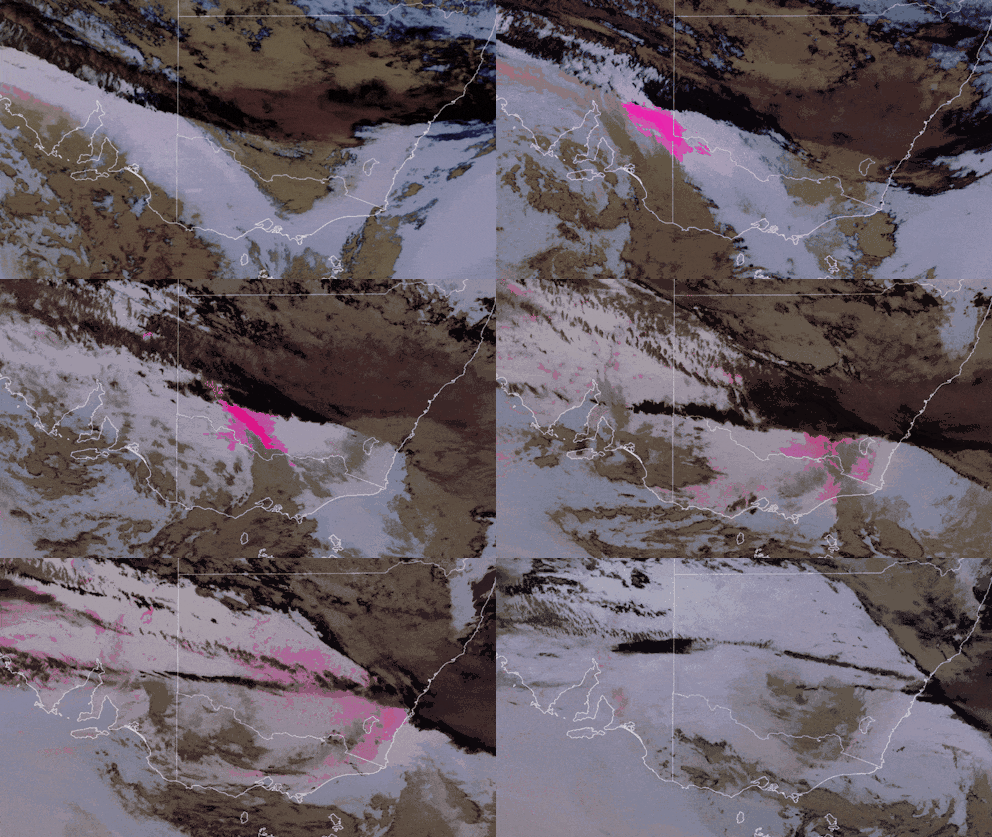
Much to the surprise of Sydney-siders, a dusty haze settled over the city on Tuesday morning after a week of heavy rain.
Satellite images reveal the dust storm formed in the Mid-North region of South Australia, east of Spencer Gulf, at around 11am on Monday. It then travelled through western Victoria into New South Wales, reaching Sydney approximately 18 hours later.
It’s an odd time of year for a dust storm, but South Australia is in drought. The soil is very dry, bare and loose. So when a cold front with strong winds moved through SA earlier this week, it picked up lots of dust.
This demonstrates how everything is interconnected in Australia, despite the nation’s huge size. Extreme weather events such as drought in one part of the country can cause trouble for people “downwind”, hundreds of kilometres away. Climate change is likely to further raise the risk of dust storms in the future.
Sydney’s air quality tumbled after the dust cloud settled on the city | 7NEWS.The dust bowl era
In the 1930s, prolonged drought in the United States coupled with poor land management practices caused devastating dust storms. This eroded valuable agricultural soils and forced many families off the land. All this took place across the Central Plains, which became known as the American Dust Bowl – later immortalised in Steinbeck’s book The Grapes of Wrath.
Australia experienced its own smaller dust bowl about a century after British settlers arrived. Overgrazing in the late 1800s removed native vegetation from large parts of western New South Wales. Dust storm activity picked up dramatically from the late 1800s onwards and hit a maximum in 1944-45 during the World War II drought.
Fortunately, the dust storms and drought experienced during the 1940s soon prompted a change in both policy and attitude. The focus of land management shifted from “taming the land” to more sustainable use, such as moving livestock around from time to time – allowing paddocks to rest and recover. The government also provided more financial support to manage drought.
Growing awareness and the desire to protect environmental assets also led to development of the NSW Soil Conservation Service.
Australia has continued to experience heightened dust activity and major dust storms after 1945. In 2009, Sydney awoke to what looked like apocalyptic scenes straight out of the movie Mad Max when a dust storm engulfed the city.
The last big dusty period was the Black Summer of 2019-20. Parts of NSW such as Wagga Wagga and Sydney were shrouded in smoke and dust for days. But there were significantly fewer “dust storm days” compared to 1944-45. This is partly due to improved land management practices that value sustainability, including the revegetation of denuded land.
The movie Mad Max featured apocalyptic dust storm scenes.More dust storms as the climate changes
Around the world, climate change is expected to make dust storms more common globally.
Recent research suggests southern Australia may experience longer and more frequent droughts in the future. Grazing and cropping will put extra pressure on the land.
In addition, the cold fronts that typically trigger large dust storms are expected to intensify with climate change. This means a growing chance of major dust storms such as the one this week.
Dust is a health hazard
Dust consists of tiny particles, some smaller than the width of a single strand of hair. These particles may include sand, topsoil, pollen, microbes, iron and other minerals, lifted into the air.
When these tiny particles enter the lungs, they can cause breathing difficulties and respiratory diseases such as asthma. Dust storms are also known to transport diseases such as Valley Fever.
The 2009 dust storm in Sydney led to an increase in emergency hospital admissions for respiratory illnesses, especially asthma.
During the latest dust storm, health authorities warned people with respiratory issues to stay indoors and monitor symptoms.

Developing early warning systems
The 2019-20 dusty period and the current SA drought shows Australia can still fall victim to these major dust storms. But there are things we can do to be better prepared and more resilient.
The United Nations Convention to Combat Desertification suggests better ways to reduce harm from dust. These include improving land management practices, implementing early warning systems and improving monitoring of dust events.
On the ground, NSW is well equipped to monitor dust through the DustWatch network. The air quality monitoring network acts as an early warning system, particularly for people in Sydney living downwind of sources interstate. But usually no more than 12-24 hours notice is provided. This means the authorities might might start to prepare to issue a warning when they detect poor air quality in Western NSW.
However, these systems pale in comparison to the predictive capacity available in South Korea and Japan. There, alerts of dust storms and poor air quality can be issued days in advance.
Using our eyes in the sky
My PhD research project involves using satellites to deepen our understanding of where dust storms are coming from and where they might travel to.
For instance the Himawari-8/9 satellite scans Australia every ten minutes, allowing us to track the evolution of dust events from start to finish.
We can pinpoint almost the exact moment a dust storm begins. These areas can then be targeted using satellites to understand the conditions of the land causing dust storms to form and monitor high-risk areas for erosion in the future.
Putting technology to good use will get us part of the way to a more resilient Australia. There is also a clear need to adapt to the changing climate in our nation’s grazing and cropping systems.
Authors: Tegan Clark, PhD Candidate, College of Systems and Society, Australian National University

















