

The Top End’s tropical savannas are a natural wonder – but weak environment laws mean their future is uncertain
- Written by Euan Ritchie, Professor in Wildlife Ecology and Conservation, School of Life & Environmental Sciences, Deakin University
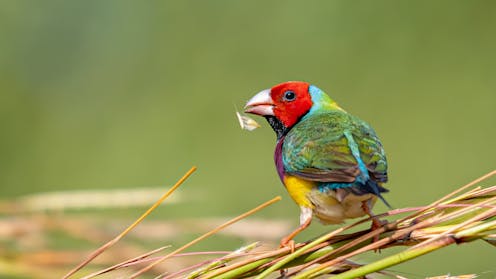
The Top End of Australia’s Northern Territory contains an extensive, awe-inspiring expanse of tropical savanna landscapes. It includes well-known and much-loved regions such as Darwin, Kakadu National Park, Arnhem Land and Nitmiluk Gorge.
These tropical savannas feature open forests and woodlands dominated by eucalypts and a diverse grassy understorey. They experience an intense monsoon-driven wet season and long dry season during which fire is common.
The area is home to a spectacular range of plants and animals, including crocodiles, barramundi, speartooth sharks, the spectacularly coloured Leichhardt’s grasshopper and flocks of magpie geese. Some groups are extraordinarily diverse. Several thousand ant species are thought to live there – compared to just 1,000 species in South America’s Amazon basin.

Yet, despite their immense ecological and cultural significance, the NT’s tropical savannas face an uncertain future. The landscape is under increasing pressure from invasive species, more frequent and severe fires, climate change, mining, agriculture and development – including water extraction.
Our new report outlines what should be done to ensure conservation and sustainable management of this unique and special region.
A region in trouble
As ecologists, we share a deep passion for tropical Northern Australia but fear for its future. To aid environmental policy and decision-making, we set out to describe the current condition and likely future of the NT’s tropical savannas. This involved identifying existing, emerging and possible future threats.
We found biodiversity in decline. Many species, particularly mammals that were once common and widespread, have disappeared from much of the region. These include the northern quoll, brush-tailed rabbit-rat and black-footed tree-rat.

Habitats are degraded and ecosystems are showing signs of collapse. Feral animals are widespread. Cats prey on native wildlife. Feral pigs feast on turtle nests and trash plants in and around waterways, reducing water quality. Cattle, water buffalo, horses and donkeys eat their way through native plants, reducing habitat structure and complexity, aiding the establishment and spread of weeds.
In many parts of the Top End, fires are becoming more frequent and severe. This is in part due to the increasing dominance of invasive grasses, particularly Gamba and buffel grass. Both grasses are highly flammable, increasing the risk and harm of fires.
Longer and hotter dry seasons also increase fire risk and severity, as well as making water less available to wildlife due to higher rates of evaporation. Plants and animals also face greater heat stress and risk of dying during extended periods of extreme temperatures.
 The Top End is spectacular and rich in biodiversity.
François Brassard
The Top End is spectacular and rich in biodiversity.
François Brassard
The changing nature of land-clearing
Land-clearing is increasing in the Top End, too. We estimate about 45,000 hectares of savanna habitat was destroyed between 2000 and 2020. That’s equivalent to an area roughly the size of 22,500 Melbourne Cricket Grounds.
Another 146,000 hectares have approval to be cleared, and an additional 100,000 hectares could be cleared for an expanded cotton industry.
It is not just the amount of clearing that matters, but where it occurs. The habitat mainly destroyed to date has been in higher rainfall areas between Darwin and Katherine. This is where most threatened species live. On average, the cleared areas overlapped with more than 12 nationally listed threatened species.
What should be done?
Our report shows current laws are insufficient to protect the Northern Territory’s tropical savannas. Evidence-based law reform is urgently needed.
Decision-making must be collaborative, not controlled by individuals, based on sound science. It must also actively support and involve First Nations peoples and their goals.
 The Top End is awe inspiring but without greater enviromental protection its many values may be diminished.
François Brassard
The Top End is awe inspiring but without greater enviromental protection its many values may be diminished.
François Brassard
The situation in the NT reflects broader calls to strengthen national environmental laws as a matter of urgency and greatly boost investment in conservation to achieve positive results for nature.
Nature is the lynchpin of northern Australia. It characterises and nurtures the place, underpins and embraces Indigenous culture, is a major tourist attraction and helps make our country healthy. We need to recognise its value, and guard against its ongoing loss.
Our report was independently reviewed by experts in the ecology and conservation of Northern Australia, Professors Richard Williams and Christopher Johnson.
Authors: Euan Ritchie, Professor in Wildlife Ecology and Conservation, School of Life & Environmental Sciences, Deakin University

















