

We tracked 13,000 giants of the ocean over 30 years, to uncover their hidden highways
- Written by Ana M. M. Sequeira, Associate Professor, Research School of Biology, Australian National University
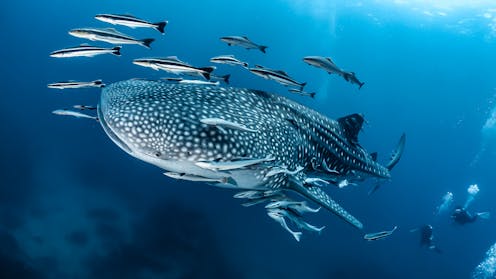
Big animals of the ocean go about their days mostly hidden from view. Scientists know this marine megafauna – such as whales, sharks, seal, turtles and birds – travel vast distances to feed and breed.
But almost a third are now at risk of extinction due largely to fishing, shipping, pollution and global warming.
Protecting them can be difficult, because we don’t often know where these animals are.
New research I led sought to shed light on the issue. My colleagues and I gathered 30 years of satellite tracking data to map hotspots of megafauna activity around the globe.
We tracked 12,794 animals from 111 species to find out where they go. The results reveal underwater “highways” where megafauna crisscross the global Ocean. They also show where megafauna dwell for feeding and breeding. Now we know where these special places are, we have a better chance of protecting them.

Pulling all the data together: a mega task
For more than 30 years, marine biologists have tagged large animals in the sea with electronic devices and tracked their movements via satellite. The trackers capture data on everything from speed of travel, to direction of movement and where the animals spend most of their time.
I put a call out to the global research community to bring together the tracking data. I hoped it would help scientists better understand the animals’ movements and identify their favourite places.
Some 378 scientists from 50 countries responded. We assembled the world’s largest tracking dataset of marine megafauna. It includes species of flying birds, whales, fishes (mostly sharks), penguins, polar bears, seals, dugongs, manatees and turtles. They were tracked between 1985 and 2018, throughout the world’s oceans.

Mapping reveals a lack of protection
When we started analysing the data, it showed the tagged animals used some parts of the ocean more frequently than others. Most of them travelled to the central Indian Ocean, northeast Pacific Ocean, Atlantic north, and waters around Mozambique and South Africa.
It’s likely this reflects a lack of data from elsewhere. However, these species are known to go to places where they are most likely to find food, so we expect some areas to be used more than others (including the areas we detected).
Then we were able to identify the world’s most “ecologically and biologically significant areas” for the tracked animals.
Currently only about 8% of the global ocean is protected. And only 5% of the important marine megafauna areas we identified occur within these existing marine protected areas.
This leaves all of the other important marine megafauna areas we identified unprotected. In other words, the species using those areas are likely to suffer harm from human activities taking place at sea.
More than 90% of the important marine megafauna areas we identified are exposed to high plastic pollution, shipping traffic or to intensifying global warming. And about 75% are exposed to industrial fishing.
We also found marine megafauna tend to spend most of their time within exclusive economic zones. This area lies beyond the territorial sea or belt of water 12 nautical miles from the coast of each country, extending 200 nautical miles from shore. The presence of megafauna in these exclusive economic zones means individual countries could increase the protection afforded within their jurisdictions.
About 40% of the important marine megafauna areas were located in these zones. But about 60% were on the high seas.
The future of marine megafauna conservation
The High Seas Treaty, recently adopted by the United Nations and signed by 115 countries, governs the conservation and sustainable use of marine biological biodiversity on the open ocean.
Working alongside this treaty, the Kunming-Montreal Global Biodiversity Framework aims to protect 30% of the global ocean by 2030. This presents an opportunity to ensure important marine megafauna areas are well represented.
We used an optimisation algorithm to identify the best areas to protect, when it comes to marine megafauna. We gave priority to areas that are potentially used for feeding, breeding, resting and migrating across all the different species.
But even if important marine megafauna areas are selected when 30% of the ocean is protected, about 60% of these areas would still stay unprotected.
Significant risks from human activities will remain. Management efforts must also focus on reducing harm from fishing and shipping. Fighting climate change and cutting down noise and plastic pollution should also be key priorities.
Like for most megafauna on land, the reign of marine megafauna might come to an end if humanity does not afford these species greater protection.
Authors: Ana M. M. Sequeira, Associate Professor, Research School of Biology, Australian National University

















