

Premature babies are given sucrose for pain relief – but new research shows it doesn’t stop long-term impacts on development
- Written by Mia McLean, Senior lecturer, Auckland University of Technology
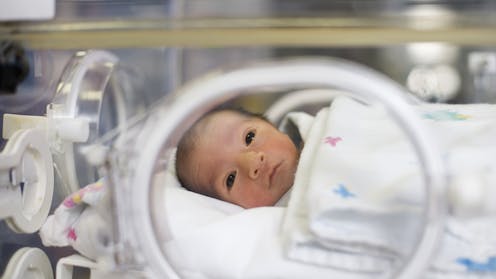
Infants born very preterm spend weeks or even months in the neonatal intensive care unit (NICU) while their immature brains are still developing.
During this time, they receive up to 16 painful procedures every day. The most common is a routine heel prick used to collect a blood sample. Suctioning of the infant’s airways is also common.
While many of these procedures provide critical care, we know they are acutely painful. Even tearing tape off the skin can be painful.
We also know, from decades of research, that preterm babies’ exposure to daily painful invasive procedures is related to altered brain development, stress functioning and poorer cognitive and behavioural outcomes.
The commonest strategy to manage acute pain in preterm babies is to give them sucrose, a sugar solution. But my recent research with Canadian colleagues shows this doesn’t stop these long-term impacts.
In New Zealand, there is no requirement to document all procedures or pain treatments. But as the findings from our Canadian study show, we urgently need research to improve long-term health outcomes for children born prematurely.
Long-term effects of pain in early life
We collected data on the number of procedures, clinical exposures and sucrose doses from three NICUs across Canada.
One of these sites does not use sucrose for acute pain management. This meant we were able to compare outcomes for children who received sucrose during their NICU stay and those who did not, without having to randomly assign infants to different care as you would in a randomised controlled trial – the gold standard approach.
At 18 months of age, when children born preterm are typically seen for a follow-up, parents report on their child’s behaviour. Our findings replicate earlier research: very preterm babies who were exposed to painful procedures early in life showed more anxiety and depressive symptoms by toddlerhood.
Our findings are similar regarding a child’s cognition and language, backing results from other studies. We found no link between preterm babies’ later behaviour and how much sucrose they were given to manage pain.
Sucrose is thought to activate centres of the brain that modulate pain and lead to the release of endorphins, but the exact mechanism remains unclear. It has become the worldwide standard of care for acute neonatal pain, but it doesn’t seem to be helping in the long term.
Improving pain treatment
About 1 in 13 babies are born preterm each year in Aotearoa New Zealand. Some 1-2% are very preterm, two to four months early. Māori and other ethnic minorities are at higher risk.
Studies in New Zealand show children born very preterm have up to a three-fold risk of emotional disorders in preschool and by school age. This remains evident through adulthood.
Sucrose may stop preterm babies from showing signs of pain, but physiological and neurological pain responses nevertheless happen.
As is the case internationally, sucrose is used widely in New Zealand, but there is considerable variation in protocols of use across hospitals. No national guidelines for best practice exist.
Infant pain should be assessed, but international data suggest this isn’t always the case. What’s more, pain isn’t always managed. Routine assessment of pain and parent education videos are useful initiatives to encourage pain management.
Minimising the number of procedures is recommended by international bodies. Advances in clinical care, including the use of less invasive ventilation support and the inclusion of parents in the daily care of their infant, have seen the number of procedures decrease.
Pain management guidelines also help, but whether these changes improve outcomes in the long term, we don’t know yet.
We do know there are other ways of treating neonatal pain and minimising long-term impacts. Placing a newborn on a parent’s bare chest, skin-to-skin, effectively reduces short and long-term effects of neonatal pain.
For times when whānau are not able to be in the NICU, we have limited evidence that other pain management strategies, such as expressed breast milk, are effective. Our recent research cements this: sucrose isn’t helping as we thought.
Understanding which pain management strategies should be used for short and long-term benefits of this vulnerable population could make a big difference in the lives of these babies.
This requires additional research and a different approach, while considering what is culturally acceptable in Aotearoa New Zealand. If the strategies we are currently using aren’t working, we need to think creatively about how to limit the impact of pain on children born prematurely.
Authors: Mia McLean, Senior lecturer, Auckland University of Technology

















