

Modern Australian
The Times

9 myths about electric vehicles have taken hold. A new study shows how many people fall for them

  • Written by Christian Bretter, Senior Research Fellow in Environmental Psychology, The University of Queensland
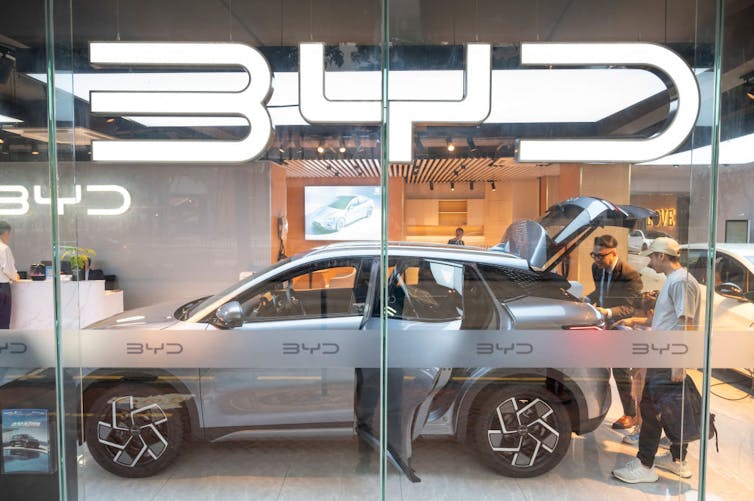
People look at an EV in a car dealership.

More people believe misinformation about electric vehicles than disagree with it and even EV owners tend to believe the myths, our new research shows.

We investigated the prevalence of misinformation about EVs in four countries – Australia, the United States, Germany and Austria. Unfortunately, we found substantial agreement with misinformation across all countries.

People who endorsed false claims about EVs were, not surprisingly, significantly less likely to consider buying one.

Electric vehicles are vital in the fight against climate change. But pervasive misinformation is a significant challenge to the technology’s uptake and has serious implications for the shift away from fossil fuels.

Widespread agreement with false EV claims

We conducted a survey of 4,200 people who did not own an electric vehicle across the four countries. We measured the extent to which they agreed with these nine misleading claims about electric vehicles:

What we found

To tally the results, we looked at participants’ responses for all nine misinformation statements – more than 36,000 responses in all. We then calculated how many of these responses indicated agreement or disagreement.

Of the 36,000 responses, 36% were in agreement with a statement and 23% were in disagreement. A further 24% were undecided and 17% did not know.

Misinformation agreement was highest in Germany and lowest in the US, but the differences between nations were small.

The most widely believed myth was that electric vehicles are more likely to catch fire than petrol cars. Some 43–56% of people agreed with the statement, depending on the country.

Agreement with misinformation was strongly correlated with a lack of support for electric vehicle policies and a lack of intention to buy an EV in future.

A separate part of the research involved 2,100 people in the US, about half of whom owned an electric vehicle. Surprisingly, EV owners did not significantly differ in their agreement with misinformation compared to non-owners. This underscores how embedded the problem has become.

People look at an EV in a car dealership.
Agreement with misinformation was strongly correlated with a lack of buying intention. Photo by Sebastian Ng/SOPA Images/LightRocket via Getty Images

It’s not about education

We also examined the factors that make individuals more susceptible to EV misinformation.

The strongest predictor was people who scored highly on a “conspiracy mentality” – in other words, they believed conspiracies were common in society, they saw the world through a lens of corruption and secret agendas, and distrusted institutions.

People with progressive political and environmental views were less likely to endorse misinformation about EVs.

A person’s scientific knowledge or level of education was not a predictor. This finding aligns with previous research, and suggests the pervasive endorsement of misinformation stems from distrust in institutions and expertise rather than from a lack of education.

Aerial view of hundreds of electric vehicles.
People with progressive political views were less likely to endorse EV misinformation. Costfoto/NurPhoto via Getty Images

Grounds for optimism

We tested whether misinformation could be reduced with two interventions among a different sample of US participants. One group was asked to converse with ChatGPT about their views on EV misinformation. The second was asked to read a traditional EV fact sheet from the US Department of Energy. On a third “control” group, no intervention was tested.

Participants who engaged with either ChatGPT or the fact sheet before we surveyed them showed significantly lower endorsement of EV misinformation compared to the control group. This persisted at a follow-up session ten days after the survey.

Notably, ChatGPT did not produce any misinformation about EVs. These results build upon existing research demonstrating ChatGPT’s potential to reduce endorsement of conspiracy theories.

A worker inspects an EV being manufactured.
Misinformation about EVs poses significant challenges to uptake of the technology. Florian Wiegand/Getty Images

How to tackle EV misinformation

Our findings show misinformation about electric vehicles has a substantial foothold in Western nations. Susceptibility is not a matter of education or knowledge, but rather stems from distrust of established institutions and expertise.

We also found people who engage with facts about electric vehicles are less likely to endorse misinformation.

This suggests a dual strategy is needed to reduce misinformation about EVs. First, those who deliberately spread misinformation should be held accountable. And second, evidence-based information, including accessible AI tools, can be used to build public resilience against false claims.

Authors: Christian Bretter, Senior Research Fellow in Environmental Psychology, The University of Queensland


Read more https://theconversation.com/9-myths-about-electric-vehicles-have-taken-hold-a-new-study-shows-how-many-people-fall-for-them-257557

What’s Trending in Men’s Jewellery This Father’s Day!

Finding a Father’s Day gift that feels personal, stylish and genuinely wearable is not always easy. While socks and novelty mugs have traditionall...

Road Signs: Understanding Their Role in Clear and Effective Signage

Effective signage and display hardware can help businesses communicate information, promote products and organise customer or visitor movement. Road...

Bottle Label Printing: Key Factors to Consider Before Your Next Packaging Run

Effective packaging begins with understanding the product, bottle material, artwork and production requirements when planning bottle label printing. H...

Planning a Long-Distance Move With Interstate Movers Melbourne

Moving between states involves more planning than a typical local relocation. Along with packing and transporting household belongings, you need to...

Understanding the Role of an I/O Controller in Industrial Automation

Modern industrial systems depend on accurate communication between sensors, machines and control systems. An I/O controller can help manage this commu...

How the Right Mining Hose Supports Demanding Operations

Mining environments place considerable demands on equipment used for material transfer, water management and processing. Hoses operating in these co...

Simple Ideas for Making Social Gatherings More Memorable

We have all been to those parties where everyone just stands around the kitchen island, staring at their phones, waiting for someone else to make a mo...

Outdoor Wall Lights: Improving Exterior Lighting Around Your Home

Lighting can influence how a room looks, feels and functions, so the right fitting should be selected according to both appearance and practical req...

Commercial Office Cleaning: Combining Routine Office Cleaning With Melbourne Service

Keeping a workplace clean requires a service that can accommodate everyday tasks as well as the particular needs of the business. Professional comme...

Caravan Sales in Queensland: How to Find the Right Caravan for Sale QLD

Caravan ownership is about more than having somewhere to sleep while travelling. For many Queenslanders, it is one of the best ways to explore regio...

What Sir Walter Buffalo Turf Actually Costs in 2026 (And Why Quotes Vary So Much)

Two quotes landed on a Hills District homeowner's kitchen table last spring for the exact same 80-square-metre backyard. One said $12 a metre. The o...

Nearly 1,300 NSW Hospital Beds Are Occupied By People Who Are Ready To Go Home

1,276 people in NSW hospitals have been medically cleared for discharge but remain in hospital because they're still waiting for NDIS or aged care sup...

National Survey Launched to Measure Operational Impacts of Federal NDIS Policy Reforms

The effects of recent NDIS reforms are beginning to move beyond policy papers and into day to day service delivery. A new national survey is asking ...

Beyond the Nappy Cake: Baby Shower Gifts That Get Used

What new Australian parents unwrap, keep, and quietly thank you for months later. Six weeks after my daughter was born, I did an audit of the baby sh...

Parent-Advocates Are Reshaping Frontline Disability Service Delivery

Parents have always been part of the disability sector. They advocate, coordinate services, challenge decisions and often become the person holding ev...

Vista Cruises Enters "Two-Flagship Era" as Vista Aurora Completes Inaugural Voyage

Vista Aurora Sets Sail along the Yangtze. (Photo courtesy of the company)YICHANG, China — August 5, 2026 — Vista Aurora, a high-end interprovinc...

A Digital Preparation Checklist For International Medical Conferences

An international medical conference compresses many responsibilities into a few days. A delegate may need to present research, move between venues, ...

The Growing Popularity of Lab Grown Diamonds in Sydney and Hong Kong

The diamond industry has changed significantly in recent years as more buyers seek ethical, affordable, and sustainable alternatives to mined diamon...















