

Malaria has returned to the Torres Strait. What does this mean for mainland Australia?
- Written by Cameron Webb, Clinical Associate Professor and Principal Hospital Scientist, University of Sydney
Malaria is one of the deadliest diseases spread by mosquitoes. Each year, hundreds of millions of people worldwide are infected and half a million people die from the disease.
While mainland Australia was declared malaria-free in 1981, from time to time travellers return to Australia with an infection.
Infections from local mosquitoes are incredibly rare. However, last week two cases of locally acquired malaria were reported in the Torres Strait.
So what does this mean for local communities? And is this a risk for mainland Australia?
What is malaria?
Unlike other mosquito-borne disease, malaria is caused by protozoan parasites, not viruses. These parasites belong to the Plasmodium genus. While five of these parasites are considered a human health concern, Plasmodium falciparum poses the most serious threat.
Symptoms can be mild and include fever, chills and headache. But sometimes people develop severe symptoms, such as fatigue, confusion, seizures and difficulty breathing.
Without appropriate medical care, the disease can be fatal. Those most at risk of life-threatening illness include infants, children under five years, pregnant women and patients with HIV and AIDS.
How does it spread?
Malaria parasites are spread by the bite of a mosquito carrying the malaria parasite.
Not all mosquitoes can carry the parasite. The group of mosquitoes responsible for most malaria transmission is called Anopheles. Aedes and Culex mosquitoes, which are typically associated with the spread of viruses, don’t transmit malaria to people.
While there are medications available to prevent malaria, and these are routinely recommended to travellers, this is not a sustainable approach for communities within regions at risk. The cost of medications, as well as the risk parasites may develop resistance to medications over time, are barriers for routine use in high risk countries.
Alternative strategies include using insecticide-treated bed nets and controlling mosquitoes by spraying insecticide on and around homes. Early diagnosis and treatment of those suspected to have an infection is also crucial.
‘Imported’ versus ‘locally acquired’ infections
There is an important distinction between “imported” and “locally acquired” cases of malaria.
“Imported” cases mean the person has been infected overseas and returned to Australia, where they’ve been diagnosed and treated. These cases appear in official statistics but are not the result of local mosquito bites.
“Locally acquired” cases are where a person is infected without any overseas travel. These cases often result from the parasites first introduced into Australia by infected travellers. The travellers are then bitten by local mosquitoes that go on to bite and spread the pathogens to people who haven’t travelled.
The last locally acquired malaria outbreak in mainland Australia occurred in 2002, when ten people were infected in Far North Queensland.
When this happens, it indicates local mosquitoes are carrying the malaria parasites and there is a significant risk further infections have occurred (but are not yet diagnosed) or may be diagnosed in the near future. Mosquito control or other initiatives are required to prevent larger outbreaks.
In the case of the Torres Strait, there is also the risk infected mosquitoes are transported, either by wind or boats, from Papua New Guinea.
So, what’s happening in the Torres Strait?
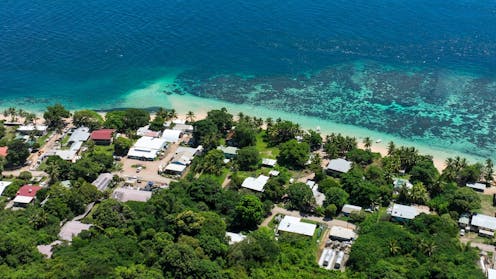
Queensland Health is currently investigating two recent cases of locally acquired malaria on Saibai Island.
But cases of locally acquired malaria aren’t unusual in the Torres Strait. They’re often suspected to be linked to movement of people into the islands from PNG, a country that reports more than a million suspected cases of malaria each year.
Previous locally acquired malaria cases in the Torres Strait were reported in 2023. Before that, a single case was reported in 2013 and eight cases in 2011.
The tropical climate of the Torres Strait and presence of Anopheles mosquitoes means conditions are right for local spread once the parasites are introduced, either through infected mosquitoes or people.
Read more: Torres Strait Islanders face more than their fair share of health impacts from climate change
Could malaria spread to mainland Australia?
Since the 1980s, there have only been a small number of cases reported on mainland Australia. The majority are in travellers returning to Australia who were infected overseas.
Historically, malaria cases were reported in many parts of the country, especially in the 1940s, including suburbs around Sydney when soldiers infected overseas returned to Australia.
The mosquitoes capable of spreading the parasites then are still present today. While the most important malaria mosquito in Australia, Anopheles faurati, is limited to northern regions of coastal Australia, Anopheles annulipes is widespread across much of the country.
But just because the mosquitoes are there, it doesn’t mean there will be an outbreak of malaria.
The parasite needs to be introduced and it needs to be warm enough for it to complete its life cycle in local mosquitoes. The cooler it is, the less likely that is to happen, even if suitable mosquitoes are present.
The parasites also face additional challenges. Infected people need to be bitten by local Anopheles mosquitoes, not just any mosquitoes. And with modern health-care systems in Australia, untreated sick people are less likely to be exposed to mosquito bites.
Malaria is one of the mosquito-borne pathogens considered at risk of increasing as a result of climate change. But there are many other factors at play that will determine future outbreak risk in mainland Australia, especially outside the tropical north of the country, such as a changing climate and seasonal changes in numbers and types of mosquitoes.
How to stay safe
The most important way local communities and visitors to the Torres Strait can stay safe is to avoid mosquito bites.
Cover up when possible with long-sleeved shirts, long pants and covered shoes and apply an insect repellent.
Insect screens, whether on buildings or in the form of bed nets will also provide protection overnight.
Read more: Mozzies biting? Here's how to choose a repellent (and how to use it for the best protection)
Authors: Cameron Webb, Clinical Associate Professor and Principal Hospital Scientist, University of Sydney

















