

Will the fragile ceasefire between Iran and Israel hold? One factor could be crucial to it sticking
- Written by Ali Mamouri, Research Fellow, Middle East Studies, Deakin University
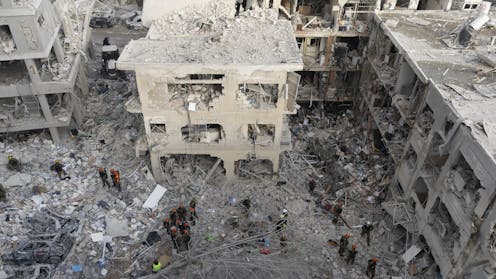
After 12 days of war, US President Donald Trump announced a ceasefire between Israel and Iran that would bring to an end the most dramatic, direct conflict between the two nations in decades.
Israel and Iran both agreed to adhere to the ceasefire, though they said they would respond with force to any breach.
If the ceasefire holds – a big if – the key question will be whether this signals the start of lasting peace, or merely a brief pause before renewed conflict.
As contemporary war studies show, peace tends to endure under one of two conditions: either the total defeat of one side, or the establishment of mutual deterrence. This means both parties refrain from aggression because the expected costs of retaliation far outweigh any potential gains.
What did each side gain?
The war has marked a turning point for Israel in its decades-long confrontation with Iran. For the first time, Israel successfully brought a prolonged battle to Iranian soil, shifting the conflict from confrontations with Iranian-backed proxy militant groups to direct strikes on Iran itself.
This was made possible largely due to Israel’s success over the past two years in weakening Iran’s regional proxy network, particularly Hezbollah in Lebanon and Shiite militias in Syria.
Over the past two weeks, Israel has inflicted significant damage on Iran’s military and scientific elite, killing several high-ranking commanders and nuclear scientists. The civilian toll was also high.
Additionally, Israel achieved a major strategic objective by pulling the United States directly into the conflict. In coordination with Israel, the US launched strikes on three of Iran’s primary nuclear facilities: Fordow, Natanz and Isfahan.
Despite these gains, Israel has not accomplished all of its stated goals. Prime Minister Benjamin Netanyahu had voiced support for regime change, urging Iranians to rise up against Supreme Leader Ali Khamenei’s government, but the senior leadership in Iran remains intact.
Additionally, Israel has not fully eliminated Iran’s missile program. (Iran continued striking to the last minute before the ceasefire.) And Tehran did not acquiesce to Trump’s pre-war demand to end uranium enrichment.
Although Iran was caught off-guard by Israel’s attacks — particularly as it was engaged in nuclear negotiations with the US — it responded by launching hundreds of missiles towards Israel.
While many were intercepted, a significant number penetrated Israeli air defences, causing widespread destruction in major cities, dozens of fatalities and hundreds of injuries.
Iran has demonstrated its capacity to strike back, though Israel has succeeded in destroying many of its air defence systems, some ballistic missile assets (including missile launchers) and multiple energy facilities.
Since the beginning of the assault, Iranian officials have repeatedly called for a halt to resume negotiations. Under such intense pressure, Iran has realised it would not benefit from a prolonged war of attrition with Israel — especially as both nations face mounting costs and the risk of depleting their military stockpiles if the war continues.
As theories of victory suggest, success in war is defined not only by the damage inflicted, but by achieving core strategic goals and weakening the enemy’s will and capacity to resist.
While Israel claims to have achieved the bulk of its objectives, the extent of the damage to Iran’s nuclear program is not fully known, nor is its capacity to continue enriching uranium.
Both sides could remain locked in a volatile standoff over Iran’s nuclear program, with the conflict potentially reigniting whenever either side perceives a strategic opportunity.
Sticking point over Iran’s nuclear program
Iran faces even greater challenges when it emerges from the war. With a heavy toll on its leadership and nuclear infrastructure, Tehran will likely prioritise rebuilding its deterrence capability.
That includes acquiring new advanced air defence systems — potentially from China — and restoring key components of its missile and nuclear programs. (Some experts say Iran has not used some of its most powerful missiles to maintain this deterrence.)
Iranian officials have claimed they safeguarded more than 400 kilograms of 60% enriched uranium before the attacks. This stockpile could theoretically be converted into nine to ten nuclear warheads if further enriched to 90%.
Trump declared Iran’s nuclear capacity had been “totally obliterated”, whereas Rafael Grossi, the United Nations’ nuclear watchdog chief, said damage to Iran’s facilities was “very significant”.
However, analysts have argued Iran will still have a depth of technical knowledge accumulated over decades. Depending on the extent of the damage to its underground facilities, Iran could be capable of restoring and even accelerating its program in a relatively short time frame.
And the chances of reviving negotiations on Iran’s nuclear program appear slimmer than ever.
What might future deterrence look like?
The war has fundamentally reshaped how both Iran and Israel perceive deterrence — and how they plan to secure it going forward.
For Iran, the conflict has reinforced the belief that its survival is at stake. With regime change openly discussed during the war, Iran’s leaders appear more convinced than ever that true deterrence requires two key pillars: nuclear weapons capability, and deeper strategic alignment with China and Russia.
As a result, Iran is expected to move rapidly to restore and advance its nuclear program, potentially moving towards actual weaponisation — a step it had long avoided, officially.
At the same time, Tehran is likely to accelerate military and economic cooperation with Beijing and Moscow to hedge against isolation. Iranian Foreign Minister Abbas Araghchi emphasised this close engagement with Russia during a visit to Moscow this week, particularly on nuclear matters.
Israel, meanwhile, sees deterrence as requiring constant vigilance and a credible threat of overwhelming retaliation. In the absence of diplomatic breakthroughs, Israel may adopt a policy of immediate preemptive strikes on Iranian facilities or leadership figures if it detects any new escalation — particularly related to Iran’s nuclear program.
In this context, the current ceasefire already appears fragile. Without comprehensive negotiations that address the core issues — namely, Iran’s nuclear capabilities — the pause in hostilities may prove temporary.
Mutual deterrence may prevent a more protracted war for now, but the balance remains precarious and could collapse with little warning.
Authors: Ali Mamouri, Research Fellow, Middle East Studies, Deakin University

















