

Our memories are unreliable, limited and suggestible – and it’s a good thing too
- Written by Nick Haslam, Professor of Psychology, The University of Melbourne
Milan Kundera opens his novel The Book of Laughter and Forgetting with a scene from the winter of 1948. Klement Gottwald, leader of the Communist Party of Czechoslovakia, is giving a speech to the masses from a palace balcony, surrounded by fellow party members. Comrade Vladimir Clementis thoughtfully places his fur hat on Gottwald’s bare head; the hat then features in an iconic photograph.
Four years later, Clementis is found guilty of being a bourgeois nationalist and hanged. His ashes are strewn on a Prague street. The propaganda section of the party removes him from written history and erases him from the photograph.
“Nothing remains of Clementis,” writes Kundera, “but the fur hat on Gottwald’s head.”
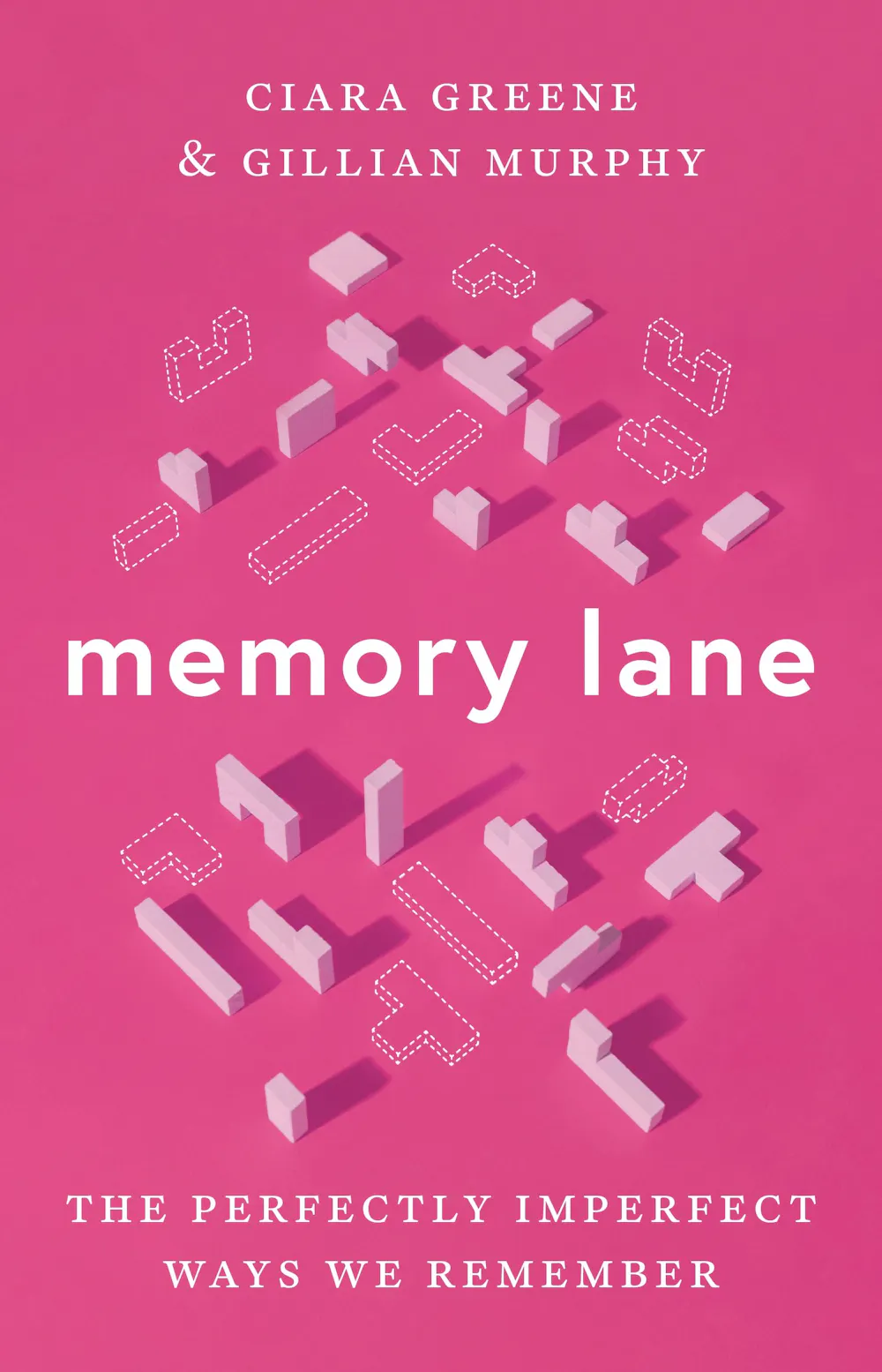
Review: Memory Lane: The Perfectly Imperfect Ways We Remember – Ciara Greene & Gillian Murphy (Princeton University Press)
Efforts to enforce political forgetting are often associated with totalitarian regimes. The state endeavours to control not only its citizens, but also the past. To create a narrative that glorifies the present and idealises the future, history must be rewritten or even completely obliterated.
In a famous article on “the totalitarian ego”, the social psychologist Anthony Greenwald argued that individual selves operate in the same way. We deploy an array of cognitive biases to maintain a sense of control, and to shape and reshape our personal history. We distort the present and fabricate the past to ensure we remain the heroes of our life narratives.
Likening the individual to a destructive political system might sound extreme, but it has an element of truth. Memory Lane, a new book by Irish psychology researchers Ciara Greene and Gillian Murphy, shows how autobiographical memory has a capacity to rewrite history that is almost Stalinesque.
There is no shortage of books on memory, from self-help guides for the anxiously ageing to scholarly works of history. Memory Lane is distinctive for taking the standpoint of applied cognitive psychology. Emphasising how memory functions in everyday life, Greene and Murphy explore the processes of memory and the influences that shape them.
What memory is not
The key message of the book is that the memory system is not a recording device. We may be tempted to see memory as a vault where past experience is faithfully preserved, but in fact it is fundamentally reconstructive.
Memories are constantly revised in acts of recollection. They change in predictable ways over time, moulded by new information, our prior beliefs and current emotions, other people’s versions of events, or an interviewer’s leading questions.

Eyewitness memories and misinformation
Memory Lane pays special attention to situations in which memory errors have serious consequences, such as eyewitness testimony. Innocent people can be convicted on the basis of inaccurate eyewitness identifications. An array of biases make these more likely and they are especially common in interracial contexts.
Recollections can also be influenced by the testimony of other witnesses, and even by the language used during questioning. In a classic study, participants who viewed videos of car accidents estimated the car’s speed as substantially faster when the cars were described as having “smashed” rather than “contacted”. These distortions are not temporary: new information overwrites and overrides the original memory.
Misinformation works in a similar way and with equally dire consequences, such as vaccination avoidance. False information not only modifies existing memories but can even produce false memories, especially when it aligns with our preexisting beliefs and ideologies.
Greene and Murphy present intriguing experimental evidence that false memories are prevalent and easy to implant. Children and older adults seem especially susceptible to misinformation, but no one is immune, regardless of education or intelligence.
Reassuringly, perhaps, digital image manipulation and deepfake videos are no more likely to induce false memories than good old-fashioned verbiage. A doctored picture may not be worth a thousand words when it comes to warping memory.
Memory Lane devotes some time to the “memory wars” of the 1980s and 1990s, when debate raged over the existence of repressed memories. Greene and Murphy argue the now mainstream view that many traumatic memories supposedly recovered in therapy were false memories induced by therapists. Memories for traumatic events are not repressed, they argue, and traumatic memories are neither qualitatively different from other memories, nor stored separately from them.
Here the science of memory runs contrary to the wildly popular claims of writers such as psychiatrist Bessel van der Kolk, author of the bestseller The Body Keeps the Score.
 Psychology researchers Ciara Greene (left) and Gillian Murphy (right) want us to be humbler about our fallible memories.
Princeton University Press
Psychology researchers Ciara Greene (left) and Gillian Murphy (right) want us to be humbler about our fallible memories.
Princeton University Press
Misunderstanding memory
The authors of Memory Lane contend that we hold memory to unrealistic standards of accuracy, completeness and stability. When people misremember the past or change their recollections, we query their honesty or mental health. When our own memories are hazy, we worry about cognitive decline.
Greene and Murphy argue that it is in the very nature of memory to be fallible, malleable and limited. This message is heartening, but it does not clarify why we would expect memory to be more capacious, coherent and durable in the first place. Nor does it explain why we persist with this wrongheaded expectation, despite so much evidence to the contrary.
The authors hint that our mistake might have its roots in dominant metaphors of memory. If we now understand the mind as computer-like, we will see memories as digital traces that sit, silent and unchanging, in a vast storage system.
“Many of the catastrophic consequences of memory distortion arise not because our individual memories are terrible,” they argue, “but because we have unrealistic expectations about how memory works, treating it as a video camera rather than a reconstruction.”
In earlier times, when memory was likened to a telephone switchboard or to books or, for the ancient Greeks, to wax tablets, memory errors and erasures may have seemed less surprising and more tolerable.
These shifting technological analogies, explored historically in Douwe Draaisma’s Metaphors of Memory, may partly account for our extravagant expectations for memory. Expecting silicon chip performance from carbon-based organisms, who evolved to care more about adaptation than truth, would be foolish.
But there is surely more to this than metaphor. All aspects of our lives are increasingly recorded and datafied, a process that demands objectivity, accuracy and consistency. The recorded facts of the matter determine who should be rewarded, punished and regulated. The bounded and mutable nature of human memory presents a challenge to this digital regime.
Human memory is also increasingly taxed by the overwhelming and accelerating volume of information that assails us. Our frustration with its limitations reflects the desperate mismatch we feel between human nature and the impersonal systems of data in which we live.
Greene and Murphy urge us to relax. We should be humbler about our memory, and more realistic and forgiving about the memories of others. We should not be judgemental about the errors and inconsistencies of friends, or overconfident about our own recollections. And we should remember that, although memory is fallible, it is fallible in beneficial ways.
A person whose memory system always kept an accurate record of our lives would be profoundly impaired, Greene and Murphy argue. Such a person “would struggle to plan for the future, learn from the past, or respond flexibly to unexpected events”. Brimming with insights such as these, Memory Lane offers an informative and readable account of how the apparent weaknesses of human memory may be strengths in disguise.
Authors: Nick Haslam, Professor of Psychology, The University of Melbourne

















