

MethaneSat failed just as NZ was to take over mission control – here’s what we need to know now
- Written by Nicholas Rattenbury, Associate Professor in Physics, University of Auckland, Waipapa Taumata Rau
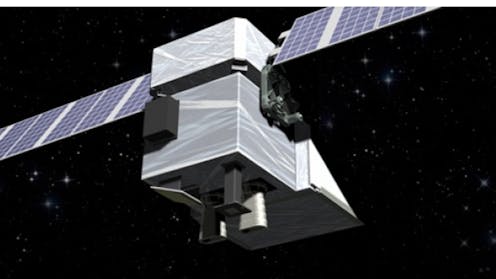
This week’s announcement of the loss of a methane-detecting satellite, just days before New Zealand was meant to take over mission control, is a blow to the country’s space research sector.
New Zealand invested NZ$29 million in the MethaneSat mission, built and operated by the US nonprofit Environmental Defense Fund, with a goal of growing the nation’s space industry.
This would have been accomplished through gaining experience in operating a satellite at the University of Auckland’s Te Pūnaha Ātea Space Institute, and through research led by a team at Earth Sciences New Zealand to use the satellite to measure agricultural sources of methane.
But on June 20, the satellite lost power and contact with the ground, and appears to be irrecoverable. This is disappointing for everyone on the mission development and operations teams.
Having been in that position personally when my team lost a miniature satellite after a successful launch, I sympathise. But the benefits New Zealand hoped to gain from the MethaneSat mission will now be limited, at best, and questions need to be asked to learn from the failure.
Early issues and delays
The MethaneSat satellite launched in March 2024. New Zealand was meant to take over mission control by the end of last year, but problems with the satellite’s thrusters meant this was delayed to June this year.
The satellite’s main mission was to detect methane leaks from oil and gas production, but it was also used to track methane sources from agriculture.
New Zealand was not likely involved in the chain of events leading to the under-performance and delays, nor the eventual loss of the satellite. But as investors in the project, we are entitled to an explanation.
That a spacecraft fails in orbit is not surprising. The space environment is unforgiving. But there is a question about whether New Zealand should have taken a closer look “under the hood” before investing in MethaneSat.
The principle of caveat emptor (buyer beware) applies to spacecraft as much as to purchasing a car. While we were not involved in the MethaneSat mission design, satellite construction and testing, we were certainly entitled to relevant information to make a fully informed decision on whether or not to invest.
Questions remain. During the MethaneSat post-mortem, one could reasonably ask to what extent experts were consulted during the decision-making process to invest in the satellite mission, and who was applying due diligence on behalf of New Zealand taxpayers.
When earlier issues emerged, to what extent should New Zealand taxpayers, as investors, have been happy with explanations veiled in reported obligations of confidentiality or commercial sensitivity?
Lessons for future space missions
New Zealand has scientists and engineers working at publicly-funded universities who can contribute to future decision-making processes for the next taxpayer-funded space mission.
New Zealand scientists working in the space sector do so knowing full well that the nation’s capacity to fund space missions is limited. Apart from being hard, frustrating, rewarding and unforgiving, working in space is expensive – and there are often delays and setbacks.
Some of us working in New Zealand space research have been trying to work through how best to advise government on where to spend limited public funding. This will not be an easy task.
The Committee on Space Research (COSPAR) is an international organisation established in 1958 to promote global cooperation in space research. It provides a forum for the exchange of scientific results, sets standards for space data sharing, and advises on space policy and planetary protection.
New Zealand participates in COSPAR as a national member and its committee comprises space science researchers from across the country. As chair of the New Zealand COSPAR committee, I sent a letter to Minister of Space Judith Collins last year offering our services:
I believe closer collaboration between COSPAR’s initiatives and New Zealand’s aerospace goals would enhance our mutual objectives and strengthen our contribution to the global aerospace community. Specifically, we are uniquely placed to advise on the range of scientific endeavours currently underway […] that could be at the heart of a national space mission.
Close scrutiny needed
New Zealand has more talent and good research ideas than funding to support them. So there has to be a way of choosing between competing ideas.
Crucially, that selection process has to be fully transparent so the investors – New Zealand taxpayers – can have confidence their investment is being safely bestowed.
My vision is for a funding process for future space missions that addresses scientific goals relevant to New Zealand and takes advantage of the talent we have. There will be applicants who miss out, as there always are in any competitive process. But I would like to see support given to unsuccessful applicants to improve their chances in subsequent attempts.
I work towards fostering the New Zealand space sector, especially in the areas where we can push back the boundaries of human knowledge via the safe, peaceful and sustainable use of space. This is the excitement I see reflected in the students I teach.
For a nation with ambitions to utilise space for science, technological development and commercial gain, we also have to acknowledge that failure is a part of that journey. To make the best use of our very limited resources, we must examine our processes in the fullest light of disclosure – regardless of whether the failure was technological or in our decision-making processes.
Authors: Nicholas Rattenbury, Associate Professor in Physics, University of Auckland, Waipapa Taumata Rau

















