

We don’t need deep-sea mining, or its environmental harms. Here’s why
- Written by Justin Alger, Associate Professor / Senior Lecturer in Global Environmental Politics, The University of Melbourne
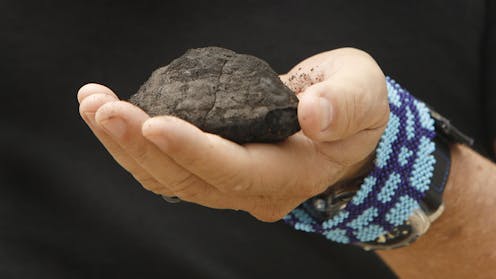
Deep-sea mining promises critical minerals for the energy transition without the problems of mining on land. It also promises to bring wealth to developing nations. But the evidence suggests these promises are false, and mining would harm the environment.
The practice involves scooping up rock-like nodules from vast areas of the sea floor. These potato-sized lumps contain metals and minerals such as zinc, manganese, molybdenum, nickel and rare earth elements.
Technology to mine the deep sea exists, but commercial mining of the deep sea is not happening anywhere in the world. That could soon change. Nations are meeting this month in Kingston, Jamaica, to agree to a mining code. Such a code would make way for mining to begin within the next few years.
On Thursday, Australia’s national science agency, CSIRO, released research into the environmental impacts of deep-sea mining. It aims to promote better environmental management of deep-sea mining, should it proceed.
We have previously challenged the rationale for deep-sea mining, drawing on our expertise in international politics and environmental management. We argue mining the deep sea is harmful and the economic benefits have been overstated. What’s more, the metals and minerals to be mined are not scarce.
The best course of action is a ban on international seabed mining, building on the coalition for a moratorium.
The Metals Company spent six months at sea collecting nodules in 2022, while studying the effects on ecosystems.Managing and monitoring environmental harm
Recent advances in technology have made deep-sea mining more feasible. But removing the nodules – which also requires pumping water around – has been shown to damage the seabed and endanger marine life.
CSIRO has developed the first environmental management and monitoring frameworks to protect deep sea ecosystems from mining. It aims to provide “trusted, science-based tools to evaluate the environmental risks and viability of deep-sea mining”.
Scientists from Griffith University, Museums Victoria, the University of the Sunshine Coast, and Earth Sciences New Zealand were also involved in the work.
The Metals Company Australia, a local subsidiary of the Canadian deep-sea mining exploration company, commissioned the research. It involved analysing data from test mining the company carried out in the Pacific Ocean in 2022.
The company has led efforts to expedite deep-sea mining. This includes pushing for the mining code, and exploring commercial mining of the international seabed through approval from the US government.
In a media briefing this week, CSIRO Senior Principal Research Scientist Piers Dunstan said the mining activity substantially affected the sea floor. Some marine life, especially that attached to the nodules, had very little hope of recovery. He said if mining were to go ahead, monitoring would be crucial.
We are sceptical that ecological impacts can be managed even with this new framework. Little is known about life in these deep-water ecosystems. But research shows nodule mining would cause extensive habitat loss and damage.
Do we really need to open the ocean frontier to mining? We argue the answer is no, on three counts.
How does deep-sea mining work? (The Guardian)1. Minerals are not scarce
The minerals required for the energy transition are abundant on land. Known global terrestrial reserves of cobalt, copper, manganese, molybdenum and nickel are enough to meet current production levels for decades – even with growing demand.
There is no compelling reason to extract deep-sea minerals, given the economics of both deep-sea and land-based mining. Deep-sea mining is speculative and inevitably too expensive given such remote, deep operations.
Claims about mineral scarcity are being used to justify attempting to legitimise a new extractive frontier in the deep sea. Opportunistic investors can make money through speculation and attracting government subsidies.
2. Mining at sea will not replace mining on land
Proponents claim deep-sea mining can replace some mining on land. Mining on land has led to social issues including infringing on indigenous and community rights. It also damages the environment.
But deep-sea mining will not necessarily displace, replace or change mining on land. Land-based mining contracts span decades and the companies involved will not abandon ongoing or planned projects. Their activities will continue, even if deep-sea mining begins.
Deep-sea mining also faces many of the same challenges as mining on land, while introducing new problems. The social problems that arise during transport, processing and distribution remain the same.
And sea-based industries are already rife with modern slavery and labour violations, partly because they are notoriously difficult to monitor.
Deep-sea mining does not solve social problems with land-based mining, and adds more challenges.

3. Common heritage of humankind and the Global South
Under the United Nations Convention on the Law of the Sea, the international seabed is the common heritage of humankind. This means the proceeds of deep-sea mining should be distributed fairly among all countries.
Deep-sea mining commercial partnerships between developing countries in the Global South and firms from the North have yet to pay off for the former. There is little indication this pattern will change.
For example, when Canadian company Nautilus went bankrupt in 2019, it saddled Papua New Guinea with millions in debt from a failed domestic deep-sea mining venture.
The Metals Company has partnerships with Nauru and Tonga but the latest deal with the US creates uncertainty about whether their agreements will be honoured.
European investors took control of Blue Minerals Jamaica, originally a Jamaican-owned company, shortly after orchestrating its start up. Any profits would therefore go offshore.

A wise investment?
It is unclear whether deep-sea mining will ever be a good investment.
Multiple large corporate investors have pulled out of the industry, or gone bankrupt. And The Metals Company has received delisting notices from the Nasdaq stock exchange due to poor financial performance.
Given the threat of environmental harm, the evidence suggests deep-sea mining is not worth the risk.
Authors: Justin Alger, Associate Professor / Senior Lecturer in Global Environmental Politics, The University of Melbourne
Read more https://theconversation.com/we-dont-need-deep-sea-mining-or-its-environmental-harms-heres-why-260401

















