

Hendra virus has killed a horse in Queensland. Should we be worried?
- Written by Vinod Balasubramaniam, Associate Professor (Molecular Virology), Monash University
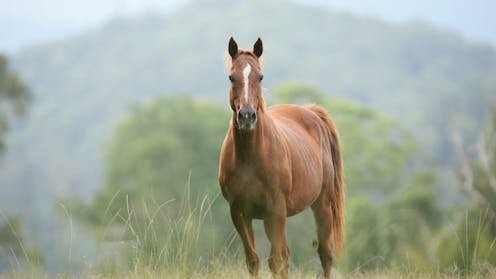
The death of an unvaccinated horse from Hendra virus this week in southeast Queensland is the state’s first reported case in three years.
Before that, Australia’s last case was in July 2023, when another unvaccinated horse died in New South Wales.
The new incident is a stark reminder that, while rare, this persistent virus poses a deadly threat to both animals and humans.
So, what is Hendra virus? And how is it passed on? Here’s what you need to know.
What is Hendra virus?
Hendra virus is found only in Australia. It is named after the Brisbane suburb Hendra, where it was first identified in 1994 – an outbreak that killed 13 horses and one human.
Hendra is a highly pathogenic virus, meaning it causes severe, often fatal illness.
It is a kind of henipavirus, which belongs to the large family of Paramyxoviridae. Henipaviruses such as Hendra are zoonotic, which means they occur naturally in animals but can also be passed on to humans.
Australia’s native flying foxes or fruit bats (the genus Pteropus) are Hendra’s natural “reservoir host”. They carry the virus without symptoms.
Outbreaks occur when the virus is transmitted to horses and occasionally to humans through infected horses. It is not known to affect other animals.
Can humans get Hendra?
Although alarming, human cases of Hendra virus remain exceedingly rare. Only seven confirmed cases have been reported since 1994, resulting in four deaths.
Each human case occurred after close contact with an infected horse or horses.
Those who contracted Hendra were typically veterinarians or horse trainers exposed to blood, mucus or other bodily fluids while caring for the horse or determining its cause of death.
Direct transmission of Hendra from bats to humans, or between humans, has not been documented.
How does it spread?
Hendra exists year-round in flying fox populations, who shed virus particles in bodily fluids, but don’t get sick themselves.
Horses mainly become infected through grass, feed or drinking water that has been contaminated by flying fox saliva, urine or feces. Although horse-to-horse transmission is possible, it is not common.
An infected horse will show rapid symptoms including:
- fever
- breathing difficulties
- nasal discharge
- increased heart rate
- neurological signs, such as muscle twitching, loss of coordination, and disorientation.
The infection progresses rapidly. In around 75% of cases, death follows within 48 to 72 hrs of symptoms beginning.
How dangerous is Hendra for horses?
Cases are infrequent but severe. Hendra has killed over 100 horses since it was identified in 1994.
Around 75–80% of infected horses either die naturally or are euthanised due to welfare concerns. This high death rate underscores the need for preventive measures.
Vaccination is the main way to prevent infection in horses. No vaccinated horses have developed the disease since a highly effective vaccine became available in 2012.
Veterinary authorities strongly recommend vaccination for horses, especially in Queensland and northern New South Wales, regions historically affected by the virus.
Other preventive measures include: placing feed and water containers away from areas frequented by flying foxes, regular stable cleaning, and keeping horses in stables overnight during months when bats are most active.
This is typically May to October, sometimes known as “Hendra season”. But there are signs climate change and habitat destruction may be changing when and where flying foxes roost and potentially worsening the risk of outbreak.
How to prevent human infection
There is no vaccine for humans against Hendra virus.
Preventing virus transmission from horses to humans requires strict biosecurity and hygiene protocols.
People who work with potentially infected horses must use personal protective equipment, including gloves, masks, eye protection and disposable gowns.
Rigorous hand hygiene practices – such as thorough washing with soap and water or alcohol-based sanitisers after horse contact – are vital.
If you suspect your horse is sick, avoid direct contact and get veterinary help straight away.
Authors: Vinod Balasubramaniam, Associate Professor (Molecular Virology), Monash University

















